Get Full Government Meeting Transcripts, Videos, & Alerts Forever!
Get email alerts on the Dental Networks Antitrust topic
No spam. Unsubscribe anytime.
Bill to let dentists jointly negotiate with insurers draws legal objections and calls for AG oversight
Summary
A proposed bill to let two or more independent dental providers jointly negotiate with dental insurers drew skeptical legal testimony Thursday that the measure could trigger antitrust liability unless the state provides clear policy direction and active supervision.
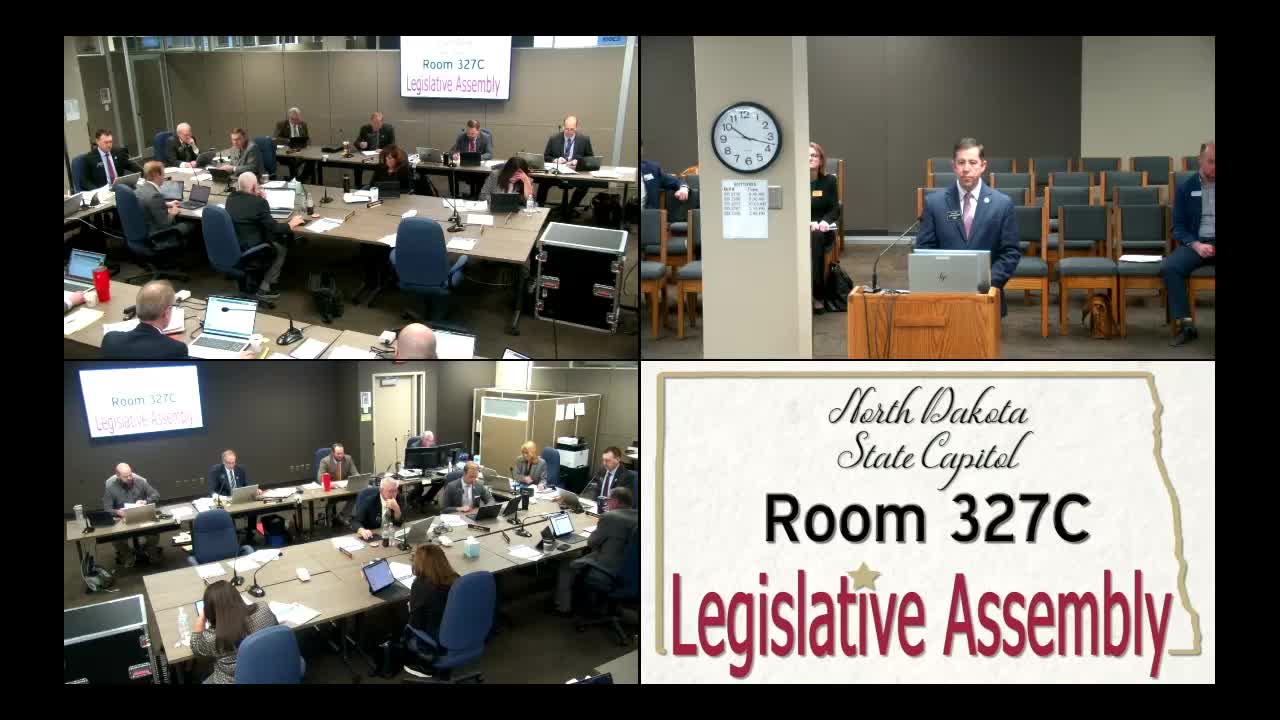
A bill that would authorize limited joint negotiations by dental providers and insurers drew sharp legal concern at a House Industry, Business and Labor hearing on Thursday, with proponents calling the measure a novel way to address bargaining imbalances and opponents warning it could trigger antitrust exposure unless the state provides active supervision.
Sponsor27s aim Sen. Jose Castaneda described Senate Bill 23‑75 as an attempt to give dental providers a mechanism to negotiate contract terms that are effectively nonnegotiable today because of antitrust rules and market concentration. "Too often, dental providers do not have the ability nor the opportunity to negotiate with insurance companies to work out a mutual agreement," Castaneda said, describing the proposed process as voluntary and intended to avoid heavy‑handed statutory mandates.
Proponents27 case Will Sherwin, executive director of the North Dakota Dental Association, told the committee the state27s market is highly concentrated: two insurers account for roughly 98% of the market, and most dental offices account for 1–2% or less. He said dentists currently have little leverage and that the bill seeks a supervised process where representatives of providers and carriers could negotiate administrative and, in limited circumstance, fee‑related terms.
Legal and administrative objections Peril Grossman, representing the American Council of Life Insurers, urged a "do not pass," saying no other state currently permits competing dentists to jointly bargain fees and fee‑related contract terms; he said similar laws in New Jersey and Texas lapsed years ago and that the state action antitrust immunity doctrine is narrowly construed.
Ellen Alm, director of the Attorney General27s Consumer Protection and Antitrust Division, told the committee the bill27s conduct is by its nature anti‑competitive and that a valid immunity requires a clearly articulated state policy and active state supervision. Alm recommended the attorney general, not the Office of Administrative Hearings, provide the oversight because the AG27s office has antitrust expertise and enforcement authority.
Practical questions and changes sought Opponents and neutral advisers criticized the bill27s drafting: they said the role of the Office of Administrative Hearings (OAH) was unclear, that OAH would be asked to promulgate rules and arbitrate contested factual issues without the investigative role a supervising agency normally provides. Peril Grossman and others also expressed concern that the bill27s language could be read as authorizing fee‑setting or other price coordination without sufficient supervision.
Proponents said they were working with the attorney general27s office on amendments, and Sherwin said the association would pay for the mediation/arbitration process if required. The Dental Board and the insurance commissioner27s staff were part of discussions on amendments.
Status The committee took testimony and closed the hearing; members did not vote on the bill during the session recorded in the transcript and sought further drafting to clarify oversight, scope of permitted negotiations, and cost allocation.
Ending The attorney general27s representative urged that any immunity be narrowly drawn and actively supervised by the AG27s office; proponents said they would work with the AG and stakeholders to address antitrust concerns before the bill moves forward.