Get Full Government Meeting Transcripts, Videos, & Alerts Forever!
Get email alerts on the Recycling Hhw Report topic
No spam. Unsubscribe anytime.
Director reports recycling gains, warns household hazardous waste use could strain district budget
Summary
District director Jessie told the board that annual SB131 reporting shows increases in most recycling streams and resident visits, while household hazardous waste (HHW) collection growth could increase costs and affect the 2026 budget.
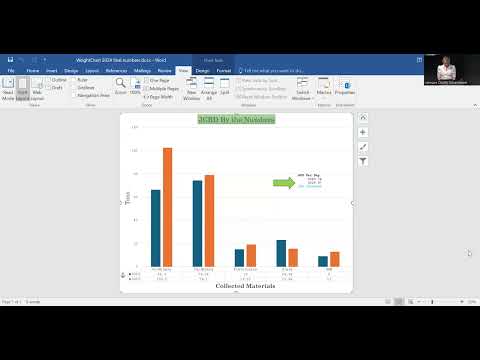
Jesse, the district director, told the Johnson County Solid Waste Management District board on March 10 that annual reporting under SB131 shows an increase across most recycling categories except glass and a 35% rise in the average number of residents served per day.
"If you look at those numbers, you will see that we have actually seen a substantial increase in all of our lines with the exception of glass," Jesse said during the director’s report, which included SB131 reporting the district is required to file.
Jesse said the district’s vertical baler is producing roughly 1,000-pound bales — higher than typical averages discussed with downstream vendors — but that growth may outpace current equipment and staffing. She said the district is exploring grant opportunities and different baler types (horizontal versus vertical) to manage labor and throughput.
The director raised concern about household hazardous waste (HHW) collection costs if participation continues to climb. Jesse said weekday HHW service averages about five residents per open weekday and 35–50 people on Saturdays, but the district’s sign-up system does not easily track cancellations. She said HHW collection was the most costly program and that last year the district reached a collection-related expenditure of about $35,000.
"Those HHW numbers... continue to concern me as we move forward when it comes to our financials," Jesse said. "If you figure $4 across the board... it costs us money — AJW is the largest cost to us for the residents." (Note: AJW referenced in the transcript was not further explained at the meeting.)
Board members asked about publicity and outreach; Jesse said the district relies on town and utility billing notices, social media, newspaper notices and partner agencies rather than heavy paid advertising, and that some residents find services via search. Several board members suggested that once the new facility opens the district could revisit public outreach and user-fee options if demand strains the budget.
Jesse recommended the board monitor utilization after the move to the new facility before making budget or fee decisions for 2026.