Get Full Government Meeting Transcripts, Videos, & Alerts Forever!
Get email alerts on the Officer Due Process topic
No spam. Unsubscribe anytime.
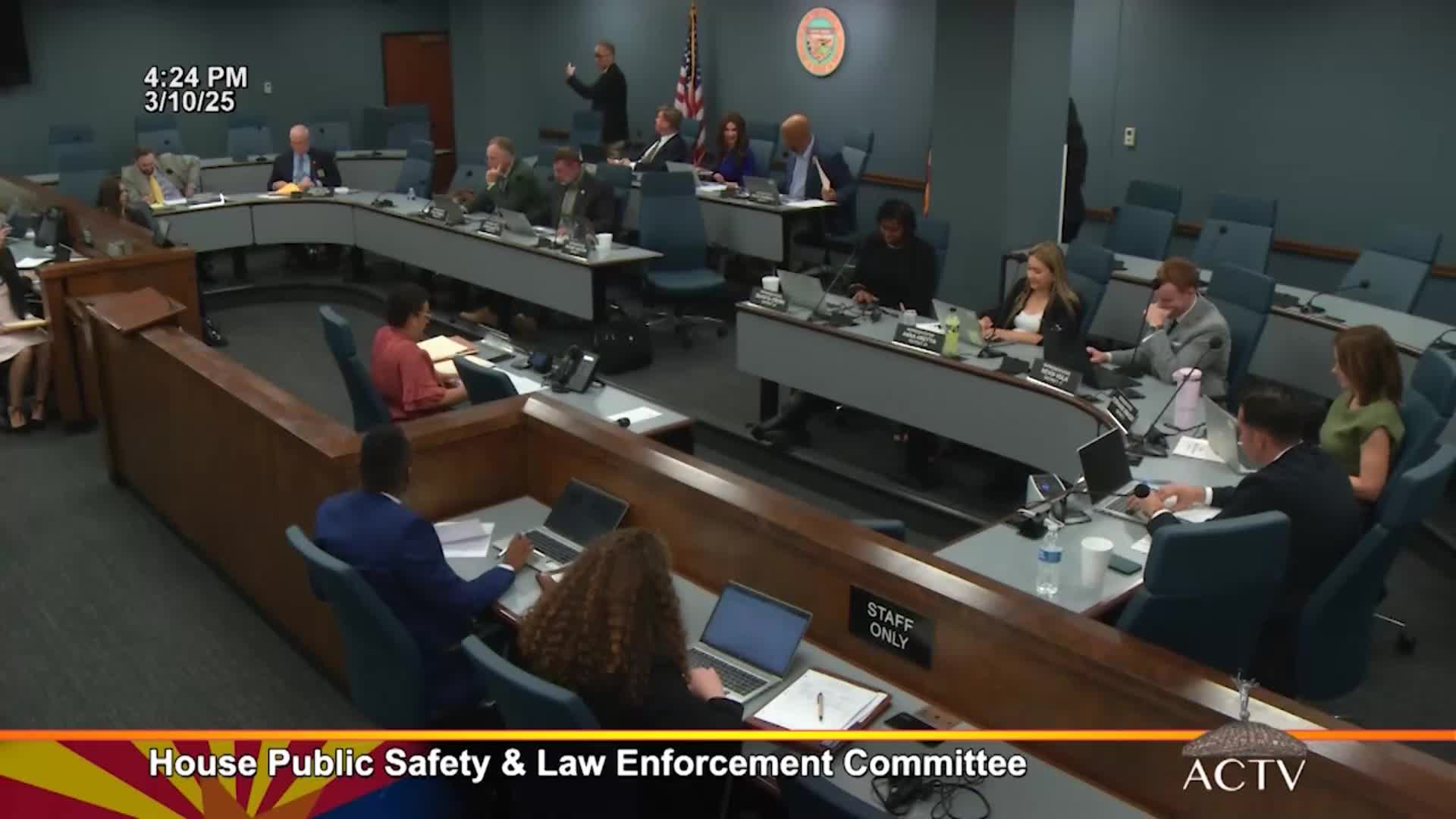
Committee approves 24-hour notice rule for officer administrative interviews, with carve-outs
Summary
Senate Bill 1060, which requires employers to provide law enforcement officers with statutorily required materials at least 24 hours before administrative investigative interviews (with specified exceptions), was returned with a due-pass recommendation amid debate over exception breadth.
The House Committee on Public Safety and Law Enforcement voted to return Senate Bill 1060 with a due-pass recommendation. The bill would require an employer to provide statutorily required materials to a law enforcement officer at least 24 hours before an administrative-investigation interview, with three defined exceptions: the officer waives notice; the employer determines earlier action is necessary to preserve the integrity of testimony or evidence; or the circumstances constitute a major law enforcement incident (for example, certain critical incidents).
Sponsors and supporters said the measure standardizes a minimum notice period and addresses the growing volume of digital evidence officers must review before giving administrative statements. Don Isaacson of the Fraternal Order of Police told the committee the bill “establishes a 24 hour rule with exceptions,” and said it does not affect criminal investigations. Justin Thornton, Executive Director of the FOP–Arizona, said technological changes have increased the volume and complexity of materials officers receive and that the bill “brings all the departments in line saying that at a minimum you're going to give the officer 24 hours to review it unless those exceptions apply.”
Opponents and some committee members questioned the scope of the carve-outs. Representative Collin pressed whether the exceptions could be applied broadly by agencies to avoid providing the notice; he characterized the exceptions as potentially giving an employer discretion that could undermine notice protections. Representative Abatia said protections must be balanced against public access to evidence in serious incidents and voted against the bill.
The committee discussed whether an administrative interview could reveal criminal conduct and whether the process would transition to a criminal investigation; witnesses said criminal investigations proceed under a different process if criminal allegations arise. The bill's proponents emphasized the proposal is limited to administrative processes (personnel rule violations) and that, when a criminal nexus appears, investigations would stop and proceed under criminal-procedure rules.
The committee recorded 9 ayes, 4 nays, 1 present and 1 absent and returned SB 1060 with a due-pass recommendation. Supporters said the measure standardizes minimum due-process notice and accommodates exception situations such as active critical-incident investigations; critics said the exception language may be too broad and asked for clearer statutory limits.