Get Full Government Meeting Transcripts, Videos, & Alerts Forever!
Get email alerts on the School Finance topic
No spam. Unsubscribe anytime.
Millcreek Township SD staff say special-education enrollment and pension costs are widening funding gap; board discusses outreach and advocacy
Summary
Finance staff presented benchmarking showing a sharp rise in special-education enrollment, heavy reliance on local tax revenue and a relatively low fund balance; board members discussed public communication and continued legislative advocacy.
Millcreek Township SD finance staff presented a benchmarking overview to the board showing that special-education enrollment has climbed sharply, local tax revenue supplies a larger share of the district’s budget than peers, and the district’s fund balance is low compared with similar districts.
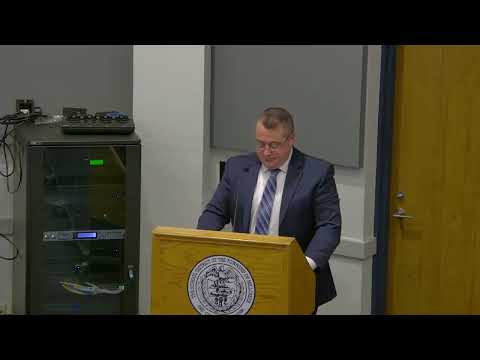
The presentation, delivered by a staff member identified in the transcript as Aaron, showed special-education enrollment growth of about 19.3% (as stated in the presentation) and noted that pension and health-care costs have risen far faster than state subsidies. “Special education enrollment continues to climb,” Aaron said during the presentation, summarizing statewide and local trends that he said are pressuring district budgets.
The nut graf: the presentation explained why Millcreek generates more of its revenue locally than many comparable Pennsylvania districts — and why that pattern reduces the district’s share of state subsidies — making local tax decisions more consequential for year-to-year revenue.
Key points from the presentation included: Millcreek’s local revenue share was reported at roughly 67% of the district’s total budget for the most recent year, above the state average; the district ranked near the top among comparable suburban districts for local revenue per pupil but well below average for state revenue per pupil; and the district’s equalized mill rate and market-value/personal-income ratios contribute to how state funding formulas allocate aid. The presenter said Millcreek’s total revenue per student ranked 427 out of 500 Pennsylvania districts in 2023, meaning 73 districts had less total revenue per student.
The staff presentation highlighted several structural drivers: state funding uses weighted average daily membership, poverty and English-language-learner weights, local effort capacity and median household income; special-education subsidy formulas allocate funding by category of need and the district’s perceived ability to generate local tax revenue; and long-term compounding effects of not raising millage can reduce cumulative revenue in future years.
Board members and staff also discussed local effects of enrollment and program choices. The board heard that Millcreek’s fund balance (expressed as a percentage of expenditures) is among the lower ones in the local intermediate unit (IU 5) and that the district has added programs elsewhere — for example, Erie County Technical School (ECTS) added cosmetology, protective services and construction trades — even as Millcreek’s participation at ECTS has declined, reducing Millcreek’s payment by about $9,000 annually as reported by the liaison.
Board members asked how the district could better communicate funding mechanics to taxpayers and whether to pursue legislative changes. One board member summarized the public-perception problem: “It doesn’t seem fair, does it?” she asked, referring to the disparity in who bears the local tax burden. Aaron responded that the district posts videos and has held town halls with low attendance, and he said staff will consider other outreach options. He also said the district continues to discuss funding concerns with legislators but does not expect the state formula to change in the near term.
The presentation concluded with next steps: the finance committee will present a preliminary budget next month with staffing ratios and embedded goals; a proposed final budget is expected in April, with a request for approval in May (timeline as stated in the meeting).
Ending: Board members praised the clarity of the presentation and asked staff to explore ways to explain the funding picture to taxpayers and to continue conversations with legislators about unfunded mandates.