Get Full Government Meeting Transcripts, Videos, & Alerts Forever!
Get email alerts on the Forestry topic
No spam. Unsubscribe anytime.
Senator warns pulpwood market collapse is putting South Carolina forestry industry "on the ropes"
Summary
On the Senate floor, the senator from Charleston urged state action to restore markets for pulpwood — including a bulk loading facility at the Port of Charleston — after mills closed and pulpwood prices plunged, a development she said threatens timber production and rural economies.
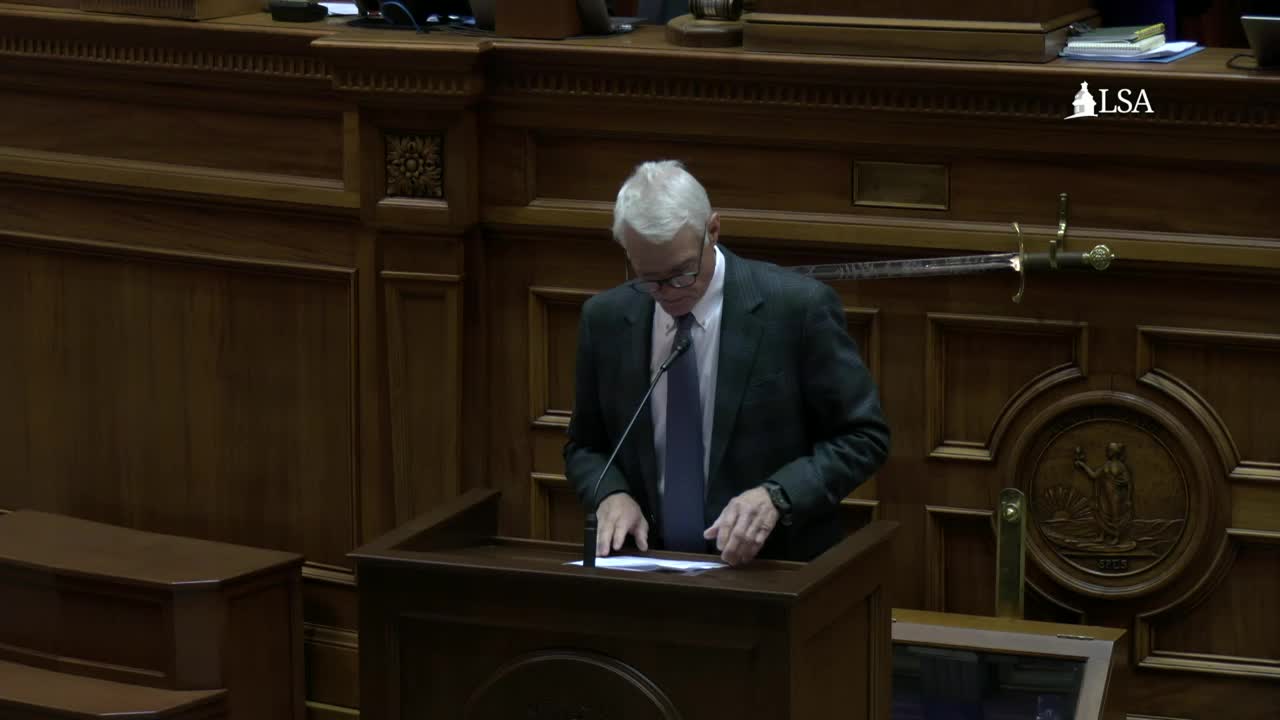
Senator Khamsin, the senator from Charleston, told the South Carolina Senate on the floor that the state's forestry industry is in a market crisis and urged action to restore demand for pulpwood, including construction of a bulk loading facility at the Port of Charleston.
Khamsin said the forestry sector is the state's largest industry by payroll and cited what she described as a $23,000,000,000 economic impact. "If you can't sell pulpwood, you can't grow sawtimber," she told colleagues, adding that the loss of markets and mill closures are forcing landowners to consider selling timberland for development rather than managing it for timber production.
The senator said multiple paper mills have closed and that pulpwood prices have collapsed. "The price of the pulpwood is just plummeted. It's gone to like $2. From $18," she said on the floor, and warned that logging crews that liquidate equipment will not return without stable markets.
Khamsin recommended a specific public-sector intervention: "We need a bulk loading facility at the Port Of Charleston for wood chips. There are markets, there are international markets for wood chips," she said, describing bulk ship loading that would use conveyors to place wood chips directly into vessels. She also argued the state could support development of private and public solutions in parallel.
Other senators pressed her on technical and market questions. A senator from Greenville asked whether a port facility would require rail support; Khamsin replied that inland processing for sustainable aviation fuel (SAF) and siting refineries near inland ports could be part of a broader strategy to create demand. Another senator asked whether European fumigation rules block some exports; Khamsin acknowledged a fumigation issue affecting certain markets but said other foreign markets remain available and that containerized shipping is typically too expensive for chips.
Khamsin also noted private-sector interest but said no single private solution has yet solved the problem statewide: "I'm not saying the port, doing a port boat loading facility is the, is the solution. It is part of the solution," she said, urging lawmakers to consider a mix of public and private actions, including potential budget provisos to study and support new markets.
She described downstream impacts to other local businesses when logging crews go out of business: local repair shops and parts suppliers, equipment lessors and service providers all lose customers, she said, and the high capital cost of logging equipment means crews typically cannot restart quickly if they exit the industry.
The remarks were delivered during the introductions and recognition portion of the Senate session after the body welcomed groups from the forestry industry to the gallery. Khamsin concluded by urging colleagues to take steps to prevent what she characterized as a long-term structural loss of forestry jobs and working forests.
No formal motion or vote resulted from the floor discussion; senators indicated follow-up questions and some pledged to explore budget language and other administrative steps in committee.