Get Full Government Meeting Transcripts, Videos, & Alerts Forever!
Get email alerts on the Child Protection topic
No spam. Unsubscribe anytime.
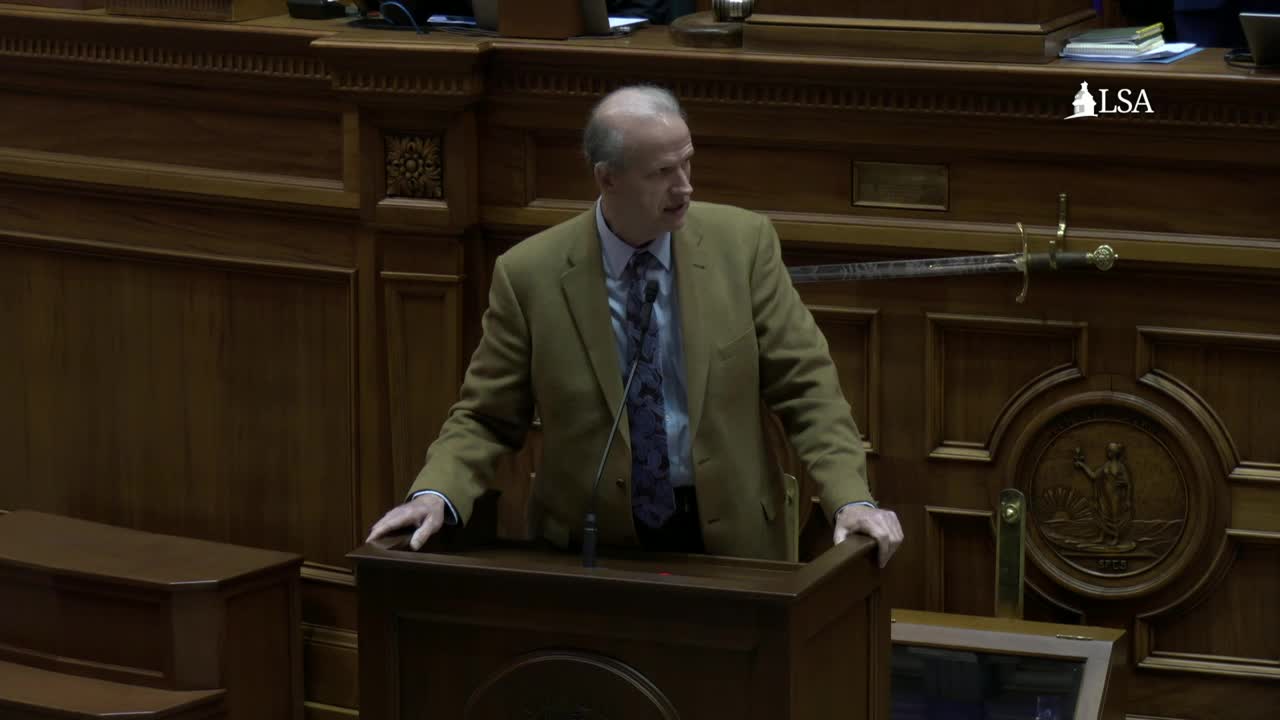
Senate debates bill targeting morphed and AI-generated sexual images of minors; amendment to remove mandatory minimums tabled
Summary
The South Carolina Senate debated S.28, a bill to criminalize morphed and AI-generated sexual depictions of minors. An amendment to remove a two‑year mandatory minimum for certain offenses was defeated by a 27‑12 roll call; the measure was later advanced to second reading by voice and a 39‑0 roll call.
The South Carolina Senate spent an extended period debating S.28, legislation that would create criminal penalties for creating, distributing or possessing certain morphed or AI-generated sexual depictions of minors.
The debate centered on sentencing structure and how to treat different levels of culpability. A floor amendment (amendment 4A) offered by the senator from Williamsburg would have removed the bill’s two‑year mandatory minimum sentence for some covered offenses and left greater discretion to judges. The amendment was tabled on a roll call vote of 27 to 12 after senators debated the balance between judicial discretion and a statutory minimum meant to deter and punish serious offenders.
Why it matters: sponsors and supporters said the bill is targeted at preventing widespread online exploitation and the unique risks posed by AI-enabled image production. Opponents warned that a mandatory minimum could prevent judges from tailoring sentences to facts that range from inadvertent possession to deliberate, large‑scale distribution.
Supporters described acts such as uploading large image sets to train AI models and mass distribution as particularly dangerous. As one senator put it during the debate, producing and distributing AI‑generated sexual material can involve “hundreds, potentially hundreds of thousands of pictures” used to train systems — a fact some senators argued warrants stiffer statutory penalties for the most culpable actors.
Opponents and some former prosecutors urged maintaining judicial discretion. The senator from Williamsburg, a former prosecutor, argued that sentencing should allow judges to weigh background and mitigating facts, saying, “courts have their own approach to analyzing the conduct of defendants to determine where they fit on the scale.” Supporters of the mandatory minimum countered that certain conduct is sufficiently heinous to warrant a statutory floor.
The chamber later ordered S.28 to a second reading by a roll call of 39 to 0. The bill text discussed during the session strikes and inserts language in a criminal statute identified in the floor amendment as section 16‑15‑390 and adds definitions for “identifiable minor” and “morphed image.” Debate also included proposals to require education for students about the new law and an amendment that directs state agencies to develop a statewide education policy for students about the statute.
Votes and next steps: the amendment to remove the mandatory minimum was tabled (27‑12). The bill was advanced to a second reading (39‑0). The measure will return for further consideration on a subsequent calendar.
Ending: The discussion left clear differences among senators about sentencing approach for crimes involving digital and AI‑generated images of minors. S.28 will proceed through the legislative process; the Senate gave it a second reading and several senators asked for further work on implementation and education for students.