Get Full Government Meeting Transcripts, Videos, & Alerts Forever!
Get email alerts on the Education School Choice topic
No spam. Unsubscribe anytime.
Senate advances school-choice scholarship bill after heated debate over scope and administration
Summary
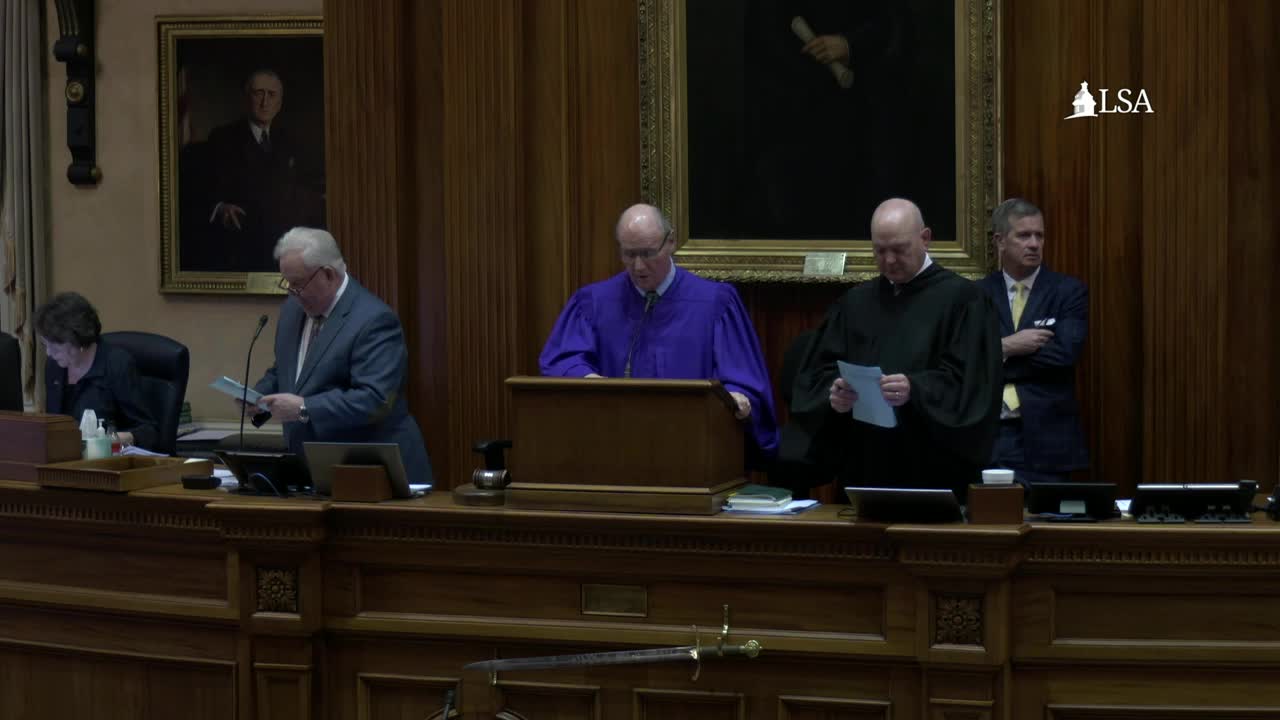
After hours of debate and multiple amendments, the South Carolina Senate gave S.62 a second reading, advancing an Education Scholarship Accounts (ESA) framework by a 32-12 vote. Lawmakers sparred over who should be eligible, whether the program should be universal and how administrative fees and vendor contracts should be handled.
The South Carolina Senate advanced S.62, a bill to create Education Scholarship Accounts (ESAs) for k–12 students, after a contentious floor debate and several amendment battles. The chamber gave the bill a second reading by a 32-12 vote and sent it toward third reading with key provisions and procedural changes still unresolved.
Why it matters: The bill would route lottery-funded scholarship dollars to families for private tuition, transportation, tutoring and similar educational expenses. Lawmakers and witnesses disagreed sharply over eligibility, vendor administration fees and whether a universal, no‑income‑limit option should be allowed — issues that affect state budget exposure and the program’s legal risk.
Most immediately, the Senate rejected a push to make the scholarship universal. An amendment by Senator Leatherman Clymer to remove income and enrollment caps — which would have opened the program to all children statewide — was tabled on a 26‑18 vote. Supporters framed the amendment as a move to “universal school choice”; opponents warned of large fiscal exposure and urged incremental rollout. ‘‘If the people of South Carolina are clamoring for more money for something… I think the General Assembly will be responsive,’’ said Senator Clymer on the floor. Senator Kimbrell, who co-authored a companion strike‑and‑insert amendment earlier in the day, described the broader goal as ‘‘the closest thing you can get to universal school choice.’’
Other amendments that passed or were discussed change how the program will operate. Lawmakers debated limits on vendor administrative fees (the bill ties a provider’s fee to a percentage cap), application assistance and whether the Department of Education must post application access prominently. Senator Hembree argued the department has experience running scholarship accounts and that a 2% administration cap is conservative compared with other states. ‘‘They have a system that’s working very well,’’ he said in defense of the department’s contract authority.
Budget and implementation questions dominated. Committee and floor exchanges repeatedly returned to the program’s price tags — the full scholarship amount discussed on the floor was $7,500 per pupil in various amendments — and how state funding would move if many families took scholarships or transferred between districts. Supporters said money follows the child and that, over time, increased parental choice would produce options and not bankrupt public education; critics said the near‑term cost could be large and urged delaying universal eligibility until funding mechanics are clearer.
Formal actions and next steps: - Motion to table an amendment by Senator Clymer to make the program universal (mover: Senator Hembree): tabling motion passed 26‑18; amendment tabled. (Vote recorded on the floor.) - S.62 — second reading: passed 32‑12. The bill moves to third reading for final consideration; additional amendments remain possible.
What lawmakers said: Supporters framed S.62 as parental empowerment and competition that will raise school quality. ‘‘Why would we be reflexively beholden to a monopoly model that stifles innovation?’’ Senator Clymer asked. Opponents warned about the fiscal and legal risks of rapidly expanding eligibility and urged step‑by‑step implementation; Senator Hembree cautioned against cutting vendor administration without evidence that the department could assume the work at lower cost.
Where it goes from here: S.62 cleared a second reading and will be eligible for third reading on a future Senate day. Sponsors and opponents signaled ongoing negotiations on administrative caps, application assistance and transfer rules; budget writers will continue to model potential costs if enrollment grows beyond program caps.