Lifetime Citizen Portal Access — AI Briefings, Alerts & Unlimited Follows
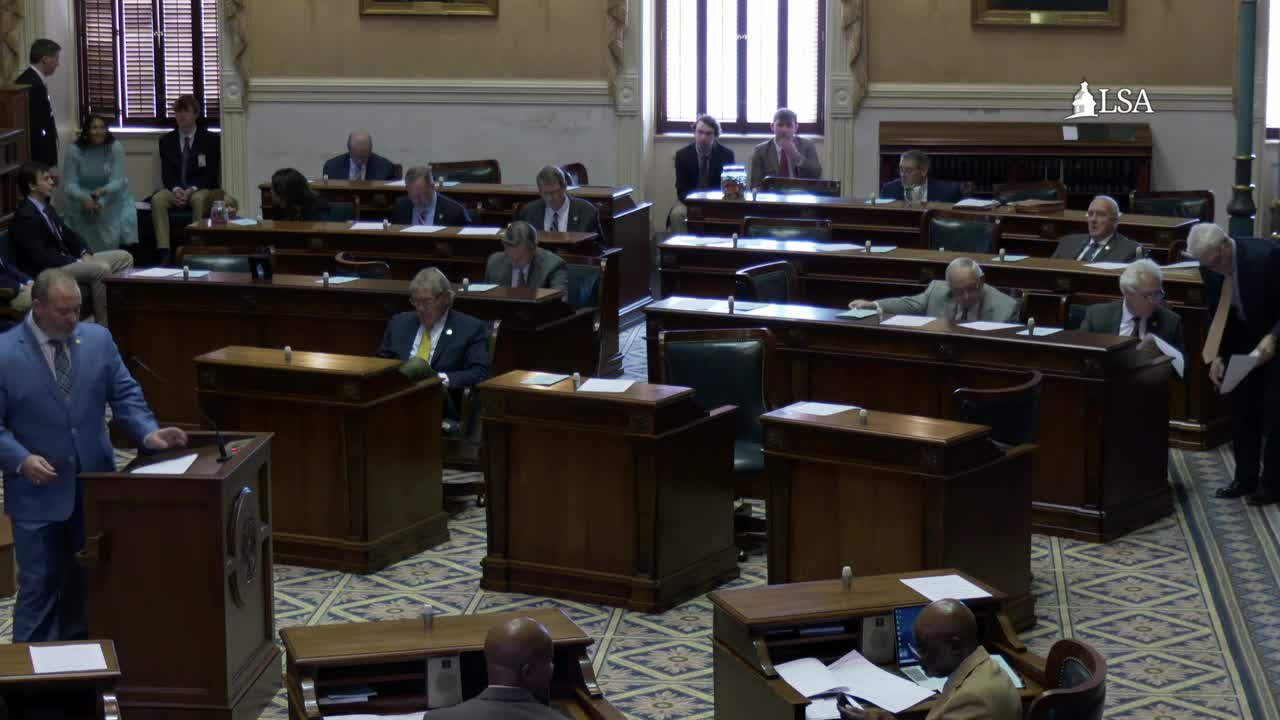
Senate debates expansion, accountability and eligibility rules for school-choice scholarships; key amendment tabled 26-15
Loading...
Summary
The South Carolina Senate spent hours debating a bill to expand education scholarship accounts, focusing on eligibility, accountability testing, transportation caps and special‑education access. Lawmakers carried several amendments, adopted others, and tabled an Edgefield amendment after a 26-15 roll call.
The South Carolina Senate debated changes to a proposed education scholarship program that would expand school‑choice options and set rules for who may receive scholarship funds.
Senators spent the bulk of the floor session on amendments addressing eligibility (residency and prior public‑school attendance), income thresholds, special‑education access (IEP students), transportation allowances, background checks for nonaccredited providers and academic accountability testing. The chamber carried several amendments for further consideration, adopted others on the floor and, by roll call, tabled an Edgefield amendment 26-15.
The proposal under consideration would resume or revise the scholarship program the Legislature previously enacted: senators argued over whether to limit initial eligibility to lower‑income students who had attended a South Carolina public school for a semester, or to open eligibility more broadly to existing private‑school students. The transcript shows repeated concern that a broader eligibility cutoff would “squeeze out” the low‑income students the program originally aimed to help.
Senator from Georgetown, speaking about a floor amendment intended to allow students whose resident schools cannot provide required IEP services to use scholarships for outside tutoring, described parents who “had to go outside of the district to receive that help” and gave a specific account of one family paying $1,500 a month for tutoring so a child could stay grade‑level. He said the amendment would let the Department of Education certify that a district cannot provide an essential service and allow families to purchase needed services with scholarship funds. He told colleagues: “If you want us to provide that child these services, take that child out of tutoring for the next year, and let's see if he falls behind again.”
Other senators pressed for tighter definitions and procedural checks. The senator from Calhoun asked whether certifying a district’s inability to provide services might be “too broad” and sought assurances the department would not be asked to make proactive statewide determinations. The senator from Dorchester noted the scholarship award cap and warned that if transportation costs exhaust the stipend, families could be effectively unable to use the scholarship. The senator from Edgefield argued for keeping statutory standards drafted in earlier bills and for legislative, not solely administrative, control over interdistrict transfer policies.
On accountability, the chamber debated whether private providers must administer state summative tests or may use nationally normed assessments; supporters said the measures give parents comparable data, while opponents said forcing a single state measure could unduly burden some private schools. Several amendments restored language from the bill as originally enacted in earlier sessions—including provisions addressing nondiscrimination and protections for private schools’ governance—and the senate adopted multiple such amendments by voice votes.
The most consequential recorded roll call on the floor involved an Edgefield amendment that would restrict eligibility and phase‑in slot counts and income thresholds (provisions intended by proponents to prioritize lower‑income applicants). Senator from Spartanburg moved to table the amendment; the Senate ordered a roll call and, after votes were recorded, tabled the Edgefield amendment by a vote of 26 to 15.
Votes at a glance - S226 (Senate resolution recognizing SkillsUSA and declaring February 2025 SkillsUSA Week): adopted by unanimous consent earlier in the session (see separate notice). - Motion to table Edgefield amendment (vote recorded by roll call): Tabled, 26 yes — 15 no. The clerk announced “By a vote of 26 to 15, the amendment is tabled.” - Multiple floor amendments were carried over for further work by voice vote or adopted without a roll‑call tally; the Senate also directed various amendments to be carried over to future floor consideration.
Why this matters: The debate affects how the state allocates limited lottery money and other education funds, which families are able to use scholarships, and how the state measures academic progress. Lawmakers repeatedly returned to whether the program should prioritize low‑income and special‑needs children or offer broader access to more families and existing private‑school students.
Next steps: Several amendments were carried over for continued consideration; committees and the Department of Education remain involved in drafting regulations and implementation procedures. The transcript records repeated offers to continue negotiations and to refine statutory language before final passage.