Get Full Government Meeting Transcripts, Videos, & Alerts Forever!
Get email alerts on the Grants And Donations topic
No spam. Unsubscribe anytime.
School committee accepts donations, approves grants for special education support, PLTW and mental‑health programs
Summary
The committee accepted two donations — $1,500 from BayCoast Bank for middle school adaptive physical‑education and 10 laptops from the Angola Project — and approved multiple grants including IEP implementation funds, Project Lead The Way awards for three middle schools and opioid‑related transportation funding for a pilot program.
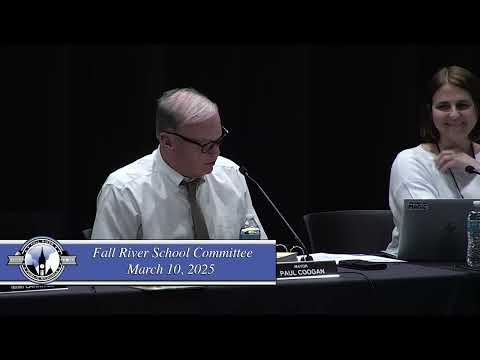
At its March 10 meeting the Fall River School Committee accepted two donations and voted to approve several grants to support special education, career‑pathway coursework and student behavioral health.
Donations: Daniel Fitzgerald, representing the health and physical education department, accepted a $1,500 donation from BayCoast Bank to support a middle‑school adaptive physical‑education field trip. Shama Daniels, principal of Henry Lord Community School, accepted 10 laptops donated by the Angola Project.
Grants: The committee approved a set of special‑education entitlement grants intended for professional development and services related to Individualized Education Program (IEP) implementation. District staff explained the IEP grant funding will be used for professional development (not direct student services or salaries), including contracting with consultant Deb Harris to support inclusive practices and co‑teaching strategies.
The committee also accepted Project Lead The Way funds: Lockheed Martin awarded $10,000 grants that will fund training and materials to revive PLTW offerings at the city’s three middle schools. Members said the funds would support teacher coursework and materials (not duplicate regular pay for time already paid during the school day).
Finally, the committee approved Bristol County opioid‑related grant money to provide transportation for a PAS program pilot year. Committee members asked for clarity that grant funds would be used for eligible program expenses and that staff stipends paid from such grants are for after‑hours work when applicable.
Ending: Committee members asked administration to provide details on timelines and allowable expenditures for each grant; members emphasized the need to avoid duplicate pay for regular-duty time and to ensure grants are spent per state requirements.