Get Full Government Meeting Transcripts, Videos, & Alerts Forever!
Get email alerts on the District Grants And Programs topic
No spam. Unsubscribe anytime.
Superintendent’s report: federal grants support dozens of staff, literacy academy serves 146 students; food service numbers rise
Summary
Assistant superintendents told the committee federal grants fund 48.35 FTEs across district instructional and support roles; the February literacy Acceleration Academy served 146 students and the district is averaging about 1,800 breakfasts and 3,500 lunches per day.
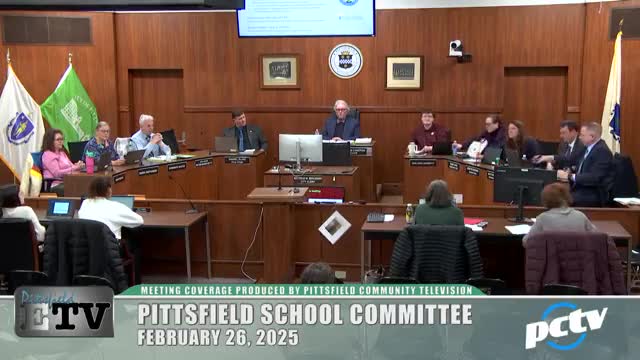
Pittsfield — District administrators told the School Committee Feb. 26 that federal, state and private grants fund substantial staff and programs across Pittsfield Public Schools, and that several grant-funded initiatives reported steady or increased participation.
Assistant Superintendent Behnke said federal grants currently support 48.35 full-time-equivalent positions, primarily instructional staff — teachers, paraprofessionals and assistant principals for teaching and learning — and also fund summer programs (Conte, Crosby, Morningside, Reed and Herberg) and special-education summer services. She said the district’s largest grants include Title I and Special Education grants.
Behnke said the district awaits clarity on federal budget continuing resolutions that could affect funding; she said some federal grants provide staff while others fund programs such as summer academies and English-learner intensive programs.
Assistant Superintendent Stokes reported on the district’s third annual February Literacy Acceleration Academy, funded by a competitive DESE grant. The four-day, project-based program employed 18 teachers across grades 3–10, offered PE and art, and for the first time provided credit recovery for grades 6–9. Enrollment for the academy was 146 students and participation came from every school in the district, Stokes said. Average daily attendance and family-satisfaction figures showed strong response to the program.
On the food-service front, the district reported average daily participation of about 1,800 breakfasts and 3,500 lunches per day. Assistant Superintendent Behnke said the district runs roughly $3.5–4 million through its food-service account annually and that USDA reimbursements are a major revenue source. Behnke said reimbursements go through the state and that nationwide changes to USDA funding could affect operations.
Committee members thanked staff for the program updates and voted to accept the superintendent’s report. The committee also approved routine scholarship and activity reports during the meeting.