Get Full Government Meeting Transcripts, Videos, & Alerts Forever!
Get email alerts on the Urban Design topic
No spam. Unsubscribe anytime.
Banyan, Clematis and the 'Flower Streets': how parks and street names shaped early West Palm Beach
Summary
Janet Naughton described Banyan Street as an early drinking and entertainment street, Clematis Street as the business corridor, and the Flower Streets naming and City Beautiful movement as shaping parks and civic spaces; she also described the "Cottage City" housing style and the role of Carrie Nation during Prohibition-era activity on Banyan.
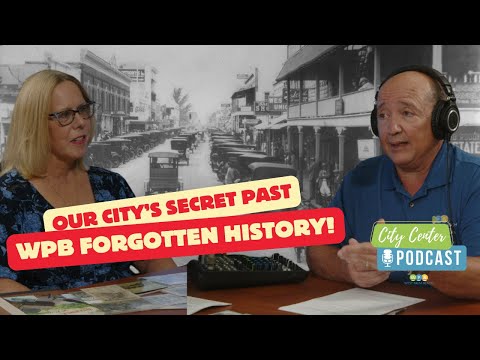
Janet Naughton told the podcast that early West Palm Beach streets and parks reflected distinct civic roles. She said Banyan Street "had a reputation for being the drinking street," with saloons and nightlife, while Clematis Street was "more business oriented and also for shopping." Naughton said the Flower Streets were named after plants by a woman who advised Henry Flagler when the town plan was laid out in 1893.
On civic design, Naughton described Flagler Park and the City Beautiful Movement in West Palm Beach: planners set aside an area at the Clematis waterfront (the Y) for public uses such as a band shell and a memorial library. "So that is, part of the City Beautiful movement, setting aside parks for public uses," she said.
Naughton also described the "Cottage City" vernacular homes—frame houses with wraparound porches built to capture coastal breezes—and she recalled the Prohibition-era presence of saloons and visits by temperance leader Carrie Nation. The podcast provides descriptive context about how street function, park planning and architecture created a distinct municipal character but does not provide street-by-street permits or zoning ordinances.