Get Full Government Meeting Transcripts, Videos, & Alerts Forever!
Get email alerts on the Graduation Policy topic
No spam. Unsubscribe anytime.
Wachusett committee adopts competency-based graduation policy for Class of 2025 after public comment on special-education protections
Summary
The Wachusett Regional School Committee approved a competency-based graduation policy for the Class of 2025 that replaces the MCAS requirement, following public comment urging protections for students with disabilities.
The Wachusett Regional School Committee approved a competency-based graduation policy for the Class of 2025 to replace the state's MCAS requirement, after public comment urging stronger safeguards for students with disabilities.
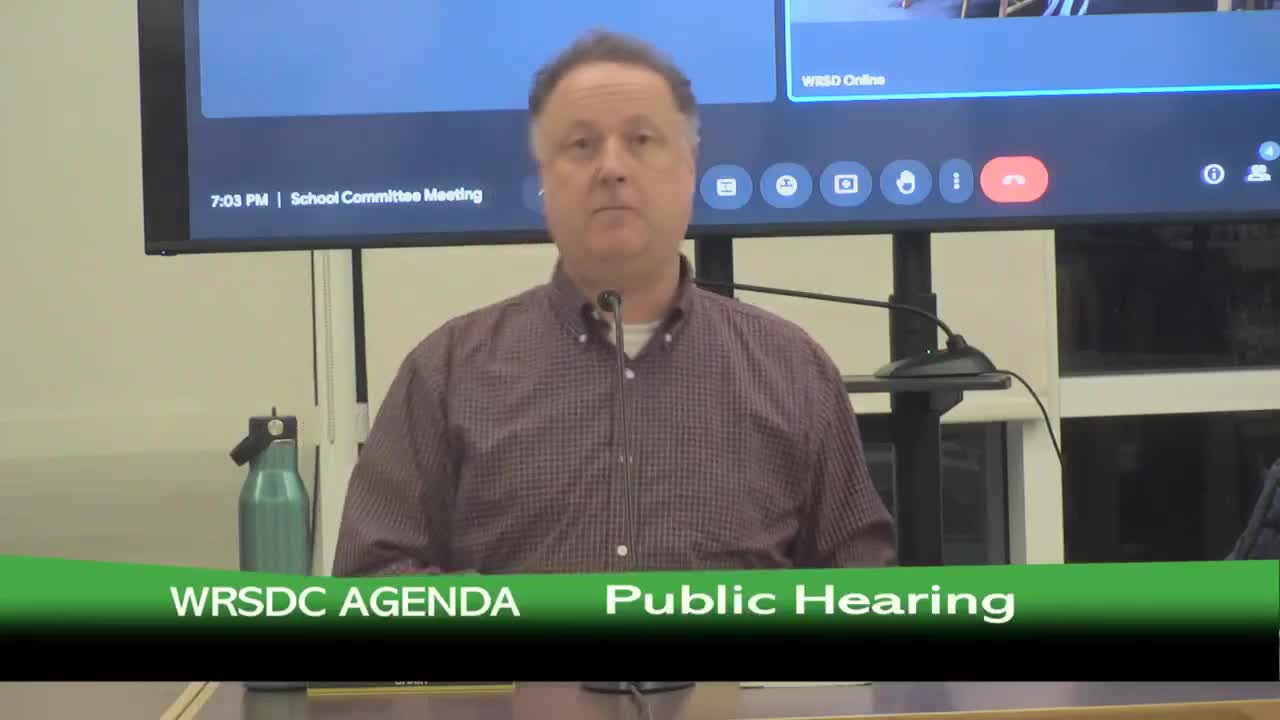
Lindsay Lukasen, vice chair of the Wachusett Citizens'PAC for special education, told the committee that the draft policy as written could "prematurely push [students with disabilities] out of the system, stripping them of the very supports that they need to succeed." She urged the committee to add explicit language so families could choose a certificate-of-completion track and to require an appeals process. "CPAC should have been engaged in this process before the policy was even proposed," Lukasen said during public comment.
Committee members discussed the urgency of adopting a local certification method before senior-year diplomas are finalized in May. Superintendent Scott Riley and district staff said they had worked with legal counsel and special-education leaders to write a policy that uses local competency determinations for course and standards equivalency but does not change the services available under IDEA. Director DeAngelis (special education) told the committee that students with Individualized Education Programs (IEPs) who do not meet the district's competency determination remain eligible for services until they meet graduation requirements or turn 22. She emphasized that teams, including families, make transition decisions and that federal law requires providing transition services until a student ages out.
Why it matters: The state removed MCAS as a mandatory graduation requirement in a recent ballot change; districts must now adopt locally defined competency determinations. Parents and advocates said the local policy must include safeguards so students eligible for transition services are not inadvertently denied supports.
Committee members said they moved quickly because some seniors currently uncertain about graduation needed clarity. During discussion, members asked whether the policy would allow families and IEP teams to defer awarding a diploma so a student could retain eligibility for transition services; district staff said yes, teams can and do recommend ongoing services and that deferral is a process conducted with the IEP team.
The committee approved the policy by roll-call vote; the chair abstained. The administration agreed to produce a communication plan for families and to identify how many students might be affected so the district can notify families directly and provide options for deferral or certificate-of-completion tracks where appropriate.
Supporting quotes and attributions: - "These consequences are entirely avoidable if we take the time to fully understand the impact of these changes before finalizing them," Lindsay Lukasen, vice chair, Wachusett CPAC (public comment). - "Students with IEPs remain eligible to receive educational services until either they meet the graduation requirements or they turn 22 years of age," Director DeAngelis (special education director).
Ending: The committee approved the policy for the Class of 2025; the administration will follow up with a family communication plan, tally of potentially affected students, and guidance for IEP teams on deferral procedures and appeals.