Get Full Government Meeting Transcripts, Videos, & Alerts Forever!
Get email alerts on the State Of The State topic
No spam. Unsubscribe anytime.
Whitmer outlines $2 billion housing plan, roads and education priorities in State of the State
Summary
Governor Gretchen Whitmer used the State of the State address to press for a $2 billion housing investment to build or repair nearly 11,000 homes, proposed a long-term fix for local roads as Rebuilding Michigan winds down, and called for targeted education investments and permitting reforms.
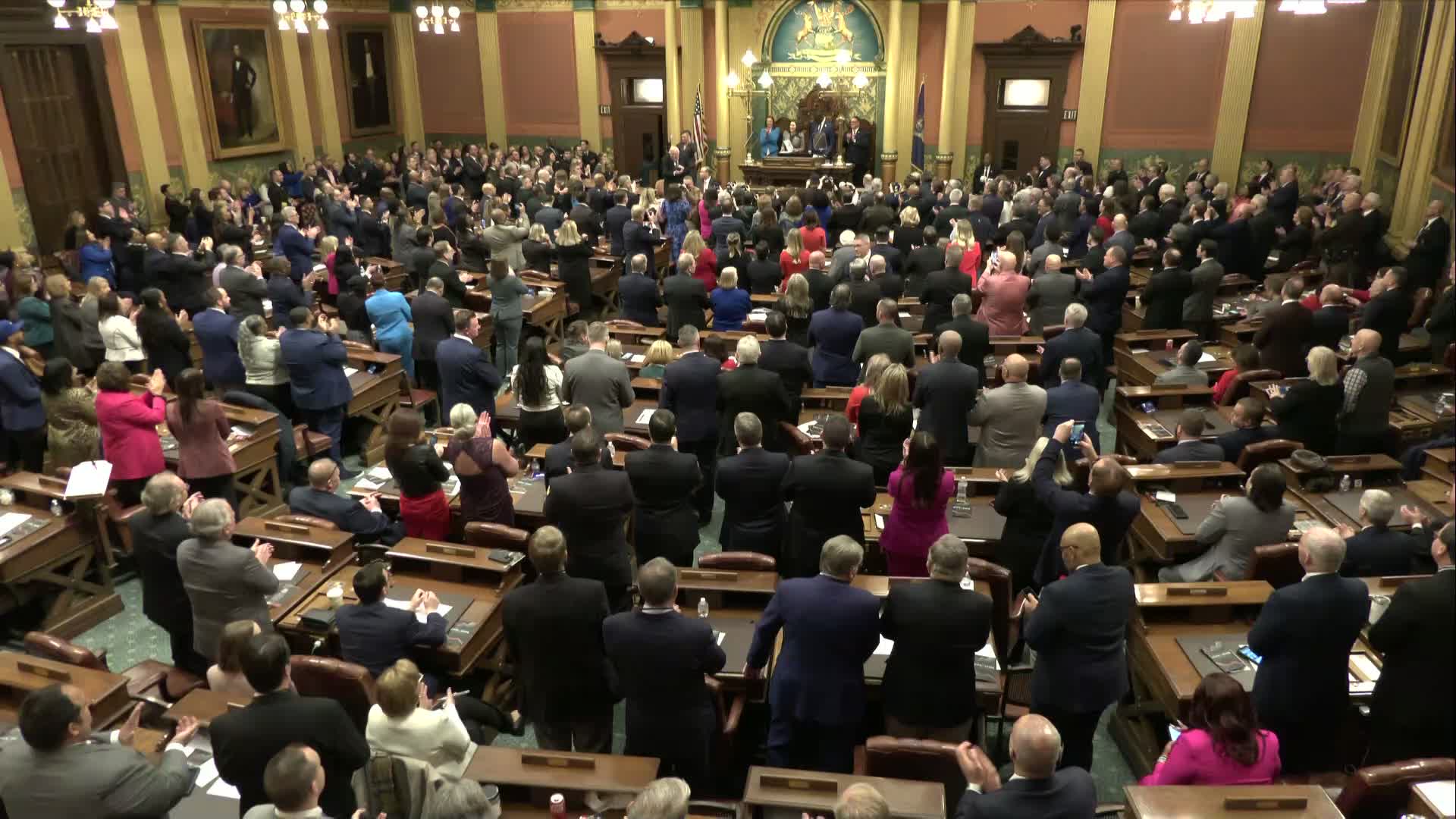
Governor Gretchen Whitmer delivered the annual State of the State address to a joint convention in Lansing on Feb. 25, 2025, laying out a three-part agenda: lower costs, more jobs and better government results. She urged lawmakers to invest in housing, find a long-term solution for roads funding, and accelerate education and permitting reforms.
The speech centered on housing and affordability. Whitmer proposed a $2,000,000,000 investment "to build, buy, or fix nearly 11,000 homes," which she said would create more than 10,000 construction jobs and lower housing costs for Michiganders. "We gotta build, baby build," Whitmer said, urging bipartisan support for the plan.
Whitmer said Michigan faces a shortage of about 140,000 homes statewide and argued the state must increase supply to reduce prices. She said the Michigan State Housing Development Authority (MSHDA) has had consecutive record years and urged additional investment to continue that momentum.
On transportation, Whitmer warned of a funding cliff when the Rebuilding Michigan bond program phases out and pressed lawmakers to agree on new, sustainable revenue sources for local roads and bridges. She said Lansing's local road funding — about $17 million a year for the city — is far short of need and said any long-term solution will require compromises across parties and sectors.
On jobs and workforce training, Whitmer highlighted career and technical education expansions and Michigan Reconnect, the bipartisan program offering tuition-free associate degrees and skill certificates. She said more than 200,000 Michiganders have participated in Reconnect and announced an upcoming executive directive to increase outreach to underrepresented groups, especially young men.
Whitmer described several enacted or proposed cost-of-living measures: a $15 minimum wage increase affecting more than 700,000 workers (already arranged through recent bipartisan action), an expansion of paid sick time, and tax changes she said have returned money to seniors and families. She cited a rainy day fund balance of $2.7 billion and said the state has paid down $26 billion in debt to date.
On health and consumer protections, Whitmer proposed bipartisan work to reduce medical debt for nearly 700,000 Michiganders and reiterated support for taxing vaping products "similar to how we tax cigarettes" to reduce youth vaping. On energy, she touted the bipartisan expansion of the Michigan Energy Assistance Program (MEAP), which she said could save hundreds of thousands of families money on utility bills, and she said Palisades nuclear plant’s restart would protect local jobs and power supplies.
Whitmer also called for permitting and licensing reforms to speed construction and economic development. She said state departments had reviewed more than 400 permitting types and that she will instruct agencies that miss statutory deadlines to refund permitting fees where legally possible; she said broader reform will require legislative change.
She discussed national trade risks, warning that a proposed 25% tariffs package would raise costs for Michigan families and industry. Whitmer urged cooperation on federal support for Selfridge Air National Guard Base and said she had discussed a fighter mission for Selfridge with federal officials.
The address included repeated calls for bipartisan cooperation and a focus on measurable results in education, where Whitmer said just 24% of fourth graders read proficiently and proposed targeted investments and use of proven "science of reading" approaches in classrooms. She thanked lawmakers for recent bipartisan education laws requiring dyslexia screening and phonics-based instruction.
The speech ended with an appeal to civic unity and a pledge to work across party lines on the governor’s three priorities.