Get Full Government Meeting Transcripts, Videos, & Alerts Forever!
Council committee backs lifting Bethesda development cap, raises park impact payment and seeks clearer monitoring
Summary
The Montgomery County Planning, Housing and Parks Committee on March 10 recommended removing the Bethesda overlay development cap, advancing transportation and school adequacy testing, prioritizing a downtown recreation center, and raising the Park Impact Payment to $15.57 per square foot while phasing collection to ease developer cash-flow.
The Montgomery County Planning, Housing and Parks Committee on March 10 held a work session on the Bethesda Downtown Plan Minor Master Plan Amendment, endorsing planning staff and Planning Board recommendations to remove the plan’s development cap, update transportation and school adequacy tests, prioritize a downtown recreation center, and raise the Park Impact Payment (PIP) to $15.57 per square foot while phasing the fee collection.
The committee’s discussion focused on implementation tools and monitoring rather than changes to site-specific zoning. Council staff and Planning Board analysis tested three development scenarios beyond the current development cap — roughly 11 million, 16 million and 21 million additional square feet by 2045 — to estimate effects on travel times, vehicle miles traveled, transit share and school enrollment. Planning Director Jason Sartori said the scenarios showed modest increases in auto and transit travel times and mixed results for vehicle miles traveled per capita; the largest scenario predicted a per-capita decrease in VMT as density reduces driving.
Why this matters: the Bethesda Downtown Plan guides public investments and zoning tools for one of Montgomery County’s largest downtowns. Removing a cap on development could accelerate housing and infrastructure decisions, but it requires an updated monitoring and implementation approach to protect transit, school capacity and public open space commitments.
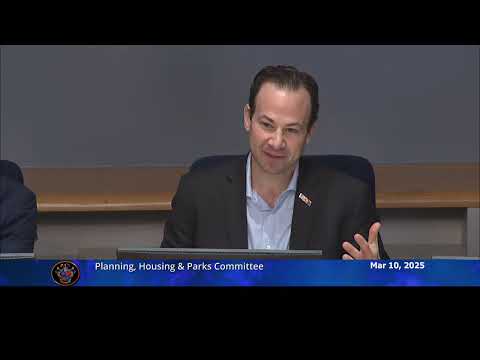
Council Member Andrew Friedson opened the session by recognizing resident frustration about the pace of public amenities and urging clarity in the plan’s language. “There is frustration that public amenities are not moving as quickly as some would like,” Friedson said. He also stressed that private investment has been substantial and that the county must balance incentives and requirements to deliver public benefits.
Transportation and monitoring: planning staff recommended keeping the Bethesda overlay’s transportation-related recommendations largely intact while advancing five targeted actions including continuing local area transportation review (LATR), supporting loading-management districts and a curbside…
Already have an account? Log in
Subscribe to keep reading
Unlock the rest of this article — and every article on Citizen Portal.
- Unlimited articles
- AI-powered breakdowns of topics, speakers, decisions, and budgets
- Instant alerts when your location has a new meeting
- Follow topics and more locations
- 1,000 AI Insights / month, plus AI Chat