Get Full Government Meeting Transcripts, Videos, & Alerts Forever!
Get email alerts on the Agriculture Family Farms Miosha topic
No spam. Unsubscribe anytime.
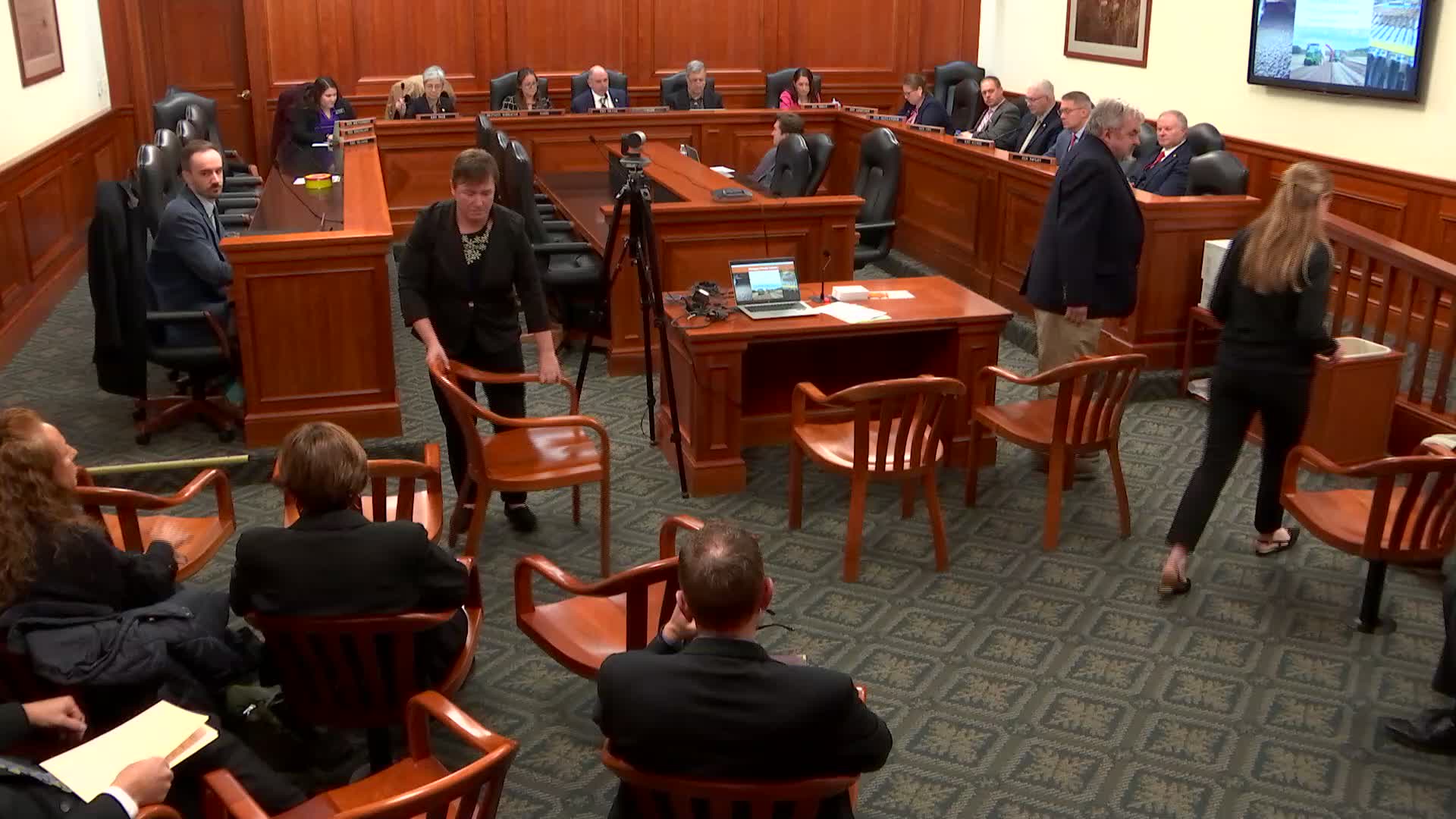
Family farm testimony on House Bill 4017: relatives recount death, fines and seek reduced MIOSHA penalty
Summary
House Agriculture Committee heard emotional testimony from the Eisman family about a 2019 on‑farm death and subsequent MIOSHA fines; the bill would reduce the mandatory penalty for failing to report a workplace death on qualifying family farm operations.
The Michigan House Agriculture Committee took testimony on House Bill 4017, a proposal to reduce the mandatory penalty that applies when an accidental death on a qualifying family farm operation is not reported to MIOSHA within eight hours.
Barb Eisman, speaking for her family, described finding her husband Keith deceased on Nov. 26, 2019, and said the farm later received a $5,000 fine for failing to report within eight hours plus an additional $12,000 in penalties stemming from an MIOSHA inspection. "To expect anyone who had just lost a spouse or a brother ... to call a government agency and notify them of a death during the first 8 hours ... and then penalize them with a maximum fine for not doing so is unrealistic, heartless, and cruel," Barb Eisman said.
Nut graf: supporters told the committee the bill would better align penalties with the realities faced by small, family‑run farms during times of personal tragedy and would spare families significant financial hardship; opponents (read into record) raised procedural concerns about broad legal alignment with federal MIOSHA requirements.
Zell Eisman, the decedent’s brother and business partner, described the farm as a two‑partner operation with three seasonal part‑time employees and said the fines amounted to more than twice the farm’s seasonal payroll. "A small business with 2 to 5 employees is not the same as one of the big three," he said, arguing that family farms lack a detached compliance officer who could handle rapid regulatory reporting.
Noel Eisman, who worked on the farm and later in the agricultural sector, told the committee he did not recall anyone on the farm thinking to make the MIOSHA report the night of the death. He warned that many other small farms could face similar penalties and asked for leniency for family operations.
Committee members expressed sympathy and asked policy questions. Representative Lightner said she would push the issue and called it "shameful" that the complaint had not been resolved in prior terms. Representative Pies described the fines as an "insult to injury" and asked whether the family had known of the reporting requirement; the family said they were not aware. Representative Koontz apologized to the family for how the state treated them and said he would help move the issue.
Bill details and limits discussed: supporters said the bill reduces the mandatory penalty by 80% for qualifying family farm operations but does not change the eight‑hour reporting window; they said altering the timeframe would require changes to federal MIOSHA rules and could jeopardize federal oversight or funding. Committee members asked whether the bill’s family definition (which the governor had previously vetoed legislation over) could be broadened to include in‑laws, cousins or nonfamily farm managers; presenters and members said that federal definitions constrain state action and that changing who is covered could require federal engagement.
Speakers also described attempts to appeal the fines to MIOSHA and said the agency had discretion to reduce fines but in their case did not exercise it. The family said MIOSHA investigators told them they "found the entity" (the corporate entity) rather than treating the case as a purely personal family tragedy, which the family members told the panel felt harsh.
Actions: the committee held a public hearing and took testimony; no vote on HB4017 was recorded during the session. Earlier in the same meeting Representative Alexander moved to adopt committee minutes from Feb. 20; "without objection, minutes are adopted," the chair announced. Later Representative Lightner moved to excuse absent members; the motion prevailed by unanimous consent.
Why it matters: family farm advocates say the current one‑size‑fits‑all reporting penalty can impose disproportionate financial sanctions on small farms grieving an accidental death; lawmakers raised questions about federal constraints and the definition of "family farm." The bill’s supporters asked the committee to advance the measure to spare other families the financial and emotional hardship the Eisman family recounted.
Ending: Committee members said they would continue work on the issue. The committee read additional witness cards and adjourned without taking a vote on HB4017 during this hearing.