Get Full Government Meeting Transcripts, Videos, & Alerts Forever!
Get email alerts on the Agriculture Potatoes topic
No spam. Unsubscribe anytime.
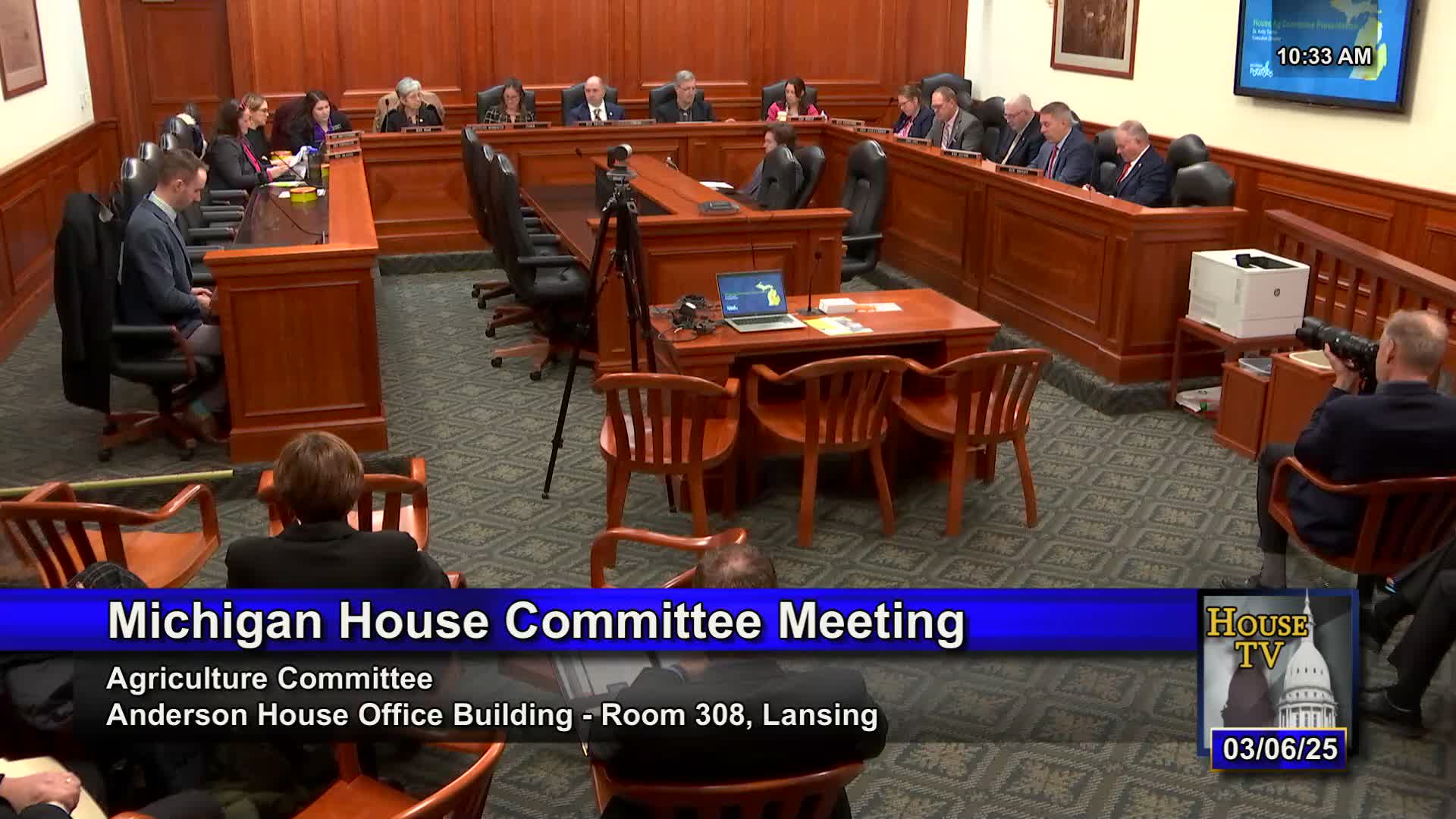
Michigan potato industry tells House Ag Committee it contributes $2.5 billion annually and flags water, labor and land concerns
Summary
The Michigan House Agriculture Committee heard a presentation from industry representatives on the economic footprint and policy needs of the state’s potato sector, which an MSU economic-impact study put at about $2.5 billion annually.
The Michigan House Agriculture Committee heard a presentation from industry representatives on the economic footprint and policy needs of the state’s potato sector, which an MSU economic-impact study put at about $2.5 billion annually.
Kelly Turner, who represents the Michigan Potato Industry Commission and the Potato Growers of Michigan, told the committee the study found roughly $1.5 billion in direct economic activity from growing, processing, wholesaling and retailing potatoes in Michigan and about $1 billion in related economic activity tied to consumption and ancillary industries. "We were like, wow. We're cooler than we thought we were," Turner said, summarizing the study results.
The nut graf: committee members were given figures and a policy agenda meant to underscore potatoes’ role in Michigan’s farm economy and food processing sector and to press for research, workforce and water-policy support that growers say the industry needs to remain competitive.
Turner and other presenters walked members through production breakdowns and industry structure. The presenters said Michigan produced about 1.9 billion pounds of potatoes two years ago across seed, fresh, processing and chipping categories. They said 20% of the crop is sold fresh, 5% is seed, 5% goes to processing other than chipping, and about 70% is grown for shipping to processors. Chip‑related sales were cited at about $246 million annually. "We are the chipping capital of the nation," Turner said, and the state ranks eighth in production and sixth in sales nationwide, presenters said.
Callie Bagley, who owns a kettle‑chip company in Waterford, said Michigan potatoes appear in one in four bags of chips sold nationwide and urged keeping potatoes on the federal school breakfast program because they are "a healthy, economical part of children's diets." Phil Gismano of Better Made Snack Foods described the company’s long relationship with Michigan growers and the industry’s work with Michigan State University to develop varieties that can be stored and supplied year‑round. "Michigan potatoes offer phenomenal opportunities," Gismano said, noting Better Made employs about 280 people in Detroit.
Speakers described three main industry organizations: the Michigan Potato Industry Commission (a research, marketing and education body established in 1970), the Potato Growers of Michigan (the industry's voluntary advocacy arm), and the seed potato association (which certifies seed potatoes under oversight of the Michigan Department of Agriculture and Rural Development). Turners said the Commission funds two full‑time positions on MSU’s Potato Outreach Team and that MSU breeding work is central to developing varieties that need less water and fewer chemical inputs.
Growers told the committee their top policy concerns are water, labor and land use. Dennis Iatt of Iatt Seed Farm (presented as president of the Potato Growers of Michigan) said most Michigan potatoes are irrigated and urged that water‑policy tools be improved rather than used in ways that inadvertently restrict agricultural withdrawals. He said the industry supports investment in the state’s Water Withdrawal Assessment Tool "to make it more accurate and more useful." The group also said it opposes commoditization of water resources and asked that any changes to withdrawal policy be science‑based.
On labor, presenters said labor costs account for roughly 35% of variable expenses in vegetable production and that growers need reliable access to a guest‑worker program to supplement domestic labor. On land use, speakers warned that large solar leases can remove productive acreage and urged protections for critical farmland. "If I lose 300 acres out of my farm from landlords that rent that land, I've lost 10% of my sales," Iatt told the committee.
Presenters also described efforts to attract new processors to Michigan to expand frozen‑product capacity and to develop niche markets such as chips paired with wine. The group invited committee members to farm and processing facility tours and said the industry runs "food and facts" tours for legislators.
Why it matters: committee members heard that potatoes provide jobs across urban and rural communities and that ongoing research, workforce development and water policy are central to maintaining processing and storage advantages Michigan growers say the state has.
The presentation generated lawmakers’ questions about research, international breeding partnerships and how MSU’s potato research connects to broader food security work. Turner described MSU breeders’ work with international partners to test breeding approaches and noted that potato breeding can take a decade from conception to commercial variety.
Less urgent material: presenters listed counties and regions where potatoes are grown and described storage and seed‑production zones; they said Montcalm County is the state's leading potato producer. They also described the seed certification role that the seed growers and MDARD perform.
The committee did not take action on legislation related to the presentation; the session concluded with an invitation for members to visit farms and processors.
Ending: Committee staff said members would receive invitations to tours and to the industry’s outreach events. The committee moved on to a separate bill hearing after the industry presentation.