Get Full Government Meeting Transcripts, Videos, & Alerts Forever!
Get email alerts on the Superintendent Contract topic
No spam. Unsubscribe anytime.
Framingham School Committee unanimously approves four‑year contract for Superintendent Robert Tremblay tied to student‑achievement metrics
Summary
After public comments pressing for greater accountability, the Framingham School Committee voted unanimously to approve a long‑term employment contract for Superintendent Robert Tremblay that ties pay increases to a rubric of academic and operational benchmarks.
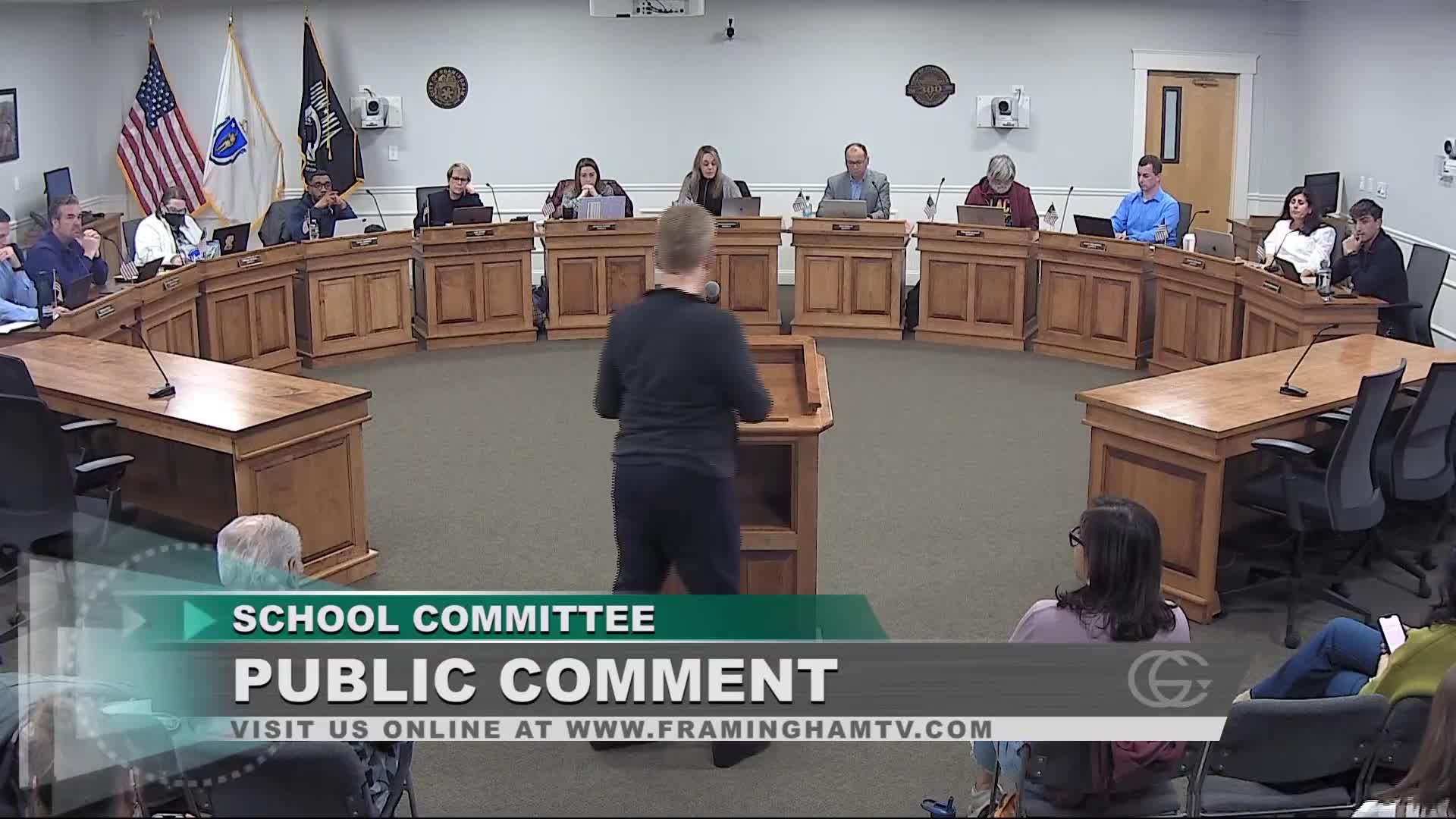
The Framingham School Committee voted unanimously Feb. 26 to approve a new long‑term contract for Superintendent Robert Tremblay that runs July 1, 2026, through June 30, 2030, and ties future pay increases to a scoring rubric focused on student achievement and attendance.
The measure, moved by District 6 member Valerie Adeviani and seconded by District 9 member William Labarge, passed by roll call with all nine elected committee members voting yes. Committee members said the rubric will hold central office leadership accountable to changes in MCAS performance, graduation rates, chronic absenteeism and other indicators.
Why it matters: The vote followed an extended public‑comment period during which teachers, parent‑advocates and union leaders urged stronger accountability and additional attention to staff retention, especially of educators and leaders of color. Committee members said linking superintendent compensation to measurable district outcomes is a tool to focus leadership on student results.
The contract includes a performance rubric that awards points in areas including elementary and secondary MCAS English language arts, math and science; graduation rate; chronic absenteeism; WIDA (access) participation and results; and secondary advanced coursework participation. Committee materials say a superintendent increase of 0% applies if “the total points earned in this rubric are 0.” Other contract provisions recorded in the meeting packet include 25 annual vacation days (maximum five carryover), 15 sick days with no buyback option, and a $6,000 annual travel allowance.
Public commenters framed the vote as a test of accountability. Christine Mulroney, president of the Framingham Teachers Association, expressed concerns about the timing and process for contract renewal and said, “This premature decision making raises questions about any process...and whether it is truly in the best interest of students and staff.” Therese Actum Roberts of the Framingham Special Education Parent Advisory Council said her group supported new positions proposed in the FY26 budget packet that she tied to services for high‑need students. Minakashi Verma Agarwal, co‑founder of Framingham Families for Racial Equity in Education, criticized the committee’s approach to staff and leadership turnover and to addressing a state discrimination complaint in the district.
Superintendent Robert Tremblay acknowledged concerns and said he will fold the meeting minutes and public feedback into his goal‑setting even if some items do not appear explicitly in the new contract. “I hear you loud and clear,” Tremblay told the committee, and he said he will include staff‑retention elements in his goals for the coming year even when those items are not in the contract language.
Committee discussion emphasized that the new contract removes automatic cost‑of‑living‑based increases used previously and replaces them with annual performance-based review tied to the rubric. Several committee members praised the change as a tool to raise accountability for student outcomes while noting the limits of what the committee can direct about curriculum and daily school operations.
The committee also authorized the chair to issue a joint press release about the contract. Members said they will use the contract and the forthcoming annual evaluation process to monitor progress and to refine evaluation tools in collaboration with the superintendent.
What’s next: The committee will vote on the annual evaluation process by May 1, as required, and members said they plan to align that evaluation with the rubric in the contract. The video and minutes from the Feb. 26 meeting will be available on the district website and were referenced by the superintendent as a source to craft his goals.