Board discusses rollback‑tax ordinance to make industrial rezoning less costly, aims to advertise ordinance for public hearing
Loading...
Summary
At a March 4 work session, county staff reviewed a proposed ordinance that would prevent immediate rollback taxes when land is rezoned to industrial or commercial uses in specified circumstances; supervisors broadly supported moving the ordinance to a public‑hearing advertisement.
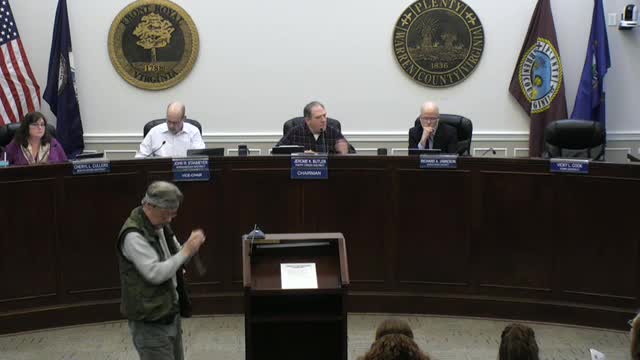
Warren County supervisors discussed a proposed local ordinance at a March 4 work session that would limit when rollback taxes become due after a property owner requests rezoning to a more intensive commercial or industrial use.
County staff read state code language and explained the draft ordinance would allow certain properties to retain use‑value assessment treatment after rezoning to specified industrial or commercial uses so long as they do not change to a disqualifying use. The presentation said that if an ordinance is enacted by June 30, it would take effect Jan. 1, 2026; the rollback interest rate in the draft was described as 6 percent.
Staff also said the county would need to amend Warren County zoning code sections (described in the work session as "100 and sixty‑twenty 3" and "100 and sixty‑23.1") to ensure the proposed ordinance’s mechanics are effective and do not unintentionally block agricultural uses in the industrial/commercial zones.
Supervisors generally said the change was intended to unlock industrial development in the county’s 522 corridor and to relieve pressure on the residential tax base. "If we want industrial development, and I personally do, I campaigned on it," one supervisor said, adding the change would facilitate development consistent with the comprehensive plan. Another supervisor said the reduced rollback burden could accelerate development and ultimately be revenue positive for the county.
The board directed staff to place the ordinance on a future agenda for authorization to advertise and to prepare required public‑hearing materials. No final ordinance vote occurred at the meeting.
Ending: Staff said that, if the board wishes to proceed, it must adopt the ordinance by June 30 for a Jan. 1, 2026 effective date; supervisors asked staff to return with codified ordinance language and the required public‑hearing advertisement schedule.