Get Full Government Meeting Transcripts, Videos, & Alerts Forever!
Get email alerts on the Youth Civic Engagement topic
No spam. Unsubscribe anytime.
UW‑Extension outlines youth county‑board advisory program for Sawyer County
Summary
A UW‑Extension coordinator described a program used in neighboring counties that places high‑school students as advisory county‑board members with roll call and symbolic votes, and outlined application, participation and stipend details for Sawyer County to consider.
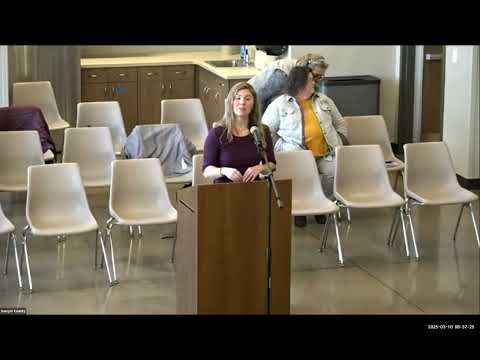
At a meeting of the Sawyer County Economic Development and UW‑Extension Committee, a University of Wisconsin‑Extension youth development coordinator described a program used in neighboring counties that seats high‑school students as nonvoting advisory county‑board members.
The coordinator, Emily (last name not specified), who works as a Positive Youth Development (PYD) coordinator for Washburn and Burnett Counties through UW‑Extension, told the committee students attend county‑board meetings, receive name tags and are recorded on roll call but cast only an advisory vote that “doesn't actually count towards the final vote.” She said the arrangement is intended as a youth‑adult partnership so young people both learn about government and provide input to elected officials.
Emily described how Washburn and Burnett each use three youth representatives (with alternates in earlier years), and said some counties instead include students on committees to give them smaller forums for discussion. She said the application process is a Google form with questions about motivation and references, followed by reference checks with a teacher or community member and a parent or guardian.
Committee members asked about participation and outcomes. Emily said she is working to track former youth representatives to see whether the experience influenced their career or civic paths; she noted one former Washburn County youth representative now works for a Wisconsin housing authority and has spoken about the program's benefits. She also said Washburn pays student participants $50 per meeting and Burnett pays $75.
The committee discussed next steps but took no formal action. Committee members asked UW‑Extension to draft an application and participation rules; Emily and UW‑Extension staff said they would provide sample materials from Washburn and Burnett for Sawyer County to review.