Get Full Government Meeting Transcripts, Videos, & Alerts Forever!
Get email alerts on the Jail Security Equipment topic
No spam. Unsubscribe anytime.
Fall River County discusses using opioid settlement funds to buy jail body scanner
Summary
Commissioners heard detailed proposals to buy a body scanner for the county jail using opioid settlement funds; vendor quotes around $150,000, warranty and maintenance questions, and placement and operational issues remain for follow-up.
Fall River County commissioners heard a proposal to buy a body scanner for the county jail with opioid settlement funds and asked staff to return with more detailed cost and maintenance information.
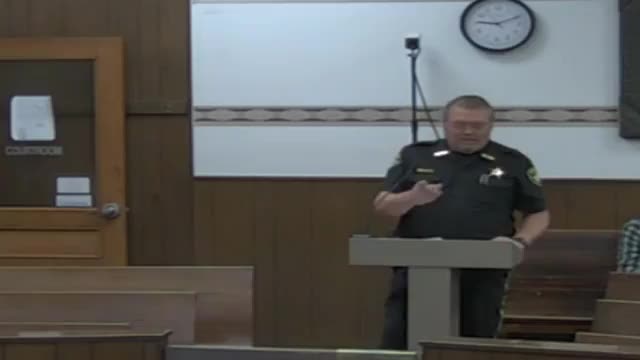
The sheriff explained the county has sought uses for opioid settlement money and that a body scanner — which can detect contraband on or inside people entering a jail — is an option. “One of the things we did look at a year ago was a body scanner,” the sheriff said. He told the commission he now has quotes from four vendors and “they are in that hundred and $50,000 range, all of them.”
The sheriff said he checked with state officials and with local contacts and that opioid settlement funds can be used for equipment intended to combat the opioid epidemic. He described a vendor, STVS, whose package he said included shipping, installation, training, a 100% covered warranty (with the vendor distinguishing a two-year warranty for the x-ray portion and a one-year warranty for the scanner unit), software upgrades and preventative maintenance for the covered warranty period.
Commissioners pressed for additional details before a purchase. One asked about ongoing costs; the sheriff said he did not yet have a firm figure for post-warranty maintenance and would obtain that information. He also said vendors indicated on-site corrective maintenance would be available with a guaranteed callback timeline and a promised 48-hour on-site response window for issues requiring a visit. Technical questions included annual calibration and radiation containment checks performed by the vendor before installation.
The sheriff said a likely location for the unit would be the county's former dispatch area, now available after dispatch moved, so that incoming arrestees could be scanned before entering booking. He said vendors told him the machines typically last about seven to 10 years.
Commissioners and staff also discussed operational and downstream effects: whether an arrestee who needs hospital monitoring (for example after swallowing contraband) would create county medical costs (the sheriff said that if a person had not been accepted into the jail, the county likely would not bear that cost) and training capacity (one quoted vendor offered training for up to 40 operators and 10 supervisors). The sheriff said he was not asking for a decision that day and would bring back a detailed cost breakdown, including projected maintenance and recalibration expenses.
The commission did not vote on a purchase; staff will return with firm vendor prices, maintenance and lifecycle cost estimates, and any legal or regulatory requirements tied to using opioid settlement funds for the equipment.
A follow-up item is expected on a future agenda once staff collects warranty, maintenance and funding details.