Get Full Government Meeting Transcripts, Videos, & Alerts Forever!
Get email alerts on the Technology Costs topic
No spam. Unsubscribe anytime.
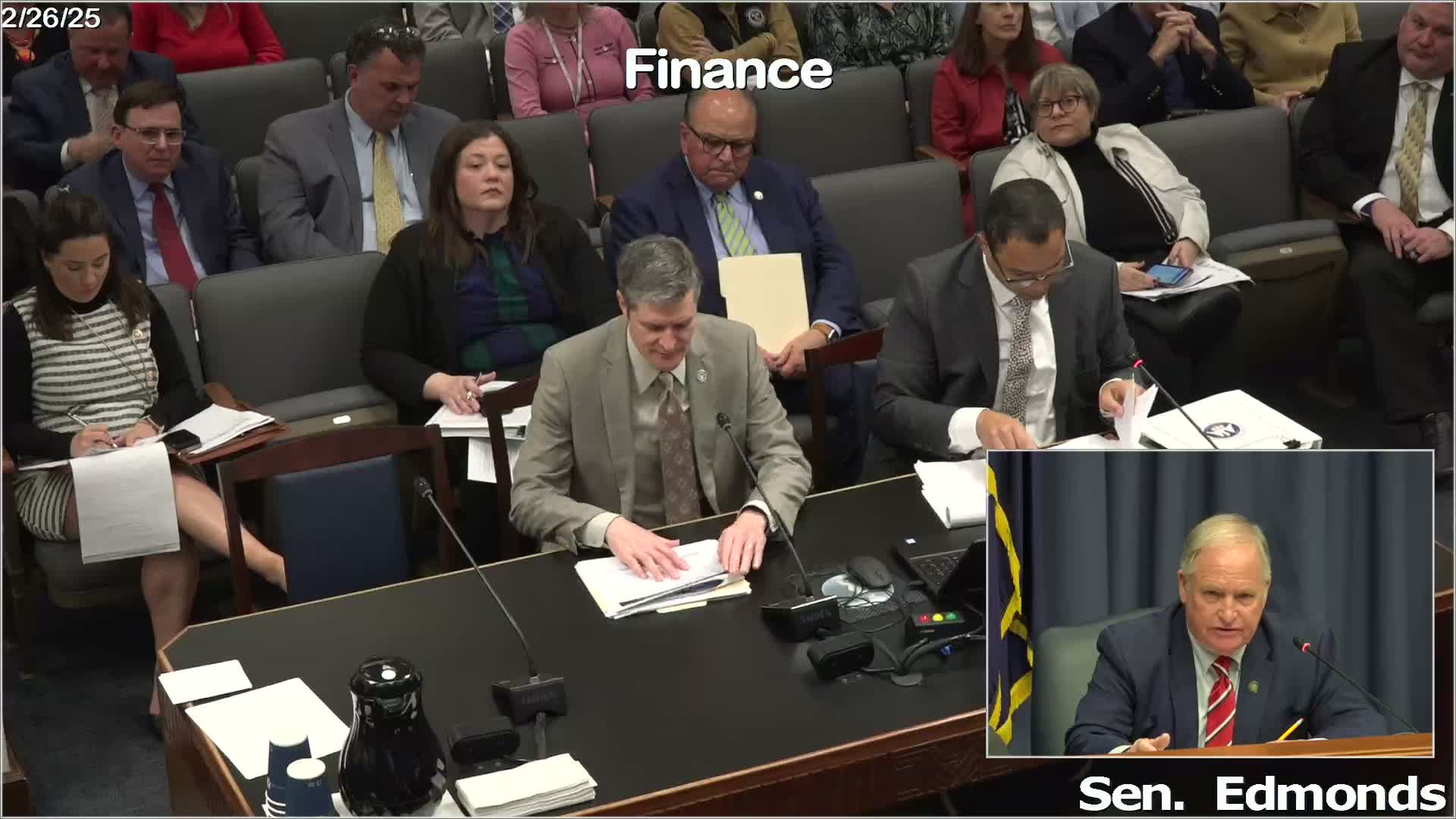
Senators press for clearer Office of Technology Services billing after multiple agency complaints
Summary
Multiple senators told the Finance Committee they want a clearer, itemized account of what agencies pay OTS and why. Officials and agency budget staff said OTS charges include three distinct categories — base rates, utilization and direct‑bill projects — and urged a consolidated, agency‑by‑agency breakdown for committee review.
Several senators raised the cost and transparency of the Office of Technology Services (OTS) during department budget presentations, urging a single, agency‑by‑agency breakdown of OTS charges.
What lawmakers asked for
Sen. Ryan Presley and other members said recurring OTS line items in many agencies’ presentations were difficult to evaluate in committee and asked for a standardized summary that separates: (1) OTS negotiated rates (lines of service), (2) utilization (per‑line or per‑seat charges such as phone lines or email storage) and (3) direct bill or special‑project charges (major software projects or agency‑specific systems).
“My computer is older than four years…when I talk to state employees, they’re not necessarily saying we’ve got the best technology in the world,” Sen. Presley said. He asked for an agency breakdown that lists hardware counts, software subscriptions, and the direct‑billing projects OTS is administering for each office.
Administration and agency responses
- Patrick Goldsmith, deputy commissioner of administration, told senators that OTS billing is often composed of three pieces — negotiated rates, utilization and direct bills for agency software — and asked committees to distinguish those parts when they request detail.
- Multiple agency presenters (Division of Administration, DOA; Department of Culture, Recreation & Tourism; Office of Financial Institutions and others) said they would cooperate. Commissioner Barra and DOA staff said line‑items could look large because DOA often hosts or aggregates services used across many agencies.
Why this matters
Senators described OTS as a common source of constituent questions and local confusion about whether the state is receiving value from the amounts charged. Committee members said a compact, comparable table — by agency and by cost category — would allow lawmakers to evaluate whether OTS is negotiating favorable rates and whether certain costs should be renegotiated or centralized differently.
Clarifying details raised in session
- OTS invoices typically include: base lines‑of‑service fees (e.g., hosted email, directory services), utilization charges for agency‑specific volumes (phones, seats), and direct‑bill project costs (large software builds for an agency, which can be many millions of dollars).
- Several agencies noted they have special‑purpose purchases that are not OTS commodity services (for example, field‑specialized equipment used by CPRA and state parks), and those should be distinguished from OTS charges for standard IT services.
Next steps requested by senators
Sen. Presley and others asked Senate Fiscal Services to request from OTS and from each agency a summarized, comparable statement showing three columns for each agency: (1) base OTS lines of service, (2) utilization/direct ongoing charges, and (3) direct‑bill or special projects (with project name and dollar amount). Committee staff said they will request a standardized report for follow‑up.
Ending
Committee members said the review is intended to improve fiscal stewardship and increase transparency, not to second‑guess necessary cybersecurity or specialized software projects that agencies require.