Get Full Government Meeting Transcripts, Videos, & Alerts Forever!
Get email alerts on the State Budget topic
No spam. Unsubscribe anytime.
Administration presents 'standstill' executive budget; teacher pay raise excluded pending constitutional amendment
Summary
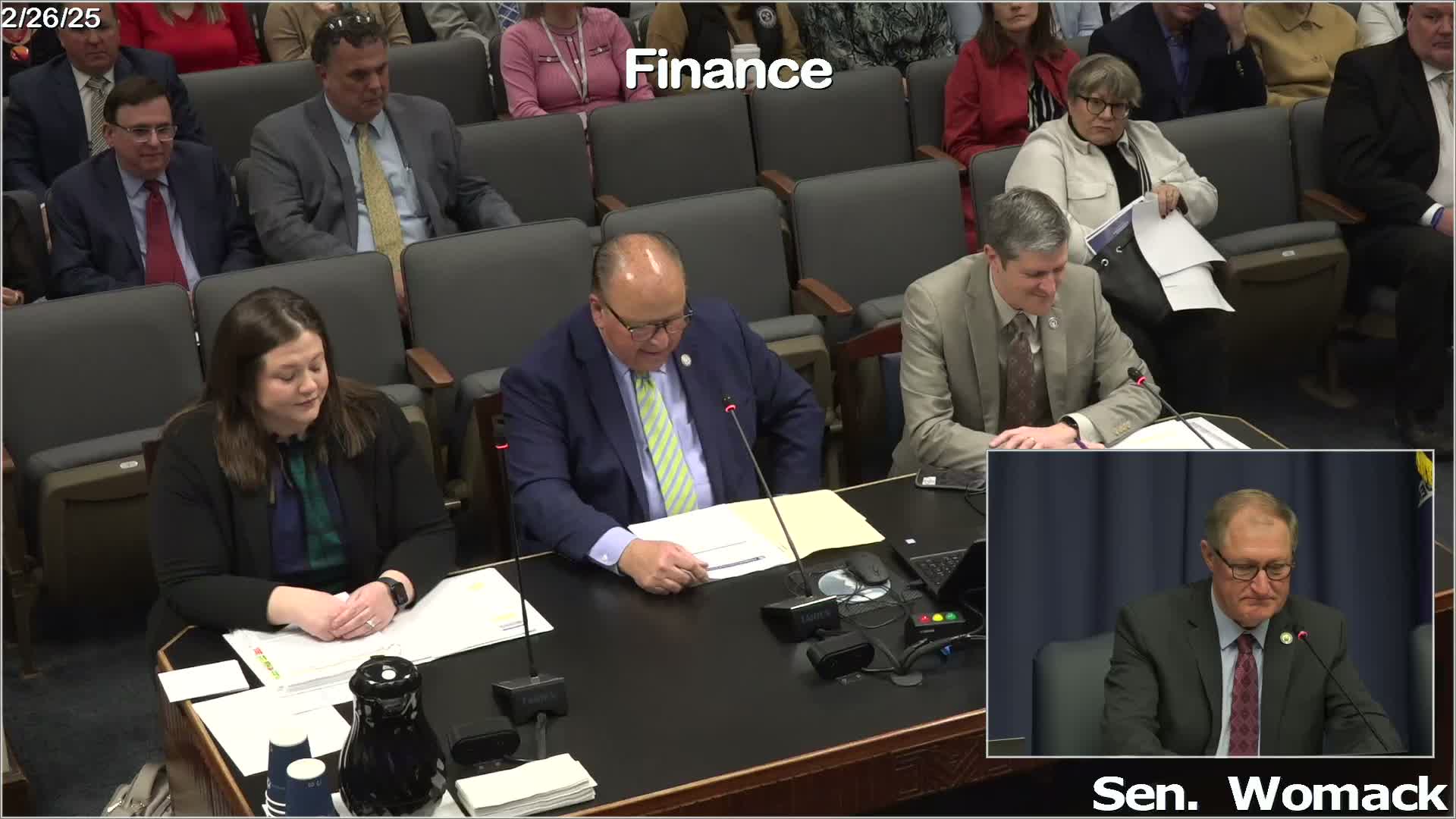
Commissioner of Administration Taylor Barra presented a “standstill” FY‑26 executive budget to the Senate Finance Committee that excludes a permanent $198 million teacher pay raise and avoids contingent new recurring spending tied to a constitutional amendment on the March ballot.
Commissioner of Administration Taylor Barra told the Senate Finance Committee that the governor’s FY‑26 executive budget is deliberately a “standstill” spending plan, prepared without contingency language tied to a constitutional amendment voters will decide this month. “We’re not gonna do the whole presentation again, rest assured. But, I do wanna hit some of the high points … we’re not gonna do the whole presentation again, rest assured. But, I do wanna hit some of the high points,” Barra said as he opened the department’s overview.
The budget is built on the Revenue Estimating Conference (REC) revenue forecast and a small REC change in collections; Deputy Commissioner Patrick Goldsmith told senators REC projected essentially flat revenues, which constrained state general fund available for new recurring commitments.
Why it matters: the administration designed the proposal to avoid new recurring spending that would depend on a pending constitutional amendment. If the amendment fails, the budget as presented will not include several high‑profile items supporters have sought.
Big picture and notable inclusions/exclusions
- Teacher pay raise: Barra said the legislature’s desired permanent teacher pay raise — roughly $198 million — is not included in the FY‑26 standstill budget because it was funded last year as a stipend and the administration did not build a permanent appropriation into the base. Barra said the stipend amount “is not included in this standstill budget.”
- Other K‑12 items: The administration did include last year’s differential pay for hard‑to‑staff subjects and high‑dose tutoring dollars. Those items “we had room to include,” Barra said.
- Voucher and scholarship funding: The executive budget adds $50 million for the Louisiana Gator scholarship program at the governor’s request, on top of the existing voucher program appropriation in the $43.46 million range. Barra said the extra $50 million is intended to fund another “roughly 5,300 to 5,500 additional scholarships” based on current applications and an application process that began March 1.
- Agency and program highlights: The Department of Economic Development received $11.1 million for a multi‑year redesign and technology updates; the budget also contains required nursing‑home rebate payments and targeted funding increases for state police, Louisiana State Police, and Wildlife & Fisheries to cover overtime and other costs tied to large public events and the Jan. 1 incidents that “escalated both of those events,” Barra told senators.
Surplus, stabilization and budget options
Barra reviewed last year’s “surplus” and how it is distributed by constitution. He said the surplus recognized at JLCB in January for FY‑24 was roughly $595 million (the transcript figures were read aloud by the commissioner). Because half of that amount is constitutionally reserved for pay‑down of unfunded liabilities and the budget stabilization (rainy day) fund, about $297 million is available for constitutionally allowed uses such as debt pay‑down, capital outlay and federally qualifying highway construction.
Sen. Edmonds pressed for detail on how the teacher pay raise would be implemented if the amendment passes. Goldsmith and Commissioner Barra said actuarial work would be required immediately after certification to determine the payout and the effect on local assessments; the state would first address the pension unfunded accrued liability to free up local levy capacity, then work with parish and local officials on final implementation and any additional state assistance to districts that remain short.
Other process notes
- The executive order that asked state agencies to identify efficiencies produced a collection of agency adjustments that are reflected in the standstill budget; DOA and other agencies returned lists of cost‑savings items that the administration then considered in building the FY‑26 request.
- Several senators asked for follow‑up detail on specific program line items and agency adjustments; the administration said departments will be prepared to discuss efficiency initiatives in committee hearings.
What’s next
Barra said if the amendment passes the REC will adjust collections and the administration will return with amendments or supplemental proposals as needed once actuarial and REC work is complete.
Ending
The presentation framed the FY‑26 request as a deliberately conservative plan that preserves the state’s flexibility while keeping base programs in place; several senators signaled they expect follow‑up hearings and possible amendments if the constitutional amendment changes the revenue picture.