Get Full Government Meeting Transcripts, Videos, & Alerts Forever!
Get email alerts on the Child Welfare Permanency topic
No spam. Unsubscribe anytime.
Judge keeps dual goal of reunification and adoption after Lenawee County review; sets June 2 hearing
Summary
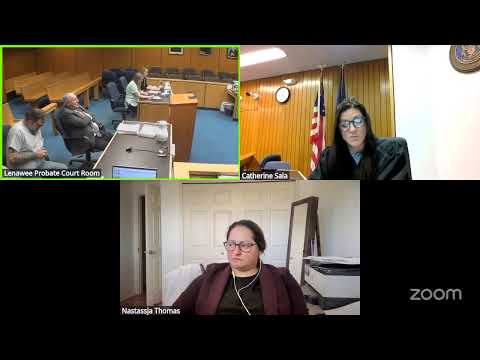
The court on Oct. 12 heard testimony that a young child in Lenawee County is “thriving” in foster care but that her parents have made limited, uneven progress toward reunification, prompting the department to ask the court to change the case goal to adoption and the judge to schedule a close follow-up review.
The court on Oct. 12 heard testimony that a young child in Lenawee County is “thriving” in foster care but that her parents have made limited, uneven progress toward reunification, prompting the department to ask the court to change the case goal to adoption and the judge to schedule a close follow-up review.
Brandy Delagarza, a foster care worker with Fostering Solutions, told the court the child is doing well at school and in the placement and that caregivers report the child has bonded with the household. “She is thriving not only at school but also in her placement,” Delagarza said. Delagarza also described a recent medical incident that was treated appropriately and noted the court previously granted an ex parte order allowing the placement to seek urgent care when parents would not agree.
The department’s attorney, Sasha Thomas, asked the court to change the permanency goal to adoption and to anticipate a termination petition, arguing the parents have shown little sustained compliance with their case service plan during the nine months the child has been in care. Michael McFarland, the attorney for the mother, and Michael Brooks, the attorney for Harold Hollis, urged more time and continued services; Brooks said his client had taken a drug test that day and disputed that there is evidence of ongoing substance use.
Delagarza testified the parents are “partially participating” in services, have changed therapists, have not completed a substance-use-disorder evaluation, and have failed to submit regular drug screens. She said one drug test had been completed that morning but that results are not immediate. Delagarza reported family team meetings occur every two weeks and that the caseworker completes a team-meeting form after each meeting. According to Delagarza, Brene Moore (a service provider) has recommended parenting time remain suspended until parents demonstrate stable, continuous compliance with their case service plan.
Parents disputed some allegations on the stand. Harold Hollis testified he is attending therapy and medication reviews and said, “I want her back.” Counsel and the court questioned both parents’ engagement, including missed or contested therapy contacts and differing explanations about missed appointments.
The court admitted the written court report with its attachments after counsel confirmed signed copies of the case service plans were provided at the hearing. The judge told the parents the next three months would be decisive: the court left the case goal as a dual goal of reunification and adoption for now but warned that if the parents do not make sufficient progress by the next review, the court will convert the goal to adoption and order the department to file a termination petition within 28 days of that review.
The judge set the next review and permanency-planning hearing for June 2 at 1:30 p.m. The child will remain in the current placement as the court found it to be the least restrictive, safest arrangement at this time.