Get Full Government Meeting Transcripts, Videos, & Alerts Forever!
Get email alerts on the Parenting Time topic
No spam. Unsubscribe anytime.
Judge keeps parenting time suspended for Lenawee County mother pending therapeutic visits
Summary
In a review and permanency-planning hearing, the Lenawee County Probate & Juvenile Court kept reunification as the goal for mother Kirsten Miller but ordered parenting time suspended until a therapeutic supervisor evaluates the case; the court set the next review for June 2 and consolidated the father’s review for April 15.
A judge in Lenawee County Probate & Juvenile Court reviewed the case of mother Kirsten Miller and her three children and continued reunification as the goal but kept parenting time suspended until a qualified therapeutic supervisor reviews the trauma assessments and parenting-time recommendations.
The court said the children have shown improvement in foster care and that reinstating visits now could reverse recent gains. “I am not inclined to allow the parent time to continue at this juncture,” the judge said, noting trauma-assessment findings and supervisors’ observations about the oldest child’s behavior after visits.
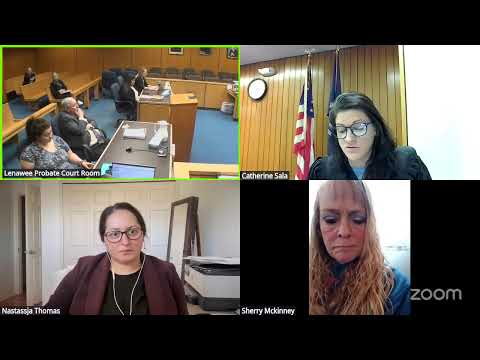
The hearing focused on trauma assessments, parenting-time recommendations and the services Miller has engaged in since the children were removed from her care on Nov. 21, 2024. Nicole Underwood, the guardian ad litem for the children, told the court: “At this time, we are asking the court to continue, with the, goal of reunification.” Foster caregiver Sherry McKinney described the children’s stabilization in placement: “They've come a long way,” she said, adding that the oldest child in particular has become calmer and better able to use classroom strategies to regulate his behavior.
Court records and testimony show the children remain in foster placement since removal. Agency witnesses and the CTAC trauma assessors reported that the oldest child shows significant behavioral issues that increase immediately after parenting time and that the middle child has continued speech and developmental needs; the youngest child is described as progressing but in need of occupational therapy and other early-intervention services. The judge cited a CTAC finding that the oldest child may require individual therapy before any visits move forward and noted reported physical signs consistent with an allegation that the oldest was pinched during a supervised visit, which the court found to affect credibility assessments.
Agency staff reported that Miller has participated in a psychological evaluation, started counseling with Counseling of Lenawee, completed some online parenting classes, and is pursuing housing and employment. The foster-care agency told the court it will convene a family team meeting within about two weeks to discuss the trauma-assessment recommendations and a structured plan for any future visits. The department asked for discretion to reinstate visits on a limited basis only after safeguards and a therapeutic plan are in place.
The judge admitted agency packets submitted Feb. 7 and March 4 into the record and left them available to the father’s counsel. The court scheduled the mother’s next review and emergency-planning hearing for 10:30 a.m. on Monday, June 2, and separately consolidated the father Dustin King’s first regular review for April 15 at 2:30 p.m. The judge ordered that parenting time remain suspended until a supervised therapeutic visitation provider—given the CTAC assessments, parenting-time recommendations and case materials—evaluates the family and recommends a plan. If a provider recommends therapeutic visitation, the department was directed to notify counsel and the court.
The court reiterated that reunification remains the stated goal but warned that substantial, demonstrable progress will be required in the next three months for reunification to remain viable. The judge emphasized the children's current stabilization in placement and the need for therapeutic and educational services to address developmental delays and behavioral concerns before unsupervised or routine parenting time is resumed.
Copies of the court report and exhibits were to be made available after the hearing. The court permitted caregivers to take the children across state lines for routine family activities if caregivers and the guardian ad litem agree and if the visitation plan allows it.