Get Full Government Meeting Transcripts, Videos, & Alerts Forever!
Get email alerts on the Photo Enforcement Ordinance topic
No spam. Unsubscribe anytime.
Milton updates automated safety camera ordinance; revenue uses narrowed, special fund planned
Summary
City staff and the police chief presented an update to Milton Municipal Code 10.46 to align with new state law restricting how automated safety camera revenue may be used; council directed staff to create a dedicated special revenue fund and will consider a budget amendment to reflect the change.
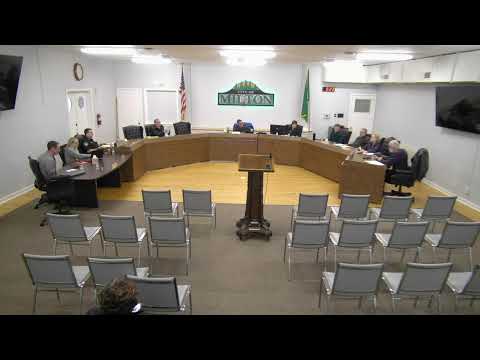
Milton staff presented an update to the city's automated safety camera ordinance (Ordinance 2107-25, amending MMC 10.46) on March 10 to conform the municipal code to recent state legislation that restricts how revenue generated by camera enforcement may be used.
"There has been legislation that has changed and our ordinance had become outdated," Police Chief Fernandez told council while introducing the clean and redline copies of the ordinance revisions. Staff said the changes tighten allowable uses for camera revenue and require the city to dedicate receipts to a specific purpose, rather than depositing them into the general fund.
Council members asked staff to clarify permitted uses and mechanics. Council member Strader noted the new law dictates where money from cameras can be spent, such as street improvements, sidewalks and high'speed areas; staff confirmed those limits are reflected in the draft language. "That was one of the biggest changes that we had to make sure that is that we included in our language," staff said.
Staff said they will likely create a special revenue fund for camera receipts (similar to existing special funds such as traffic impact fees) and will return with a budget amendment to implement that fund. Director Robick warned that 25% of some camera-related revenue will be remitted back to a state fund, requiring the city to remit funds as the law specifies.
The council and staff discussed several operational points: - Administrative costs tied to running the camera program, including processing infractions and program-related court costs, appear eligible as allowed uses under the new law; staff said they have discussed court and administrative cost treatment with their attorney and with Municipal Research and Services Center counsel. - Current state guidance does not clearly permit using camera revenue to pay for police officer salaries or to fund additional sworn positions; Chief Fernandez and staff said conversations with attorneys indicated that paying officer salaries specifically for enforcement is not an allowable expenditure under the current language. - Permanent camera installation is expected to follow the city's traffic calming program: staff will conduct traffic studies or other traffic calming analyses and present options (physical changes, targeted enforcement, or cameras) to council before installing cameras in a given location. - Signage is required where cameras operate; for park speed zones, city staff said they will post required notice signs and may expand advisory signage in other areas even where cameras are not installed.
Council members sought examples of allowed projects and asked whether sidewalks would qualify. Staff noted the law references a "complete streets" approach (citing RCW 47.04.010) and confirmed sidewalks and related pedestrian improvements are eligible uses under that rubric. Staff provided a construction cost range for sidewalks of roughly $250'$300 per linear foot, subject to site conditions and additional infrastructure needs.
Ending
Staff will return with a budget amendment to create a special revenue fund for camera receipts and with more detailed examples of projects that qualify under the new law. Council did not take final action on the ordinance at the study session; Chief Fernandez said the ordinance is expected to return for adoption at the next formal council meeting.