Get Full Government Meeting Transcripts, Videos, & Alerts Forever!
Get email alerts on the Property Taxes Homestead Exemption topic
No spam. Unsubscribe anytime.
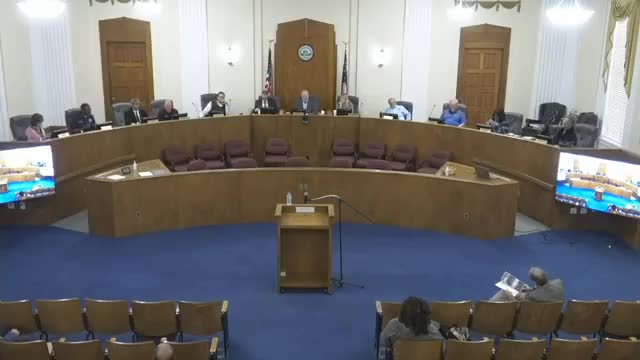
Macon-Bibb holds first of three hearings on whether to opt out of Georgia House Bill 581
Summary
The Macon-Bibb County Commission held the first of three required public hearings Monday evening on whether the county should opt out of House Bill 581, a new state law provision that would create a ‘‘floating’’ homestead exemption and change local sales-tax limits.
The Macon-Bibb County Commission held the first of three required public hearings Monday evening on whether the county should opt out of House Bill 581, a new state law provision that would create a ‘‘floating’’ homestead exemption and change local sales-tax limits.
The hearing drew a short presentation from county counsel and three public speakers, all of whom urged the commission to opt out. Commissioners did not take a vote; two additional hearings are scheduled for the following day (9 a.m. and 2 p.m.), after which commissioners said they may discuss and possibly vote on a resolution.
Attorney Lauren Schultz of James Bates, Brand and Gruver presented the county’s summary of House Bill 581 and related state guidance. She said the bill’s floating homestead exemption would be added on top of Macon-Bibb’s existing $7,000 flat homestead exemption and that, under the Department of Revenue guidance for implementation in 2025, the base-year fair-market values for properties entering the exemption would not change from 2024 to 2025. Schultz said the bill ties annual changes in the exemption to an inflationary measure set by the state revenue commissioner and noted that a separate bill, House Bill 92, had been passed by the Georgia House and was pending in the Senate; HB92 would extend the opt-out filing deadline from March 1 to March 31 if it becomes law.
Schultz walked commissioners through a household example showing modest annual tax differences under HB581 versus opting out, and presented county assessor estimates showing the scale of potential revenue impacts if the county remains in the program. The presentation said Macon-Bibb had about 23,000 homestead properties in 2024 and that homestead values increased sharply from 2023 to 2024; county assessor calculations included an estimated $8 million to $13 million potential reduction in tax revenue in an unspecified near-term projection and larger long-term reductions described in the presentation. Schultz also explained that state changes to local sales-tax law tied to HB581 limit the total additional local sales tax jurisdictions may levy (above existing local-option and SPLOST collections) to 2 percent, and that because Macon-Bibb already levies certain local-option sales taxes the county would be unable to use the new sales-tax mechanism to offset lost property-tax revenue without additional changes.
Three public speakers — former Mayor Robert Rickert, Commissioner Lane Lucas (speaking as a citizen), and Russell Whitford — urged the commission to opt out. Rickert warned that ‘‘using a statewide rate of inflation . . . may not match or factor in what’s happening in Macon,’’ and told commissioners that decoupling exemptions from fair-market value risks revenue instability for both county government and the school system. Lucas called the law ‘‘ill advised’’ and said the school board had already opted out. Whitford expressed support for an opt-out and offered unrelated comments about conservation easements.
Commission staff and the mayor reiterated the schedule for the required three hearings and said a resolution to opt out (if commissioners choose that route) must currently be filed by March 1 unless HB92 is enacted, which would extend the deadline to March 31. No formal action was taken at Monday’s hearing; commissioners adjourned after closing the public-comment portion.
The commission will reconvene for the second and third required hearings at 9 a.m. and 2 p.m. the following day, after which commissioners said they will discuss and may vote on an opt-out resolution.