Get Full Government Meeting Transcripts, Videos, & Alerts Forever!
Get email alerts on the Police Station Construction topic
No spam. Unsubscribe anytime.
New Canaan committee: permanent power installed, finish work and site access remain; contingency funds reported available
Summary
Committee meeting update: transformer installed Feb. 6 restored permanent power; MEP startups under way and TCO pushed from mid‑February to March. Committee reviewed remaining contingency and holds, and discussed generator screening, traffic flow and EMS access.
The New Canaan Building Committee received an update Thursday that permanent power was restored to the police station construction site after the transformer was installed Feb. 6, and that mechanical/electrical/plumbing (MEP) startups and finish work will determine the final temporary certificate of occupancy (TCO) date now targeted for March.
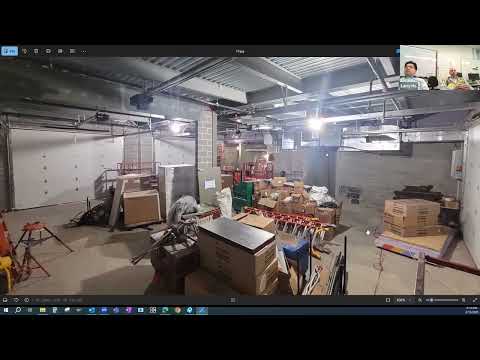
The update came during the committee’s Feb. 27 hybrid meeting, where staff described progress photos, schedule adjustments and remaining budget contingency. The discussion also covered site security and access changes tied to a reversed traffic flow, generator placement and landscaping that the committee said will require additional signage and coordination with emergency medical services (EMS).
Tanya, a staff member, said the transformer installation on Feb. 6 brought permanent power to the site and marked “a good turning point for the project.” She added that permanent lights are now on, temporary lighting will be removed, and crews are roughly “halfway” through MEP startups: “we have permanent lights on now. We get rid of our temporary lighting … and we can close-up ceilings,” Tanya said. Because the fire protection system and sprinkler work are not fully online, she said the boilers are not being run continuously: “We have 1 boiler we can use, but we don't wanna have a boiler running without the sprinkler system online.”
Scott, who walked the committee through a photo montage, described interior finishes in the stairwells, lobby, locker rooms and evidence storage, and noted insulation in the attic that meets the required R‑48 performance: “it's about 28 inches of insulation up there,” Scott said. He said flooring, millwork and door hardware are largely installed and that crews are protecting finished surfaces while final commissioning and balancing are completed.
On schedule, Tanya and other staff said the TCO target moved from the middle of February to March to accommodate startup teams’ availability and residual commissioning work. She emphasized that the remaining work is primarily finishes, system startups, balancing and final cleaning prior to inspections and the TCO.
The committee also reviewed progress on pending change orders, purchase change orders (PCOs) and hold items. Tanya reported January billings returned to about $1.7 million after a December dip and walked through a PCO/allowance log. She said buyout savings and rounding adjustments moved small sums into contingency and that certain rework items (notably MEP rerouting) are being covered by hold money where possible.
On contingency, Tanya and other participants gave multiple figures during the meeting. Tanya said there was “call it $347,000 left in our contingency,” and later noted about $190,000 remained in hold allowances to address change work. Another participant reported a separate figure of $846,000 in a different contingency account when asked; committee members discussed how those numbers relate to contract items and Turner-related adjustments. The committee did not adopt a new funding action at the meeting; staff said the numbers will be reconciled in reports and future meetings.
The group also discussed site access and safety after the change in the primary entrance and exit. Committee members said the reversed traffic flow should reduce siren and light impacts on nearby apartments but will require temporary and permanent signage so drivers learn the new pattern. Brian, a committee member, and others recommended a combination of temporary posts and later removal of extra signs once the public has adjusted.
Several members raised EMS access and coordination concerns for the new back‑lot routing. A committee member asked whether the back parking area would be sufficiently delineated so ambulances and fire apparatus have a clear “runway” for quick egress. Staff said the site will have gated access and that the technical gate/operators still require coordination with EMS and police to confirm device and key‑box arrangements.
Generator and transformer screening also came up. A staff speaker said the generator will be fenced with a locked chain‑link perimeter with vision slats and that arborvitae plantings will screen the equipment from view; bollards were noted as protection around the transformer. “There is fencing. We're gonna have fencing and a locked gate to get to the generator. So then the arborvitae will be on the outside of the fence,” one staff member said.
The committee approved the minutes from its Jan. 23 meeting by voice vote at the start of the session; no other formal votes or new contract awards were recorded.
Members said they expect more small change orders and final contingency adjustments as punch‑list and outside work (landscaping, planting and signage) are completed in spring. Staff and committee members agreed to update the committee on remaining punch‑list items and any items that could affect the TCO at the next meeting.
Information reported in this article comes from staff presentations, committee discussion and the meeting’s photo tour during the Feb. 27 New Canaan Building Committee meeting.