Get Full Government Meeting Transcripts, Videos, & Alerts Forever!
Get email alerts on the Pond Dredging topic
No spam. Unsubscribe anytime.
Inland Wetlands Commission approves small pond dredging at 89 South Bald Hill with two conditions
Summary
The commission voted unanimously to permit machine dredging of a stone-lined pond at 89 South Bald Hill, imposing two special conditions: removal of on-site debris and use of non–pressure-treated materials for the temporary wetland crossing.
The New Canaan Inland Wetlands Commission on Monday approved an application to machine-dredge a pond at 89 South Bald Hill, authorizing removal of accumulated sediment with conditions intended to limit wetland harm.
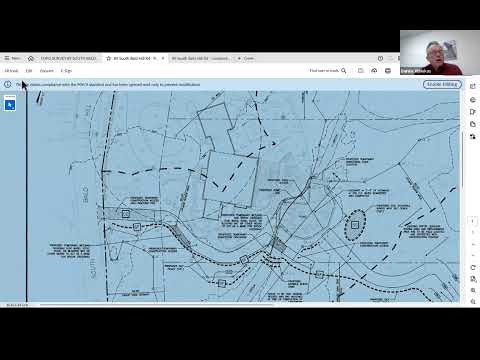
The project applicant asked to remove about 2 to 3 feet of accumulated material from a small, stone-lined pond and to place the dewatered spoils on the east side of the pond. Dynas Verbicus, a professional engineer with Artel Engineering Group, said the pond is “pretty pretty small” and described a plan that uses a single excavator, a temporary construction entrance from the road and short, temporary crossings across about 25 square feet of wetland to permit machine access.
The commission’s staff and members pressed the applicant for mitigation details and cleanup. Kathleen Holland, wetland staff, recommended the commission require removal of debris observed at the access point and that materials used for the temporary wetland crossing be non–pressure-treated. Commissioners also asked how long the work would take and how equipment would be managed; Verbicus replied the contractor expects one to two weeks and that the excavator would remain on site until the work was finished.
The commission approved the application with the two conditions recommended by staff: (1) removal of garden and construction debris from the temporary access area, and (2) use of non–pressure-treated plywood or mats for the temporary crossing. The permit requires installation of silt fence around the excavation and spoil area, on-site dewatering and seeding of the disturbed areas after stabilization.
Commission discussion noted alternatives were considered but that routing access from other sides would require longer wetland crossings or greater tree and site disturbance. Commissioners also confirmed that the contractor would stage work when brook flows are lowest and that only one machine is anticipated to perform the dredging.
The commission recorded the vote as unanimous of the seated members and closed the item.
The permit allows the short-term in‑water work and requires restoration and monitoring per the conditions imposed; the file will include the staff-recommended construction details and the two conditions documented at the meeting.