Get Full Government Meeting Transcripts, Videos, & Alerts Forever!
Get email alerts on the Traffic Safety topic
No spam. Unsubscribe anytime.
Public Safety Commission refers Garfield–Clark intersection to Mobility & Transportation after safety review
Summary
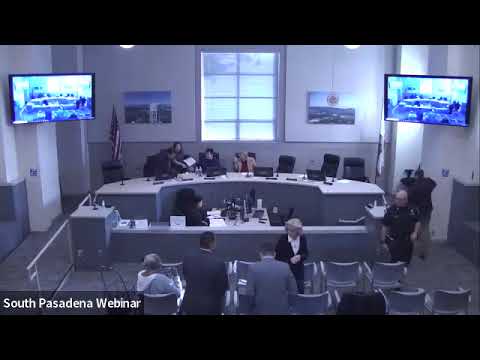
The South Pasadena Public Safety Commission voted Dec. 9 to continue oversight of enforcement at Garfield Avenue and Clark Place and to refer engineering options for that intersection to the Mobility & Transportation Commission, after officers reported repeated stop-sign violations and residents described frequent near-misses.
On Dec. 9, 2024, the South Pasadena Public Safety Commission voted to continue hearing enforcement updates for the Garfield Avenue and Clark Place intersection and formally referred engineering and traffic-calming options to the city’s Mobility & Transportation Commission, with a requested update by the second quarter of 2025.
The referral followed a presentation from Motor Officer Mike Sanchez of the Police Department’s traffic bureau, who summarized November enforcement and community complaints. Sanchez said his team issued 14 stop-sign citations at the intersection in November and that a regional, collaborative enforcement event on Nov. 19 produced about 45 citations during roughly a four-hour afternoon detail. “We wrote 45 citations approximately within a 4 hour window on the nineteenth in 1 day,” Sanchez said, noting most stops were for drivers failing to stop at the stop sign rather than failing to yield to pedestrians.
Residents and commissioners described the intersection as dangerous for pedestrians and children. One resident told the commission there are “many, many children crossing” from a nearby apartment pocket and called the site “an accident waiting to happen.” Commissioners and staff stressed that enforcement alone may not solve the problem and urged engineering review.
Ted Gerber, the city’s public works director, told the commission that state law restricts certain on-demand flashing beacons at stop-controlled intersections. “There’s a conflict in the state code that would prohibit using 1 of those push button type on demand devices,” Gerber said, adding that beacon installations can be costly because of electrical work, engineering and Americans with Disabilities Act ramping and that the city has other, less-expensive options to evaluate.
City staff estimated flashing beacons could range in cost into the tens of thousands of dollars; Gerber said other measures—advanced warning signs, improved markings, engineered bollards and temporary demonstrations—may be less expensive but must be evaluated for effectiveness. The police noted the posted speed limit on Garfield at the curve is 30 miles per hour.
Commissioners moved to retain jurisdiction over enforcement reporting while referring engineering evaluation to the Mobility & Transportation Commission; the motion passed in a roll-call vote. The commission asked staff to return with options and an update by the second quarter of 2025.
The commission also discussed short-term mitigations that can accompany engineering study—expanded enforcement patrols, public-education messaging and the use of changeable message signs or unoccupied vehicles to increase driver awareness. Police officials noted proactive enforcement and education have produced large short-term citation numbers at the location, but also warned that engineering changes are required to sustain safety improvements.