Get Full Government Meeting Transcripts, Videos, & Alerts Forever!
Get email alerts on the Homeless Outreach topic
No spam. Unsubscribe anytime.
South Pasadena police outline HOPE outreach, county mental‑health partnership and local trends in homelessness
Summary
Police and county mental‑health staff described daily HOPE outreach, MET‑team coordination and rising daytime incidents; the presentation listed local resource partners and gave demographic and service statistics for the unhoused population.
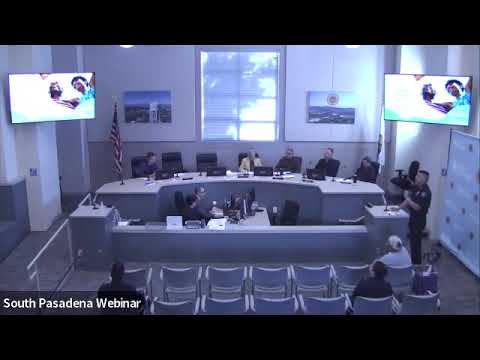
South Pasadena police told the Public Safety Commission their HOPE homeless outreach team, county mental‑health partners and regional teams address a small but visible unhoused population in the city, with most contacts involving mental‑health issues and substance use.
Lieutenant Shannon Robledo of the South Pasadena Police Department described the department’s HOPE (Homeless Outreach) team and said the city’s point‑in‑time estimate is about 14 people sleeping in the city on a typical night, rising to roughly 25–30 people during the day. “The other ones are transients that are coming to our city, using our public facilities,” Robledo said.
Robledo gave demographic and service figures: she said roughly 85 percent of the unhoused population identified in the city are male; males’ typical age range is about 38–65 and females’ ages 36–51. She told commissioners that about 80 percent of the identified unhoused have substance‑use histories, which she described as approximately 60 percent alcohol and 40 percent narcotics among those users, and that about 90 percent have mental‑health issues in some form.
Robledo reviewed partners and service frequency: the HOPE team operates daily; Los Angeles County Department of Mental Health’s MET (mental‑evaluation team) is available about four days a week and assigns a MET representative to South Pasadena one day a week; LAHSA (the Los Angeles Homeless Services Authority) outreach and the PATH Metro teams operate about five days a week; Holy Family Giving Bank provides weekday lunches; the regional HOST outreach team (funded through Measure H) coordinates multi‑agency responses across neighboring cities.
Soni (LA County Department of Mental Health, MET team) described co‑response work with officers: “My role involves a core response with law enforcement to resolve any mental‑health crises in the city,” she said, and added that MET can place holds, link people to substance‑use programs and follow up after hospital stays to reduce repeated crises.
Robledo and other speakers emphasized data tracking: the police department logs calls in its CAD system and shares monthly statistics with county partners; Flintridge and other contractors also track completions where applicable. Robledo called for community coordination and warned of regional spillover effects when neighboring jurisdictions change enforcement priorities. She said South Pasadena has considered seeking funding offsets from Los Angeles where policy changes cause displacement.
Commissioners and public speakers praised the department’s outreach and asked about library impacts, ban options for repeat problem patrons and the possibility of a dedicated full‑time outreach position. Robledo said all officers receive enhanced training in mental‑health engagement, the library now has a security guard and staff can ban repeat problem patrons from the facility for 30–365 days depending on severity.
The presentation was informational; commissioners asked staff for follow‑up data on counts, overtime costs for dedicated officers and the effectiveness of regional programs.