Get Full Government Meeting Transcripts, Videos, & Alerts Forever!
Get email alerts on the Property Crime Catalytic Converter Theft topic
No spam. Unsubscribe anytime.
South Pasadena police outline prevention steps as catalytic converter and copper‑wire thefts rise
Summary
Police briefed the Public Safety Commission on catalytic converter and copper‑wire thefts, prevention measures such as etching and cages, challenges prosecuting unserialized parts, and vulnerabilities at EV charging stations and construction sites. Commissioners discussed municipal ordinances, recycler regulation, and outreach.
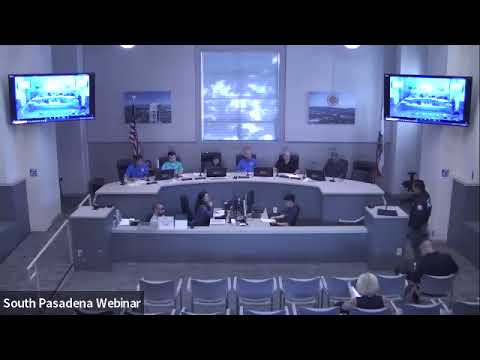
Chief Brian Solinski and Detective Carlos Petch told the Public Safety Commission that catalytic converter and copper‑wire thefts have been a growing problem locally and regionally and outlined prevention steps residents and businesses can take.
“This item is brought before you, at the request of some of the commissioners,” Chief Solinski said, and pointed to recent enforcement actions elsewhere: “Most recently, the Los Angeles Police Department, their heavy metal, theft task force arrested, 82 individuals, I believe, with over 2,000 pounds of copper wiring.”
Detective Carlos Petch described how easily thieves can remove catalytic converters and wire, noting on‑camera examples and the short time required to commit the theft. “Basically, you can just get a reciprocating saw, go underneath the vehicle… you could take no more than a minute and a half to, extract 1 of these catalytic converters,” Petch said. He said recyclers typically pay $50 to $250 per converter and then recover and resell the precious metals.
Both police speakers emphasized prevention: etching or engraving converters with a vehicle identification number or contact information, using welded metal shields (one example called a “cat cage”), and locking or securing wire at construction sites. Chief Solinski said South Pasadena runs an etch program that is free to residents, sells out quickly and is done in partnership with local garages that provide lifts for the process.
Police also warned about EV charging stations and commercial lighting junctions as targets. A commissioner recalled incidents where thieves stripped wiring from charging stations. Solinski said placement in well‑traveled, well‑lit locations reduces opportunity and cautioned that some junction boxes and lock boxes are still vulnerable to powerful cutting tools.
Commissioners pressed the department about enforcement and legal limits. Solinski explained a prosecution challenge: under California law the theft of a catalytic converter requires proof of specific intent — that the suspect intended to possess or had taken the property — and that unserialized parts complicate linking a recovered converter to a victim. He said agencies sometimes seize converters and seek proof of ownership before release, but district attorneys may decline to file charges when origin cannot be shown.
“We recommend, to have these items engraved or etched with either a VIN number of the vehicle or painting them to a certain color,” Detective Petch said, adding that recyclers are supposed to keep seller records — name, address, fingerprints and a photo — but compliance and enforcement are inconsistent.
Commissioners discussed municipal ordinances and city prosecution as possible policy responses. Chief Solinski said some Orange County cities obtained success with local measures, but Los Angeles County prosecutors have varying policies and that creating city prosecutor capacity poses legal and funding challenges. He said local and state legislative efforts are already underway and that state lawmakers such as Senator Anthony Portantino have been involved in legislative discussions about catalytic converter theft.
The department recommended resident reporting, neighborhood awareness, and continued outreach. Police promised to present the department’s 2023 crime report under the NIBRS (National Incident‑Based Reporting System) format at a future meeting to allow comparisons with neighboring jurisdictions.
Ending: No ordinance or legislative motion was adopted at the meeting. Commissioners encouraged continued etching events, improved outreach materials, and further comparison of local crime statistics to neighboring cities to support potential policy or budget requests.