Get Full Government Meeting Transcripts, Videos, & Alerts Forever!
Get email alerts on the Disaster Preparedness topic
No spam. Unsubscribe anytime.
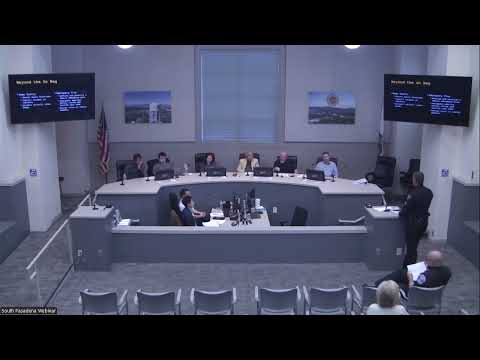
South Pasadena public safety officials urge household earthquake preparedness, point to communications gaps
Summary
Sergeant Andy Dubois and Fire Chief Greg Lloyd told the Public Safety Commission that households should prepare “go bags,” family plans and sign up for Connect South Pasadena; staff and commissioners raised concerns about communications resilience, CERT capacity and access in hillside neighborhoods.
Sergeant Andy Dubois, a night-shift patrol watch commander with the South Pasadena Police Department, told the Public Safety Commission that residents should prepare for earthquakes and other disasters by assembling “go bags,” practicing family evacuation plans and signing up for city emergency alerts.
“Knowing what to do during an earthquake, that's the important thing. The mantra today is drop, cover, and hold on,” Sergeant Dubois said. He emphasized that households should plan for at least three days of self-sufficiency and adapt kits for children, elders and pets.
Why it matters: City staff said local government and first responders will be overwhelmed in a large event, so individual and neighborhood preparedness can reduce life-safety risks and help emergency services prioritize life‑threatening needs. Fire Chief Greg Lloyd described how initial emergency response prioritizes apparatus readiness, structural checks and “windshield surveys” to identify the hardest-hit areas when 911 systems are damaged or inundated.
The commission discussed several gaps and next steps. Commissioner Beth Gee asked whether the city has predetermined triage locations and whether the police and fire departments can deliver CERT training and school presentations. Sergeant Dubois and Chief Lloyd said triage or staging locations will depend on damage and availability of facilities; they agreed to explore collaboration with the Unified School District and the American Red Cross for classroom-ready programs. Chief Lloyd said the city will help “augment, support, or assist” school training where the district’s programs exist.
Commissioners and staff pressed officials on communications resilience. Sergeant Dubois said the city uses Connect South Pasadena and Nixle for local push alerts and that he and another fire employee are managing the service; he plans to train watch commanders to use the system during an incident. Chief Lloyd described Emergency Operations Center (EOC) functions that include a joint information center (JIC) to coordinate messages and said the EOC would aim to present a unified public message during a larger incident.
Commissioners raised mobile and backup communications options. Commissioner Sancho asked about satellite or other alternate communications; Chief Lloyd said the department is reviewing mobile satellite Internet (for example, Starlink-style equipment) to provide a mobile communications hub and emphasized the need for redundancy if fixed facilities are damaged. He said proposals to equip a vehicle with mobile satellite Internet and hardened communications will be brought forward for consideration.
Hillside access and mapping also drew attention. Commissioners noted narrow streets in Monterey Hills and other neighborhoods that may hinder apparatus during “windshield surveys.” Chief Lloyd said the city is finishing brush-abatement work in some steep neighborhoods, is developing escape-route messaging for residents, and plans to discuss engineering and fire-code issues (including minimum street widths) with stakeholders to reduce access problems.
Resources and training: Dubois recommended CERT training with the fire department and apps such as MyShake, Nixle and Connect South Pasadena for alerts. He pointed residents toward Ready.gov and the Red Cross for go-bag checklists. Chief Lloyd and Dubois cautioned that some smartphone- or Wi‑Fi‑dependent tools require power and connectivity; the commission asked staff to explore public emergency Wi‑Fi hubs (library or other public buildings) and other resilience options.
Commission follow-up requests included: clearer assignments for who maintains Connect South Pasadena during a disaster; outreach plans for schools, seniors and people with disabilities; a GIS-informed inventory of neighborhood watch/block captains; and proposals for mobile communications equipment. Commissioners also asked staff to report back on plans to identify and reach vulnerable populations and ways to integrate CERT and block captain networks into response plans.
Ending: Officials scheduled the city’s Great ShakeOut earthquake drill on Oct. 17 (city staff drills and roll call), and said staff will return with more detailed proposals for communications resilience, school outreach and neighborhood mapping.