Get Full Government Meeting Transcripts, Videos, & Alerts Forever!
Get email alerts on the Finance Audit topic
No spam. Unsubscribe anytime.
Audit: Fond du Lac ends 2023–24 with smaller-than-budgeted deficit; special-education costs required multimillion-dollar transfers
Summary
District business staff told the board the 2023–24 audit shows an audited General Fund decrease of $2,158,925 — better than the $3.3 million deficit the board had adopted — while special-education expenses required roughly $9.1 million in transfers from the General Fund.
The Fond du Lac School District’s independent audit for fiscal year 2023–24 shows the district closed the year with a smaller deficit than it had originally budgeted, but continued dependence on general-fund transfers to cover special-education costs.
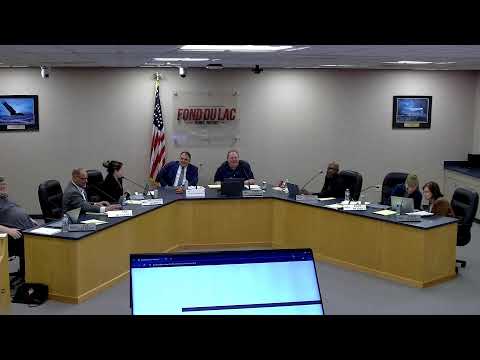
Mr. Gerlach, district business office staff member, presented the 2023–24 final audit report and explained that the independent audit was prepared by Ericsson and Associates and follows guidance from the Wisconsin Department of Public Instruction and applicable state and federal requirements. He said the audit verifies the district’s fiscal activity for the year that ended June 30, 2024, and that the audit documents will be posted on the district website.
The audited financial statements show the district’s General Fund balance decreased by $2,158,925 during 2023–24. That result was better than the budget the board had adopted for that year, which planned for a $3.3 million deficit. Gerlach said the audited beginning fund balance was about $25.8 million and the ending balance about $23.6 million, yielding the net change described in the audit.
The audit also identifies recurring structural pressure from special-education costs. The statement of revenues and expenditures for the special-education fund shows total expenditures of $16,000,241 for 2023–24 and an excess of expenditures over revenues that required a transfer from the General Fund of approximately $9,100,167. Gerlach and board members noted that state aid covers an estimated 30% of special-education costs and that districts routinely rely on general funds to make up the difference.
Board members asked for clarification on related items. Gerlach confirmed that the school district administers a state special-education voucher flow-through program for private placements; the voucher payments are reconciled through the state and are not recorded in the special-education fund (Fund 27). He said the voucher flow-through amount for the district in recent cycles was approximately $4.5 million and that the district is the taxing entity for those payments.
Gerlach said auditors identified two corrective-action items in the report (down from three the prior year). One recurring finding is that the district does not employ a staff member with professional certification required to prepare complex year-end financial statements; auditors assisted with some year-end journal entries. He said building that internal capacity remains a management objective.
Board members and staff discussed current-year budget posture. Gerlach said the board had adopted a $5.5 million deficit budget for the 2024–25 fiscal year. He stated that the district’s fiscal year runs July 1–June 30 and that the audit reflects only last fiscal year’s activity. Several board members thanked district staff for managing costs, and one board member said the audit supplies figures useful for legislative conversations about special-education funding.
No board action was required on the audit presentation; the item was presented for review and discussion only. The board recessed afterwards and later held a workshop on handbook updates.