Get Full Government Meeting Transcripts, Videos, & Alerts Forever!
Get email alerts on the Land Use Zoning topic
No spam. Unsubscribe anytime.
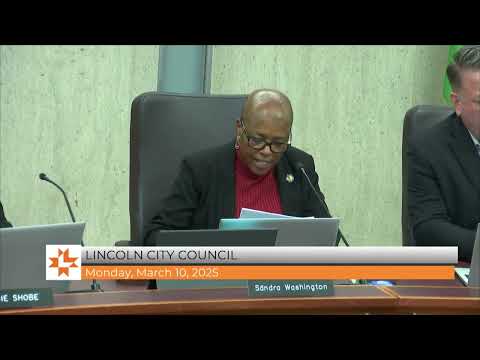
Council hears mixed-use H2 zoning package; planning staff and a property owner clash, council delays action
Summary
Planning staff outlined a package of zoning and text amendments to create an H2 mixed-use corridor around 40th and O streets, add residential uses, change alcohol separation rules and adopt streetscape design standards. A nearby property owner objected; council delayed action and will consider the items at a later meeting.
The Lincoln Planning Department presented a package of zoning changes and text amendments on Monday intended to establish an H2 mixed-use corridor along O Street and portions of 40th Street, add residential as an allowed use in H2, and adopt streetscape and pedestrian design standards.
David Carey, director of the Planning Department, and Paul Barnes, manager of long-range planning, said the package aims to encourage mixed-use redevelopment, improve pedestrian safety by moving sidewalks off the curb in some locations, revise alcohol-separation rules so certain hotels and food establishments can meet separation requirements, and permit more ‘‘light industrial’’ development by lowering minimum lot sizes in the I-3 district from 30 acres to 5 acres.
Barnes said the proposal would remove uses that are incompatible with residential development, such as certain heavy commercial or entertainment uses, and would align H2 alcohol separation rules with B2/B5 measurements so grocery stores and hotels could qualify for on-site alcohol sales in otherwise constrained locations.
The Planning Department said the H2 package is part of implementing the city’s comprehensive-plan recommendations to allow more walkable, mixed-use development in the 40th and O corridor.
Property owner and longtime neighborhood resident Alan Gossman told the council he opposes a proposal to rezone three small parcels near North 30th Street from their current zoning to RT (Residential Transitional). Gossman said the rezoning could sharply reduce his property value — he provided assessor figures and said similar changes would be a ‘‘taking’’ of retirement assets. He also said he received limited notice and wanted more direct outreach from staff.
City staff replied that multiple notices were mailed (a planning open house was held in September and follow-up notices were sent in January and during the zoning-action mailing phase) and that legal nonconforming uses and special permits provide avenues if an existing use does not match a new zoning designation.
The council moved to delay action on the H2 package (items 6H–6K) and related text amendments to give staff and property owners time to continue discussions. The motion to delay action until March 24 (action only) passed 6-0. Separate, noncontiguous H2-related rezones (including a proposal affecting North 70th Street and a Rokeby-area annexation) were discussed in the same session but will return for action later in the process.
Planning staff said the streetscape standards would apply when major redevelopment occurs or when the city undertakes a right-of-way project, and that constructing a new 10-foot planting strip with a sidewalk offset may require public access easements for parcels with tight property lines.
Carey said the I-3 minimum-lot-size change was designed to encourage light industrial uses on smaller parcels and would not permit heavy industrial uses within 300 feet of residential or other vulnerable uses; the planning team said reviews would still apply to ensure compatibility.
Council members and staff did not vote to adopt the texts or rezones Monday; they delayed action to allow further outreach and technical refinement.