Get Full Government Meeting Transcripts, Videos, & Alerts Forever!
Get email alerts on the Public Safety Regulation topic
No spam. Unsubscribe anytime.
Council clears first step to amend pawnbroker ordinance, sets $200 annual license fee
Summary
The council voted on first step to amend Chapter 270 (pawnbrokers) to remove an unspecified cap left blank in the 2016 ordinance and to formalize a $200 annual license fee; the first step passed on roll call. The ordinance retains background‑check language and the police commissioner's suitability discretion.
The Springfield City Council passed the first step Monday for an amendment to Chapter 270, Section 1 (pawnbrokers and second‑hand dealers). The proposed change removes an unintended blank in the 2016 ordinance that had left a limit on the number of licenses unspecified, and it formalizes the annual license fee at $200.
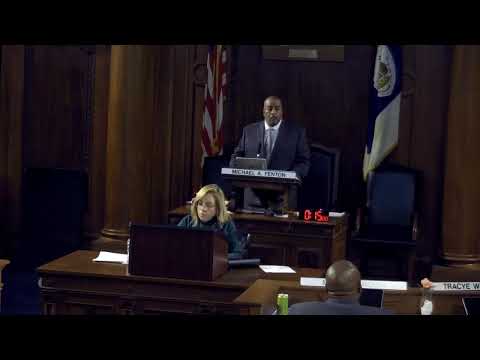
Councilor Fenton, the sponsor, said the blank was an inadvertent omission in the 2016 ordinance; the change removes the empty clause and sets the fee. He said the police department has been charging $200 for several years and the amendment aligns the ordinance text with current practice. The council retains an existing moratorium on new licenses; the amendment does not lift that moratorium.
Councilors asked about the item's background‑check requirements and the police commissioner's authority. The ordinance language requires that applicants and employees submit to a criminal background check on application and renewal; Councilor Kern asked whether that applied to owners and employees and was told it does. The police commissioner retains discretion to determine suitability, which city staff said reflects current department practice.
Councilor Delgado asked about the prior fee, which was $100; staff said the police department had been collecting $200 in recent years but that the ordinance text had not been updated. Councilors asked for clarity about the criteria the police commissioner uses to determine suitability; the law department noted the moratorium has limited licensing activity in recent years and formal suitability guidelines were not elaborated in the discussion.
The first step passed by roll call. Because this is an ordinance amendment, a second step (final passage) is required at a subsequent meeting.
Ending: The council advanced the ordinance amendment to formalize the license fee and remove the blanked cap; future steps will determine final language and whether to lift or extend the existing moratorium on new licenses.