Get Full Government Meeting Transcripts, Videos, & Alerts Forever!
Get email alerts on the Wireless Siting topic
No spam. Unsubscribe anytime.
Walla Walla enacts interim ban on new cell towers near homes; council orders study
Summary
The City Council adopted an interim zoning ordinance and moratorium to prohibit siting new wireless communication towers in or within 300 feet of residentially zoned property while staff studies permanent regulations.
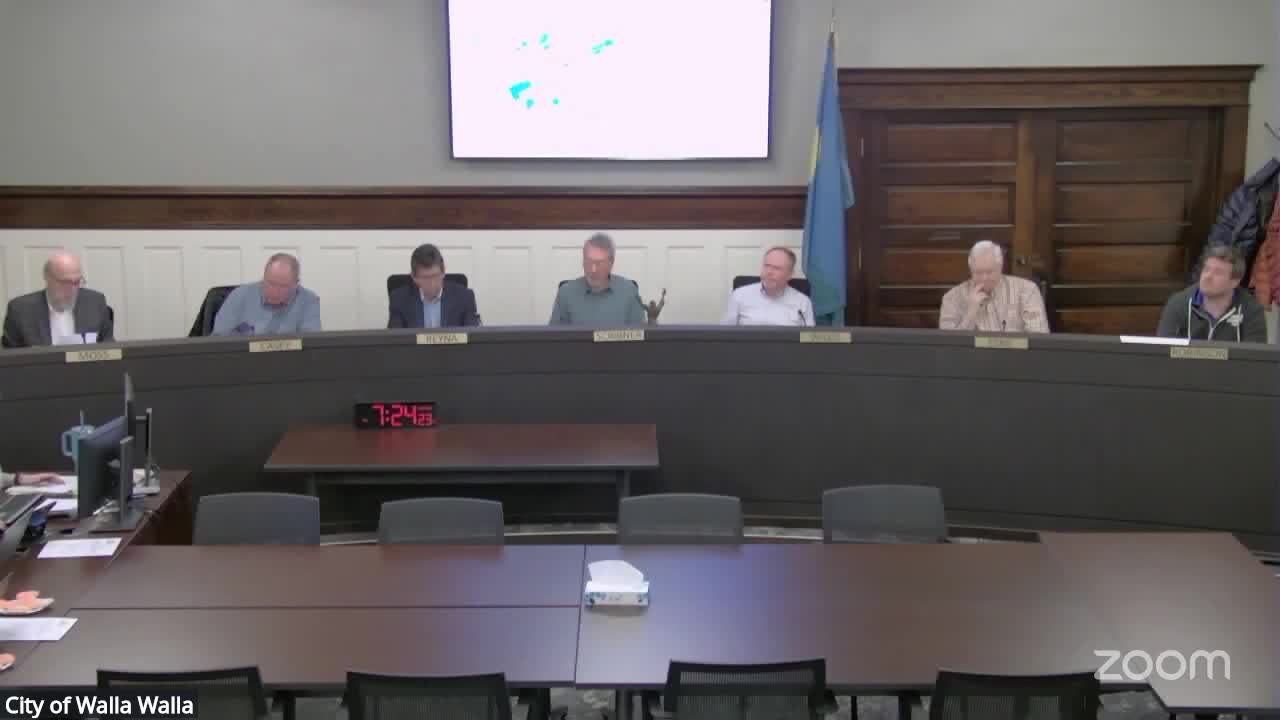
The Walla Walla City Council on Feb. 26 adopted Ordinance 2025-02, an interim zoning regulation that prohibits siting new wireless communication towers within residential zones or within 300 feet of residentially zoned properties and places a moratorium on new applications while staff completes a study.
The ordinance, introduced by City Attorney Tim Donaldson and discussed at a public hearing, is intended to preserve residential neighborhood character while the city commissions engineering work and drafts permanent zoning language. "It doesn't look like that cellular towers need to be sited in residential zones," Donaldson said during his presentation, citing a recent permit denial and related litigation involving a proposed tower at Blue Mountain Church.
Staff told the council the dispute produced technical analysis and alternative sites that would provide coverage without placing large towers in neighborhoods. Donaldson said the moratorium gives the city time to assemble radio‑frequency engineering studies and return to the council with a recommended permanent code by the end of the calendar year.
Residents who testified at the public hearing urged the council to approve the interim rules. Barbara Knudsen, who lives on Holm Avenue, said the city previously rejected an ill‑sited tower application and had alternatives available: "Industrial towers, such as cell towers, simply should not be allowed on residential property," she said. Other speakers described the cost, time and stress of opposing the earlier application and asked the council to prevent similar proposals in other neighborhoods.
Council members across the dais praised neighbors who participated in the process and supported the ordinance. Council Member Robinson said he would vote yes and noted the community's role in the policy outcome: "These were good people that legitimately didn't want something in their neighborhood that there was no clear reason why they should have had to have to begin with." Council Member Eskel asked why the council chose an interim ordinance rather than making a permanent change immediately; Donaldson said the interim measure formally initiates the code‑amendment process and allows time for the technical work and public process needed for a durable regulation.
The ordinance takes effect immediately. Council members voted unanimously to adopt the interim zoning regulation and moratorium.
The city will hire or contract radio‑frequency and network planning expertise to model alternatives and advise on permanent siting rules, staff said. The ordinance requires staff to return with a proposed permanent code amendment and a work plan for council review.