Get Full Government Meeting Transcripts, Videos, & Alerts Forever!
Get email alerts on the Regional Planning topic
No spam. Unsubscribe anytime.
YVCOG highlights crime-lab turnaround, transportation funding and housing assistance in 2024 report to Yakima council
Summary
Chris Weigenhagen, executive director of the Yakima Valley Council of Governments, presented YVCOG’s 2024 annual report to the Yakima City Council, noting faster local crime-lab processing, federal transportation awards, housing repair and down-payment programs, and planned workforce development efforts for 2025.
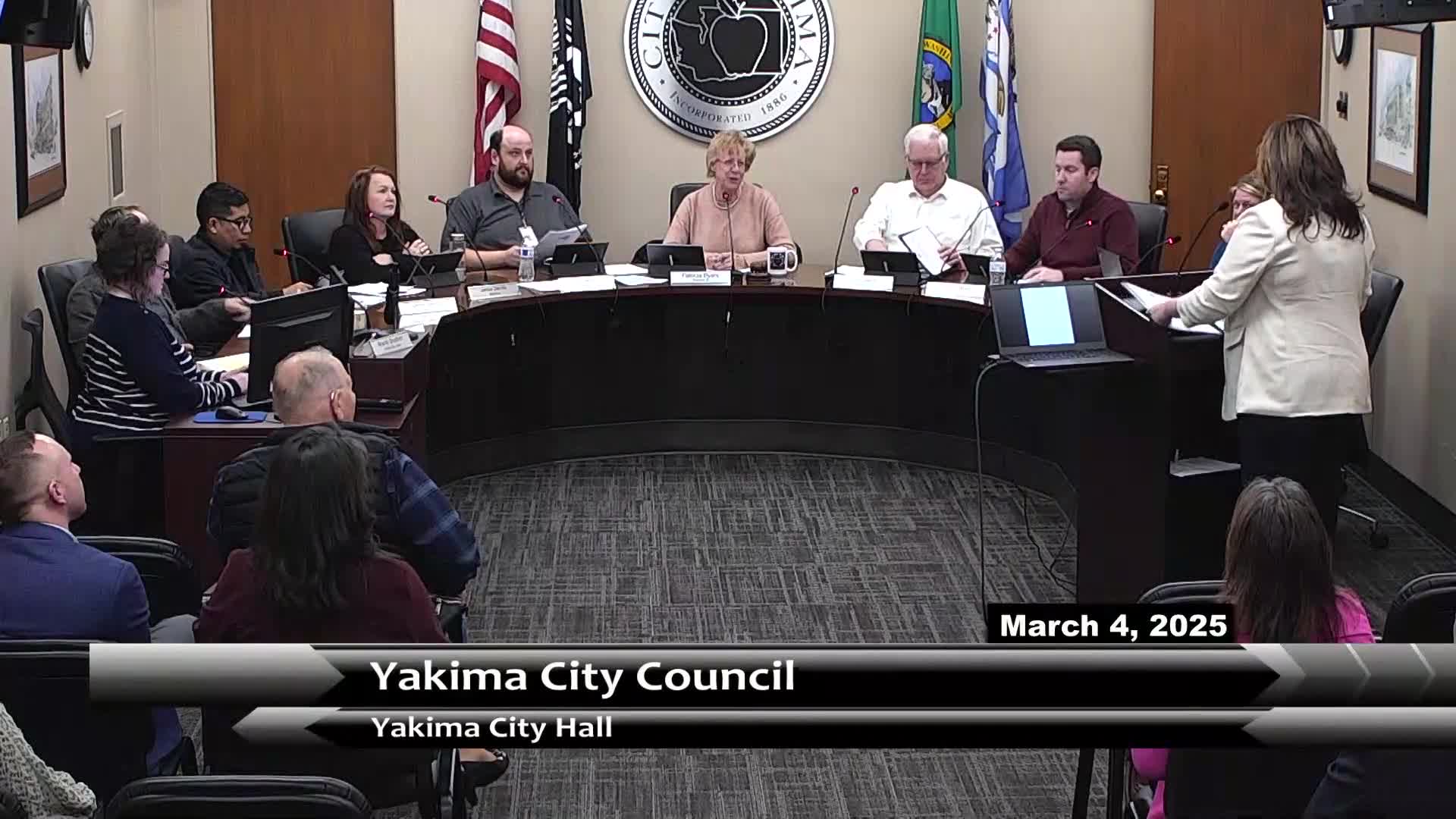
Chris Weigenhagen, executive director of the Yakima Valley Council of Governments, presented the agency’s 2024 annual report to the Yakima City Council on March 4, highlighting crime-lab capacity, regional transportation funding and housing programs.
Weigenhagen told the council the local crime lab has reduced turnaround time for NIBIN (ballistic-casing comparisons) to about 3½ days from submission to return, a change he said gives officers a “huge advantage” in investigations. YVCOG also is facilitating a rapid-DNA work group with multiple counties and the FBI to develop policies and procedures for rapid-DNA use.
On transportation, YVCOG reported $7,750,000 in federal funding awarded in 2024 and said members obligated $22,000,000 of that funding; Weigenhagen noted jurisdictions should be “shovel ready” before obligating funds because obligated funds carry a 10-year completion window. He said YVCOG adopted a required 20-year transportation plan and sponsored corridor and regional studies, including the State Route 12 corridor and passenger-rail restoration discussions.
YVCOG described housing services that include emergency home repairs for eligible owners (heating systems, wheelchair ramps and other limited repairs) and said it had received a $2,000,000 down-payment assistance grant. The council was told YVCOG received other grants and private support to equip the crime lab and continued to provide planning and GIS shared services for smaller jurisdictions.
Weigenhagen also highlighted planned 2025 priorities: workforce development for local government roles, $5,000,000 in transportation air-quality project funding (e.g., street sweepers), continued climate-element support for local comprehensive plans, and a Target Zero project focused on freeway fatalities.
Councilmembers asked questions about upcoming government-training classes; Weigenhagen said a “plain-talk” communications workshop will be held March 11 in Union Gap. The presentation concluded without a council vote.
Why this matters: YVCOG’s programs — crime-lab services, coordinated transportation planning and housing repairs — are regional functions that affect municipal planning, public safety data-sharing and grant readiness.