Get Full Government Meeting Transcripts, Videos, & Alerts Forever!
Get email alerts on the Human Trafficking topic
No spam. Unsubscribe anytime.
Senate advances tougher penalties for soliciting sex linked to human trafficking; prosecutors and defenders debate scope
Summary
Senate Bill 314, offered as part of a three-bill human-trafficking package, raises solicitation penalties and reclassifies first and subsequent offenses; the Judiciary Committee passed the bill after extended debate about prosecutorial burden and potential misuse.
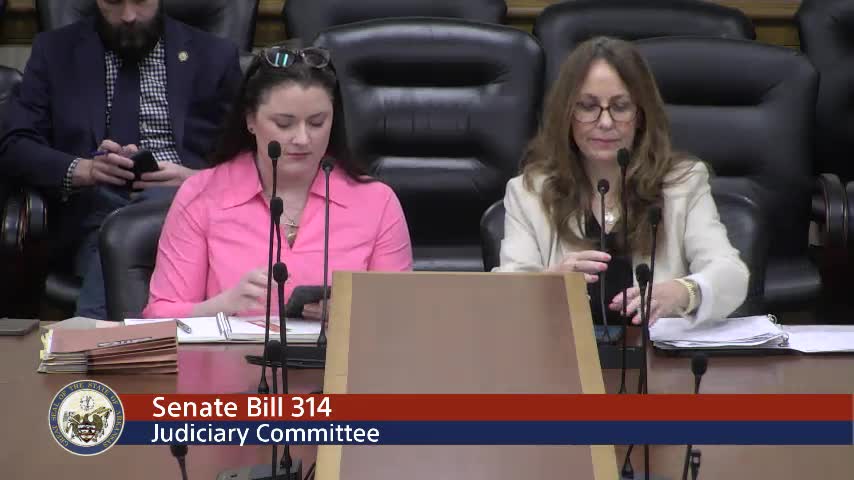
Senate Bill 314, introduced by Senator Missy Irvin, passed the Senate Judiciary Committee on May 20 after debate about how best to punish people who solicit sexual activity tied to trafficking. The committee approved the bill on a voice vote after a mediated discussion that included queries about charging standards and the AG's office explanation of prosecutorial aims.
Why it matters: The measure increases penalties for solicitation offenses and aims to cut demand that fuels human trafficking. Supporters described the bill as part of a coordinated three-bill effort; opponents warned the language could be overbroad and subject to abuse.
What the bill does: Senator Missy Irvin told committee members the bill raises the first offense to a class A misdemeanor (up from an unclassified misdemeanor) with maximum fines up to $2,500 and up to one year in jail and makes a second offense a class D felony in the bill's text as presented to the committee. The Attorney General's office explained the drafters sought to create a record (a misdemeanor conviction that is not easily expunged) so prosecutors can demonstrate a course of conduct on repeat offenders.
Committee debate and testimony: Senator Clark Tucker questioned whether the bill appropriately distinguishes one-off conduct from patterns consistent with trafficking, suggesting a temporal accumulation approach similar to retail-theft aggregation. Senator Irvin said she favors strong penalties for solicitation involving minors and that some trafficking crimes are already class Y felonies with life terms where a child is sold. Alex Benton of the Attorney General's Office told members that prosecutors prefer an approach that leaves a paper trail (a class A misdemeanor on first offense) so repeated conduct can be shown, rather than requiring prosecutors to prove multiple separate charges at once.
A registered opponent, Jeff Rosenzweig of the Arkansas Association of Criminal Defense Lawyers, argued the bill could felonize mere allegations because it does not require an act beyond the solicitation allegation and warned that the measure may be redundant with existing laws criminalizing patronizing victims of trafficking.
Committee action: Senator Gilmore moved to pass the bill; Senator McKee seconded. The committee approved SB 314 on a voice vote. Senator Irvin closed by saying due process, prosecutorial discretion and judicial review remain in place.
Ending: The bill moves from committee to the next legislative step. Supporters called it a tool to cut demand and create prosecutable records; opponents said drafters should narrow language to avoid overcriminalization or prosecutorial overreach.