Get Full Government Meeting Transcripts, Videos, & Alerts Forever!
Get email alerts on the Traffic Signal Idling Provision topic
No spam. Unsubscribe anytime.
Committee advances bill letting drivers clear empty red lights if no vehicles are approaching
Summary
A committee approved a bill aimed at reducing idling at red lights by allowing a driver who has stopped at a red signal to proceed if there is no other vehicular traffic approaching the intersection; members debated how to define "approaching."
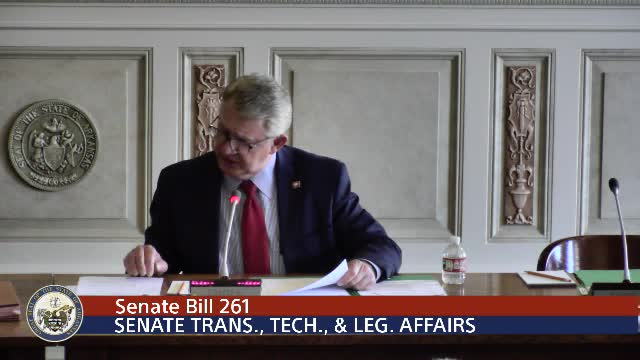
Senator Allen Clark told the Senate Transportation, Technology & Legislative Affairs committee the measure is meant to codify a common practice and reduce unnecessary idling at stoplights. "It's a green bill. It's what people are already doing," Clark said, describing the measure as mostly recognition of driver behavior intended to reduce fuel use and emissions.
Under the bill, a driver who has come to a complete stop at a red signal could proceed through the intersection if there are no vehicles approaching from any direction. Several senators questioned how "approaching" would be defined in practice and raised safety concerns about drivers misjudging distant vehicles or speeds. Senator Bryant asked about fault in collisions caused by a driver proceeding under the bill; committee discussion repeated the general rule that all drivers have a duty to avoid collisions.
Senator Stone and others described the rule as potentially too arbitrary because motorists have different judgments about whether another vehicle is "approaching." Senator Stone said she had been struck previously by a drunk driver, and that the bill left too much to individual judgment.
Senators discussed comparisons to the longstanding right-turn-on-red rule in which drivers may turn after a stop if it is safe to do so. Proponents said the bill applied only when there truly were no vehicles within sightline and that the burden to avoid crashes remains on every driver.
After debate, the committee voted to pass the bill. Senators offered no public testimony against the measure during the hearing.