Get Full Government Meeting Transcripts, Videos, & Alerts Forever!
Get email alerts on the Economic Development topic
No spam. Unsubscribe anytime.
Senate approves expedited utility review for site‑readiness; debate over who pays infrastructure costs
Summary
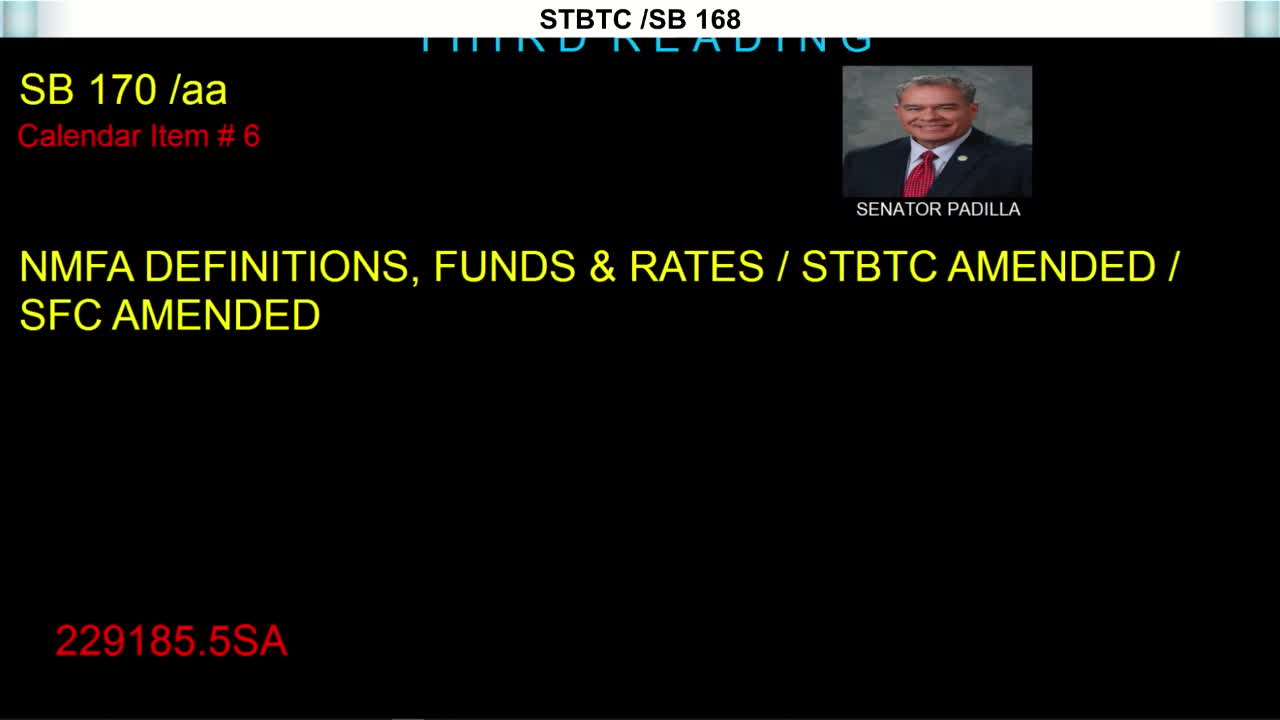
Senate Bill 170, aimed at speeding approvals and utility build‑out for certified ‘site‑ready’ properties, passed after debate on whether utilities or ratepayers would shoulder long‑term infrastructure costs and how projects would be selected.
The New Mexico Senate voted to approve legislation intended to speed the state’s ability to market industrially ready sites by shortening regulatory timelines and clarifying utility involvement.
Senate Bill 170, sponsored on the floor by Senator Padilla, is part of a two‑bill approach intended to make New Mexico more competitive for large industrial and data‑center investments by creating an expedited process at the Public Regulation Commission (PRC) for certain infrastructure approvals and encouraging early utility work to bring service to certified sites. Supporters said the changes will cut months — and sometimes years — from project timelines, while opponents warned about the fiscal risk to ratepayers if utilities build long lead‑time infrastructure before deals are final.
Supporters’ views: Senators including Padilla and Woods said the state loses deals because regulatory and build‑out time windows currently stretch far longer than competing states. Padilla said some approvals could take 36 months under the present process and that shortening key PRC steps to the order of months could help attract investment and jobs.
Questions and concerns raised on the floor: Several senators asked whether utilities or ratepayers would ultimately pay for lines and generation capacity built to service target sites, whether projects would require a firm deal before infrastructure is advanced, and whether accelerated permitting could encourage utilities to add fossil generation rather than renewables. Senator Steinborn and others pressed for protections to prevent ratepayers from carrying long‑term costs if a prospective investment failed to materialize. Several senators also asked whether rural electric cooperatives and other non‑investor‑owned utilities would participate; the bill’s amendments did add co‑ops to the framework discussed in committee.
Vote and implementation: The Senate passed SB170 after floor amendments that broadened who could participate and clarified some procurement language. The roll call was recorded on the floor; the transcript records the final vote as 35 in favor and 10 opposed on the motion for final passage (roll call recorded on the day’s transcript). If enacted, the bill will trigger rulemaking and further interagency work — including PRC rules — to define how sites are certified and how infrastructure costs are allocated.
Bottom line: The legislation shortens authorization timeframes and aims to deliver site readiness more quickly, but the floor debate indicated significant concerns about consumer protection and how costs will be apportioned if projects fall through.