Get Full Government Meeting Transcripts, Videos, & Alerts Forever!
Get email alerts on the Government Efficiency topic
No spam. Unsubscribe anytime.
House creates temporary Department of Government Efficiency task force to review state agencies
Summary
House Bill 3 64 establishes a legislative task force to study government efficiency, with a four-year sunset; the bill passed after lengthy debate about scope, duplication and staffing.
The Idaho House approved House Bill 3 64 on March 10, 2025, establishing a temporary legislative task force — described in debate as a Department of Government Efficiency (DOGE) task force — charged with deep-dive reviews of agency operations, budgets and regulatory rules. The bill passed 43 ayes to 23 nays with 4 absent/excused.
Lede
House Bill 3 64 passed by roll call 43–23 (4 absent/excused). The bill creates a nine-member legislative task force to study efficiency, regulatory accountability and budget oversight across state government and sunsets on Nov. 30, 2029.
Nut graf
Supporters framed the task force as an interim mechanism to give legislators sustained capacity for base-budget review and rule consolidation outside the limited legislative session. Opponents warned it would duplicate existing work, risk enlarging government oversight costs and could move the body toward a de facto full-time legislature.
Body
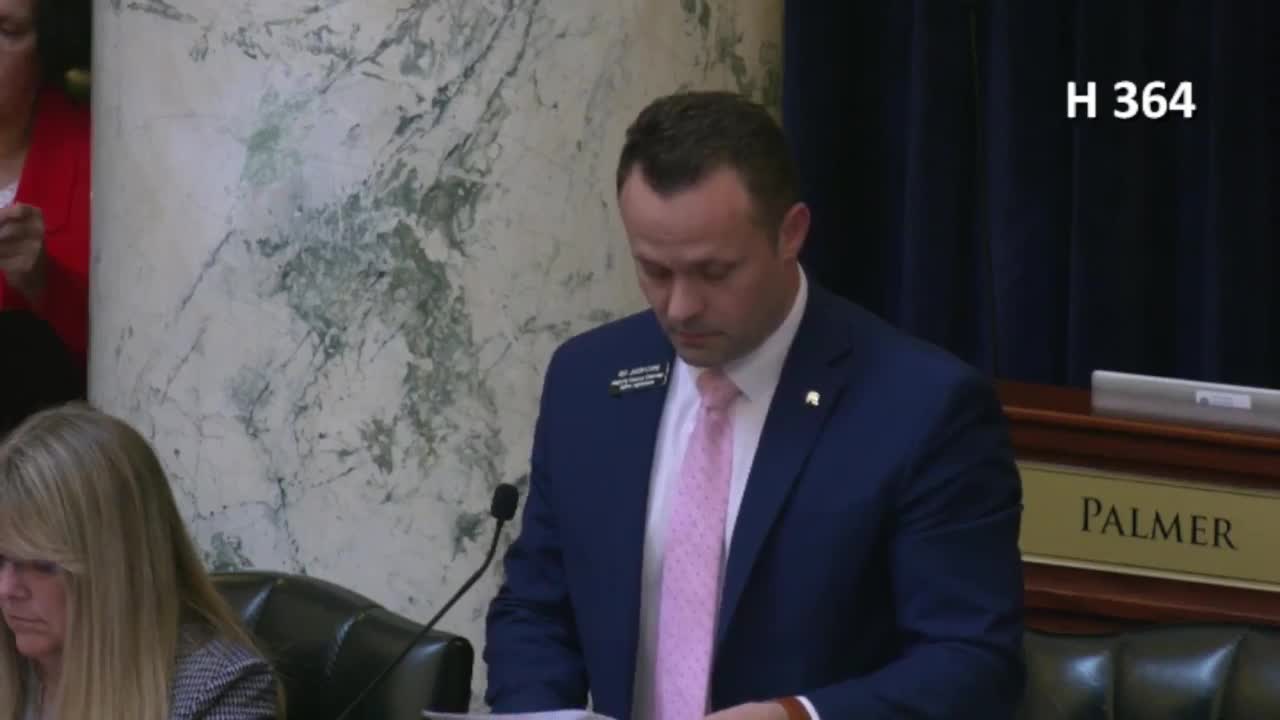
Representative, District 12 introduced the bill and described a bipartisan structure: appointments by the Speaker, President Pro Tem and the Joint Finance-Appropriations Committee, with the ability to form three subgroups (regulatory accountability, budget accountability, and operations/oversight) and appoint up to two non-legislative advisers. The task force members would serve one-year terms and be eligible for reappointment; members would be compensated for interim meetings. (Transcript evidence: sponsor presentation at s=6576.4–e=6606.01.)
Opponents — including Representatives with long interim committee experience — said the state already has auditing and fiscal committees (for example, the Division of Audits and JFAC) and flagged the risk of duplicating effort or creating expensive, ongoing interim work. Some members urged using existing resources like the Office of Performance Evaluations or expanding staff capacity instead of creating a new task force.
Proponents countered that the Legislature is a part-time body with limited time to dig into 180 agencies, multiple boards and commissions, and that a focused interim task force could accelerate rule consolidation and uncover areas for savings. The bill provides for limited compensation, authorizes subgroups, and contains a four-year sunset. Several members noted other states have similar structures and urged a trial period.
Ending
The House approved House Bill 3 64 (43–23, 4 absent/excused). Sponsors said the sunset clause and non-legislative adviser option would allow the task force to adapt and invite outside expertise if needed; opponents said the Legislature should first exhaust existing oversight tools.
Provenance
- topicintro: "What this legislation does is going to establish the state of Idaho Department of Government Efficiency." (Transcript block at s=6571.12–e=6606.01)
- topfinish: "43 ayes, 23 nays, 4 absent and excused. Majority having voted in favor of House Bill 3 64." (Transcript block at s=8801.865–e=8815.28)