Get Full Government Meeting Transcripts, Videos, & Alerts Forever!
Get email alerts on the Medicaid Reform topic
No spam. Unsubscribe anytime.
Senate committee advances bill to reshape Idaho Medicaid after hours of testimony
Summary
The Senate Health and Welfare Committee voted to send House Bill 345, the Medicaid Affordability and Healthcare Access Act, to the floor with a due-pass recommendation after a long hearing that included provider, disability‑community, and patient testimony about managed care, work requirements and rule changes.
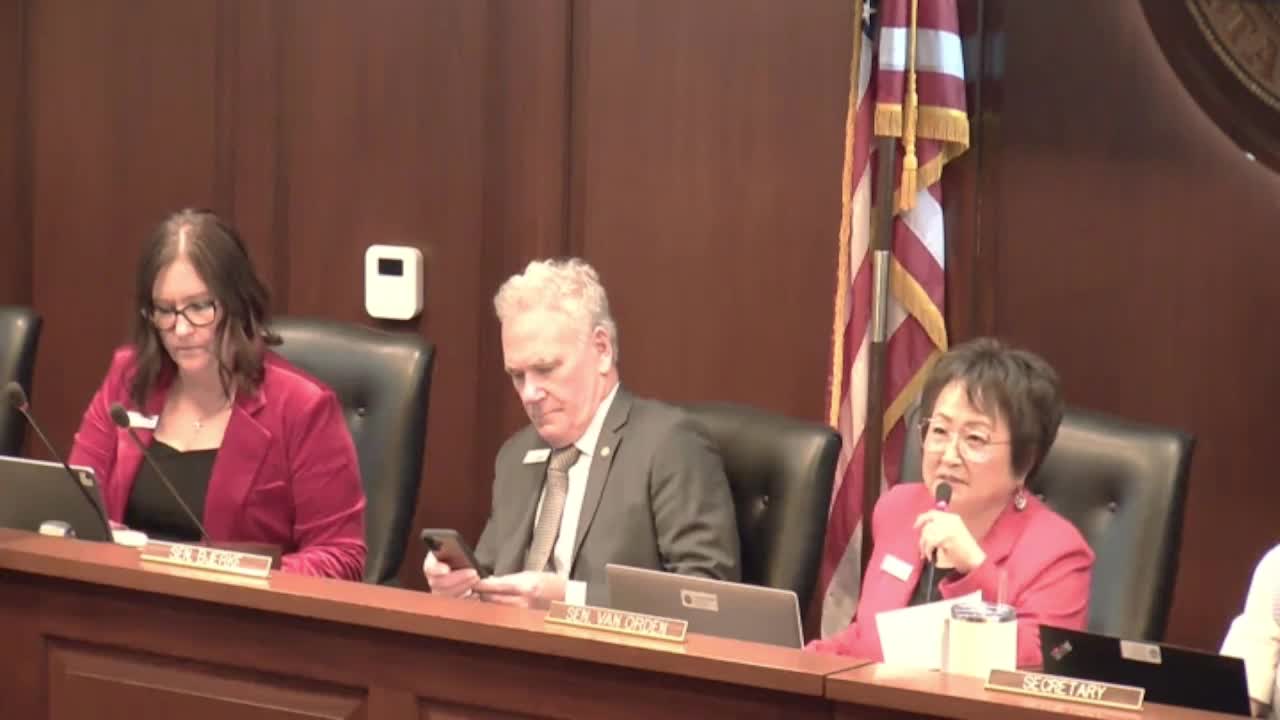
The Senate Health and Welfare Committee voted to send House Bill 345, the Medicaid Affordability and Healthcare Access Act, to the Senate floor with a due‑pass recommendation after more than three hours of testimony and questions from senators.
Representative Jordan Redmond, sponsor of the bill, told the committee the measure aims to contain growth in Idaho’s Medicaid budget by adding comprehensive managed care, Medicaid cost sharing, provider practice‑authority protections and site‑neutral payments while removing several provisions from an earlier House measure. "This bill truly does offer immediate savings to the taxpayers as well as substantial long term savings and stability to the Medicaid budget," Representative Jordan Redmond said.
The bill would, among other changes described by Redmond, repeal last year’s House Bill 3398 and replace it with language giving the Department of Health and Welfare authority to adopt temporary rules to implement changes. It would authorize a managed‑care model covering the whole Medicaid population, add a work requirement for the expansion population (with stated exceptions), require eligibility verification twice a year for some enrollees, and include protections for federally qualified health centers (FQHCs) and critical access or rural emergency hospitals.
The committee heard from more than two dozen witnesses representing state agencies, health providers, disability advocates and Medicaid enrollees. Christine Pisani, director of the Idaho Council on Developmental Disabilities, urged caution and asked that the disability community be included in managed‑care planning: "It is imperative that the disability community be included in the development of managed care as it relates to the many ways this legislation proposes changes for children and adults with disabilities and seniors." Pisani also asked how the bill would interact with the ongoing KW v. Armstrong litigation.
Several clinicians and provider groups warned of access and administrative problems under managed care and work requirements. Dr. Crystal Pyrak, president of the Idaho Academy of Family Physicians, testified against the bill, saying managed care and additional administrative requirements risked reducing access and shifting resources away from care. Emergency physician Dr. Jessica Evans Wall said harder access could increase emergency visits: "People don't stop getting sick just because they don't have insurance coverage."
Multiple witnesses cited experiences from other states with work requirements: Hillary Hagen of Idaho Voices for Children summarized research showing substantial administrative costs and coverage losses in Arkansas, saying, "Analysis showed that 1 in 4 people lost coverage even though 95 percent of them met the requirements or exemptions." Members of disability‑service organizations and families of children with complex needs said the bill’s language removing specific administrative rules raised practical and legal concerns for long‑running waiver programs such as Katie Beckett and for services governed by detailed administrative rules.
Department of Health and Welfare deputy director Juliette Sharon told the committee the department intends to prepare temporary rules if the bill becomes law and said, "we would anticipate having temporary rules ready for July 1. So we do not have any sort of gap in time." Sharon also said the department expects it would need to add staff to administer new requirements.
Representative Redmond said the fiscal note includes those costs: he told senators the department estimated the need for 17 full‑time equivalent staff to administer work requirements and eligibility verification, and that the bill’s sponsors accounted for that in their savings estimates. Redmond cited a net savings figure in the fiscal analysis and noted earlier votes on related House measures: he told the committee the bill passed the House Health and Welfare Committee 13–2 and the full House 61–9.
Committee members asked about the frequency of re‑verification, the potential for triggers that would force benefit reductions if federal matching funds change, and whether the managed‑care model would reduce provider payments. Senator Wintrow and others pressed for written commitments that disability stakeholders be consulted in rule development and oversight through the Medicaid legislative review panel.
After public testimony and questions, Senator Lenny moved to send House Bill 345 to the floor with a due‑pass recommendation. The motion was seconded and carried on a voice vote. The committee approved two sets of minutes earlier in the meeting (02/25/2025 and 02/26/2025) by voice votes.
Votes at a glance
- Approval of minutes, 02/25/2025 — moved by Senator Harris, seconded by Senator Zieterfeld; voice vote recorded as aye; outcome: approved.
- Approval of minutes, 02/26/2025 — moved by Senator Lenny, seconded by Senator Blaylock; voice vote recorded as aye; outcome: approved.
- Motion to send House Bill 345 to the floor with a due‑pass recommendation — moved by Senator Lenny, seconded (not specified); outcome: approved on a voice vote.
What it means next
With the committee’s due‑pass recommendation, House Bill 345 will appear on the Senate floor for debate and a final vote by the full Senate. If enacted, the bill would direct the Department of Health and Welfare to implement changes to Medicaid through temporary rules and to seek federal waivers where specified; the department told the committee it plans to have temporary rules ready July 1. Several witnesses and senators asked for written commitments that the disability community and other stakeholders be engaged in designing managed‑care contracts and that the department be adequately staffed to handle increased administrative tasks.
Key details and figures mentioned in the hearing
- Department staffing: department estimated need for 17 FTEs to administer work requirements and eligibility verification (as stated by Representative Redmond).
- Medicaid budget context: Representative Redmond said the Medicaid budget increased 11% on a $5,000,000,000 baseline; expansion program cited as a $1,360,000,000 budget and an 18.6% improper payment rate (about $250,000,000) in the expansion population.
- Federal match: current federal match for expansion cited as 90% federal / 10% state.
- Fiscal estimates: sponsor cited net savings figures in the fiscal note (examples mentioned: a one‑time net savings of about $15.9 million and ongoing savings of about $27.2 million), and that additional savings may not be fully reflected in the fiscal note.
Stakeholders who testified (selection)
Christine Pisani, director, Idaho Council on Developmental Disabilities (nonprofit) Jennifer Johnson, Boise resident and Medicaid enrollee (citizen) Hillary Hagen, Idaho Voices for Children (nonprofit) Dr. Crystal Pyrak, president, Idaho Academy of Family Physicians (professional association) Juliette Sharon, deputy director, Idaho Department of Health and Welfare (government) Fred Birnbaum, Idaho Freedom Foundation (think tank) Ken Hart, CEO, Valley Family Healthcare (community health center) Chris Cargill, president, Mountain States Policy Center (nonprofit)
Ending
Committee members expressed divergent views: some said the bill was a necessary start to restrain long‑term Medicaid costs, while others said the proposal risked coverage losses and operational problems without firmer written protections for vulnerable populations. The bill now moves to the Senate floor for further debate and a final vote.