Get Full Government Meeting Transcripts, Videos, & Alerts Forever!
Get email alerts on the Coastal Resources Docks topic
No spam. Unsubscribe anytime.
Appeals court reviews three Barnstable Conservation Commission denials of permanent dock projects; disputes focus on ordinance scope and invasive‑species, depth
Summary
A three‑case consolidated argument March 10 challenged Barnstable Conservation Commission denials and conditions on converting seasonal docks to year‑round structures and on new elevated docks reaching over marsh to water; appellants said the commission exceeded its authority in conditioning floats or denying waivers, the commission said local ordinance presumptions and shellfish concerns justified its judgments.
A three‑case consolidated set of appeals — 2024P673 (JMS Holdings LLC), 2024P674 (Sean Martin) and 2024P675 (McParland/McParland family) — was argued March 10 before an appeals‑court panel. The appeals challenge denials or conditions the Barnstable Conservation Commission imposed on projects to alter or replace seasonal piers, and the arguments centered on the town’s wetlands ordinance, local dock regulations and evidence about shellfish habitat and invasive species.
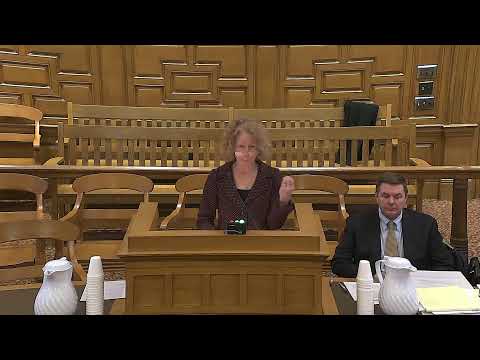
Brian Wall, counsel for the appellants in the three matters, said the commission exceeded its regulatory authority by conditioning or denying projects for effects on a float or ramp where no work on the float or ramp was proposed. For JMS Holdings, Wall described the existing pier as 138 feet long with a permanent first segment (58 feet) supported on monopiles, a seasonal midsection supported on 4x4 posts, a 3×14‑foot ramp and a 4×25‑foot seasonal float; the application sought to replace monopiles for the permanent section and make the seasonal section permanent but did not propose changes to the ramp or float. Wall argued the commission cannot “condition anything on the property, just what’s being proposed” and that the town’s regulations protect preexisting lawful uses and limit application of new requirements to substantial expansions of an existing dock.
The town’s assistant legal counsel, Kate Connolly, answered for the Barnstable Conservation Commission that the local ordinance and the dock regulations must be read as a whole, and that the commission reasonably interpreted “substantial expansion” to include a temporal change from seasonal use to year‑round use because that change affects shellfish habitat, can increase colonization by nonnative species and can shift cumulative impacts in a busy waterway. Connolly cited the commission’s reliance on its shellfish constable, the town shellfish biologist and a commissioner with a doctorate in biological oceanography who testified about invasive species on permanent pilings and about turbidity and scouring related to motorized vessels.
Central factual disputes at argument included: whether the proposed work actually altered piles that contact the water column; whether the float and ramp remained unchanged; the correct interpretation of the dock ordinance’s preamble and performance standards (the principal contested provisions were Barnstable Code ch. 2‑37 and the private dock regulations at 703 et seq.); whether seasonal docks that use benign materials avoid the colonization effects the commission associated with permanent pilings; and whether the commission’s findings about cumulative adverse effects were supported by substantial evidence in the record.
Examples from the record cited by appellants included: JMS Holdings’ permit condition that would preclude a boat berthed at a float that sits in about 22.8 inches of water where the ordinance’s motorized‑vessel depth requirement is 30 inches; Martin’s pier which originally extended about 100 feet and now is roughly 94 feet with a seasonal walkway and ramp; and McParland’s proposed elevated dock designed to traverse a salt marsh and allow non‑motorized launching (no float proposed). Appellants urged remand where findings lack substantial evidentiary support and where the commission treated project components as swept up into broader conditions unrelated to the proposed work.
Connolly defended the commission’s approach and argued the local ordinance contains a presumption (in its preamble and in 703‑5a) that docks can have significant or cumulative adverse effects and that applicants bear the burden of overcoming those presumptions in high‑value shellfish areas. She said the commission applied the ordinance’s language and relied on available studies, site inspections, and the recommendations of the shellfish biologist; the commission also granted two of three waivers in at least one application and denied the depth waiver that would have allowed a 12‑inch clearance to stand in place of the 30‑inch standard.
The appeals court questioned both sides about statutory construction, how broadly the commission may condition use of property components that were not themselves proposed for change, and what evidentiary showing is required to support a cumulative‑effects finding. Counsel for the appellants argued the commission’s use of amorphous “cumulative” findings and references to recreational access lacked the specificity required by the ordinance and case law and that the commission erred in treating the projects as falling under “substantial expansion.” Connolly pointed to the commission’s case‑by‑case practice and to earlier Superior Court decisions upholding similar interpretations where the record supported them.
The court took argument on all three consolidated matters and submitted them for decision.
Why the cases matter: The appeals test how far a local conservation ordinance may reach when an applicant proposes to change seasonal infrastructure to permanent structures in shellfish‑sensitive waters, and whether local performance standards create a predictable permitting framework or leave discretion that can fragment across cases.
Outcome at argument: The court heard consolidated argument and took the matters under advisal.