Get Full Government Meeting Transcripts, Videos, & Alerts Forever!
Get email alerts on the Wetlands Forest Cutting Plan topic
No spam. Unsubscribe anytime.
Appeals court hears dispute over forest-cutting plan, DEP determinations in Rodriguez property case
Summary
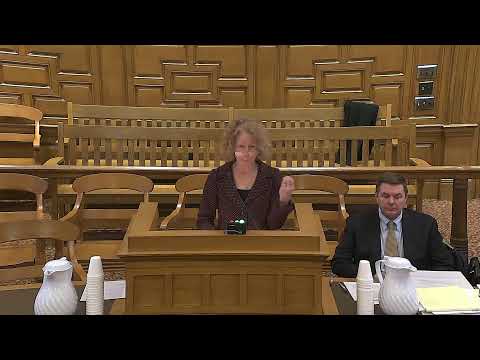
Chief Justice Vicki Henry heard oral argument March 10 in 2024P885, James M. Rodriguez v. Marianne L. Wall and others, over whether road‑maintenance and timber‑harvesting activity on Rodriguez’s property required wetland permitting.
Chief Justice Vicki Henry heard oral argument March 10 in 2024P885, James M. Rodriguez v. Marianne L. Wall and others, over whether road‑maintenance and timber‑harvesting activity on Rodriguez’s property required wetland permitting.
Rodriguez, representing himself, told the panel the Department of Environmental Protection’s (DEP) OADR decision concluded the roadway area was non‑jurisdictional and that a forest‑cutting plan (FCP) and related letters (including a Rassman clarification) show the land was in agricultural use and exempt from the Wetlands Protection Act for the activities at issue. He said the DEP and the Division of Conservation and Recreation (DCR) had recognized that only one of the two forest stands contained wetlands and that work “was allowed, as an agricultural exemption by the OADR.”
The town’s lawyer, Robert Galvin, representing the Norwell Conservation Commission, told the panel the FCP authorized work only within identified areas — principally the landward segment of Barrel Lane leading to the landing — and that Rodriguez performed work beyond that footprint, including in an intermittent stream channel and adjoining wetland. Galvin said the commission’s enforcement orders targeted where heavy equipment and excavation altered a stream channel and road layout beyond the plan’s authorized access road and landing.
Why the case matters: The dispute turns on whether a prior OADR/DEP administrative determination and an expired or active FCP can shield later work from local enforcement, and on how DCR and DEP definitions and memoranda of understanding interact when they identify and regulate wetlands and forest practices.
Panel questioning focused on technical issues the parties raised. Rodriguez pointed to IRS Schedule F filings and Chapter 61A tax classification paperwork (he said the property had a Chapter 61A farm number reported in 2023) as evidence of agricultural use; Galvin replied that the town’s concern is scope and location of work. Counsel and the judges discussed whether a June 9, 2021 DCR service‑forester clarification in the record treated an intermittent channel on Barrel Lane as non‑regulated for the particular segment, and whether that finding applied statewide or only to the plan’s limited footprint.
The parties debated res judicata and the effect of a later legislative permit‑extension provision referenced in argument (identified in the record by counsel as session laws of 2024, section 280) on permits and plans that lapsed between 2023 and 2024. Rodriguez told the court DEP had told him the 2024 session law was being reviewed for potential extension or resurrection of permits but that he could not give a final position.
The panel interrupted at the end of Rodriguez’s allotted time to ask further questions and then heard argument from Galvin. Argument closed with counsel asking the court to consider plan maps, photos and the Rassman clarification letter in the record; the case was submitted for decision.
What was not decided at argument: The panel did not issue a ruling. Judges pressed parties on whether the FCP’s expiration and the OADR decision’s reliance on the FCP affect the continuing scope of permitted activity and asked how DCR/DEP memoranda of understanding allocate jurisdiction. The record contains the parties’ competing interpretations; the court will resolve them in an opinion.
Next steps: The case was orally presented and taken under advisement.