Get Full Government Meeting Transcripts, Videos, & Alerts Forever!
Get email alerts on the Higher Education Budget topic
No spam. Unsubscribe anytime.
UND outlines budget pressures to House appropriations committee, warns tuition likely to rise
Summary
University of North Dakota President Andy Armacost told the House Appropriations — Education and Environment Division during a hearing on Senate Bill 2003 that enrollment and research growth have helped UND but that the Senate bill leaves operational funding gaps; under the Senate proposal UND would likely need a tuition increase of just over 5%.
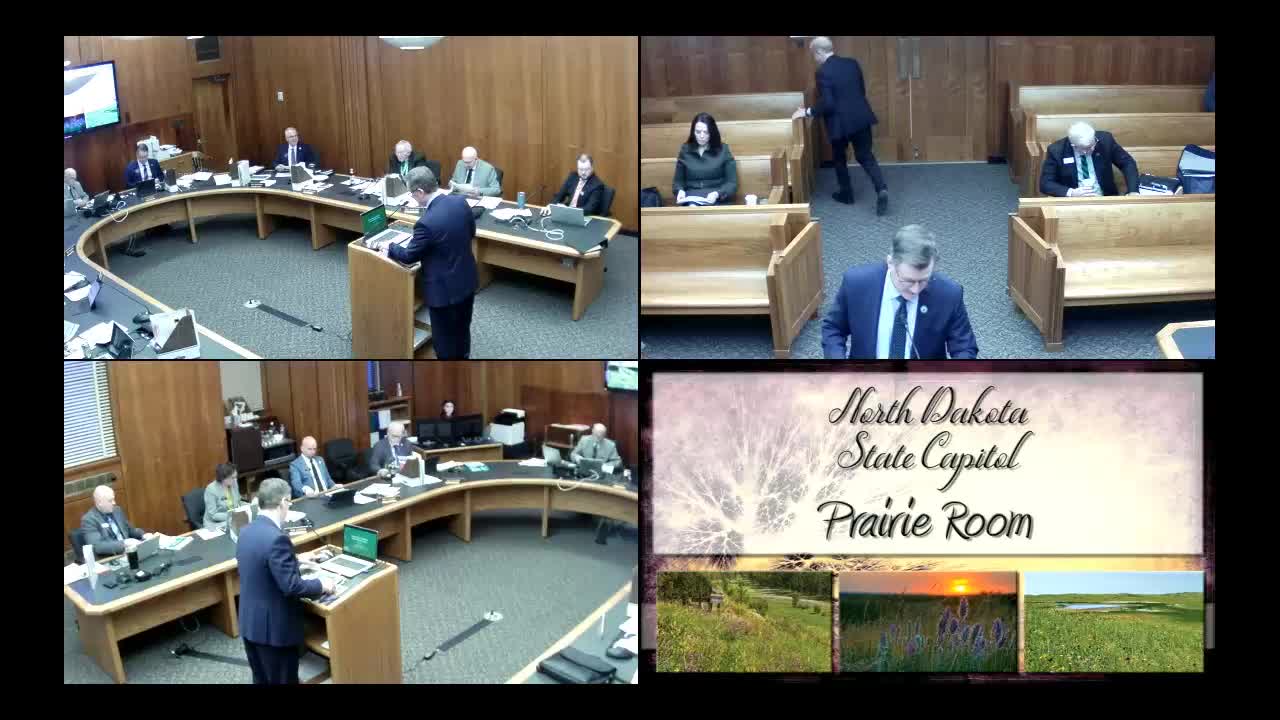
University of North Dakota President Andy Armacost told the House Appropriations — Education and Environment Division during a hearing on Senate Bill 2003 that the university has seen enrollment and research gains but still faces major operating cost pressures that the Senate’s current version of the budget does not fully cover.
Armacost said the Senate’s plan leaves the University of North Dakota and its medical school short of the funding needed to cover inflation, salary and benefit increases and other operating costs. "We would have to increase the UND tuition by just over 5% and the School of Medicine’s tuition by just over 4%," Armacost said in testimony to the committee.
The university presented slides showing four categories of operating increases — market equity and merit, benefits/cost to continue, inflation-driven operating costs and other systemwide requests — that together require roughly $60 million in additional resources across UND and the School of Medicine and Health Sciences. Armacost told the panel that the general fund share in the Senate engrossed bill covers only part of that need and that the remainder would fall to tuition and other local sources.
Armacost reviewed recent university performance and investments as context for the request. He said UND’s fall headcount rose above 15,000 and research expenditures grew from about $110 million to roughly $197 million during a recent four-year period. He also warned the committee that federal proposals to change overhead (indirect cost) rates at agencies such as the National Institutes of Health could reduce UND revenue, saying, "if they adjusted the overhead rates... it would probably be about a close to a $2,000,000 loss, to the university." He said university leaders were monitoring litigation and agency actions in Washington, D.C.
Armacost highlighted state-directed, one-time investments that have gone to UND in recent years: $2.5 million appropriated to the Economic Diversification Research Fund for UND, multi-million-dollar support for nanomaterials and space-related work, and state challenge-grant funding that the university said has leveraged donor giving. He noted the Senate had funded several NDUS initiatives at levels below their requests but singled out an $8 million Senate award to the economic diversification fund and the Senate decision to add a combined $25 million in SIF-designated items across system programs.
On facilities, Armacost reviewed UND’s campus master plan and deferred-maintenance pool, explaining how tuition increases and other dedicated local funds are being saved and used to reduce deferred maintenance over time. He said the institution uses a combination of state tiers funding, extraordinary repair money and an internally managed deferred-maintenance pool funded in part by a portion of tuition increases.
Committee members asked about the mix of on-campus versus online enrollment growth, retention and graduation rates, and the federal research outlook. Armacost told the panel UND’s growth since 2023 has been driven about 60–65% by on-campus enrollment gains and that both retention and graduation rates have improved. He also flagged emerging areas of campus investment — high‑performance computing, artificial intelligence, satellite and nanomaterials research — and said some system and statewide AI initiatives remain unfunded in the Senate version of SB 2003.
The university and committee staff also discussed how increases requested in the bill would flow through the North Dakota University System funding formula and where nursing, workforce innovation and student grant requests appear in Senate language. Armacost and UND finance staff also said they would supply the committee with additional breakouts — for example, scholarship disbursements tied to endowment payouts and program-level details the committee requested.
UND said it could supply the committee with more detailed, itemized data — including a breakdown of scholarship payouts from endowed funds and the requested list of responses for system questions — and emphasized that the enrollment and research gains do not eliminate the need to cover rising operating costs.
Ending: Armacost closed by introducing UND staff who would offer more detail during the remainder of the hearing and by reiterating the university’s willingness to provide follow‑up material the committee requested.