Get Full Government Meeting Transcripts, Videos, & Alerts Forever!
Appropriations committee reviews juvenile services budget, emphasizes community programs and YCC staffing and repairs
Summary
The Appropriations Committee heard an overview of the Division of Juvenile Services’ operations, outcomes and budget requests, including restoration of cut day-treatment funding, one night-security FTE at the Youth Correctional Center and a $6.5 million heating-plant request.
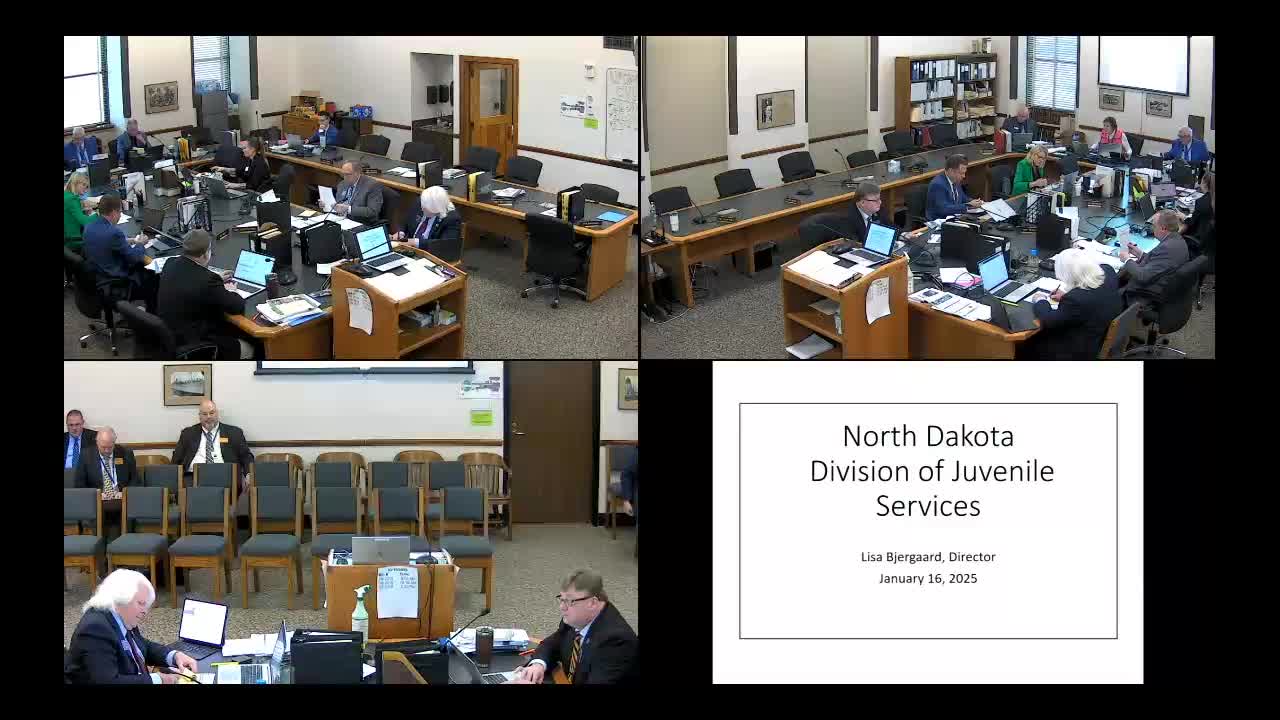
The Appropriations Committee heard a detailed briefing on the Division of Juvenile Services’ operations, outcomes and budget priorities during a budget hearing that covered arrest trends, community treatment programs and infrastructure needs. Lisa Beauregard, director of the Division of Juvenile Services, told the committee the division is focused on keeping youth in family and community settings while using short-term contract placements and secure confinement only when necessary.
Beauregard said juvenile courts processed almost 4,000 youth in 2023: 2,022 were diverted, 448 were handled informally, 579 saw a judge, 342 were placed on probation and “just a little over a hundred” were placed in state custody. “We intake probably about 60 unique youth every every year,” Beauregard said, referring to the number of youth admitted to long-term custody each year. She added that the division also houses about 100 pretrial detainees at times, in addition to those longer-term commitments.
Why it matters: Committee members heard that juvenile arrest rates have fallen from 1990 peaks but that North Dakota’s adolescent population has grown, increasing the number of young people who might need services. Committee members and agency staff framed much of the discussion around sustaining community-based, evidence-backed programs — notably brief strategic family therapy and school-based day-treatment classrooms — that officials say reduce placements away from home and subsequent law-enforcement contact.
Beauregard described outcomes the committee had in hand: during the most recent school year, roughly 250 students participated in…
Already have an account? Log in
Subscribe to keep reading
Unlock the rest of this article — and every article on Citizen Portal.
- Unlimited articles
- AI-powered breakdowns of topics, speakers, decisions, and budgets
- Instant alerts when your location has a new meeting
- Follow topics and more locations
- 1,000 AI Insights / month, plus AI Chat