Get Full Government Meeting Transcripts, Videos, & Alerts Forever!
Get email alerts on the Copay Accumulator Ban topic
No spam. Unsubscribe anytime.
Representative Karls proposes ban on insurer accumulator policies for certain high-cost prescription drugs; lawmakers debate fairness and scope
Summary
House Bill 1216 would require insurers to count third‑party payments for specified high‑cost, no‑generic prescription drugs toward the insured’s deductible and out‑of‑pocket maximum; sponsor said the change is targeted to life‑saving specialty drugs, while some senators questioned fairness and scope.
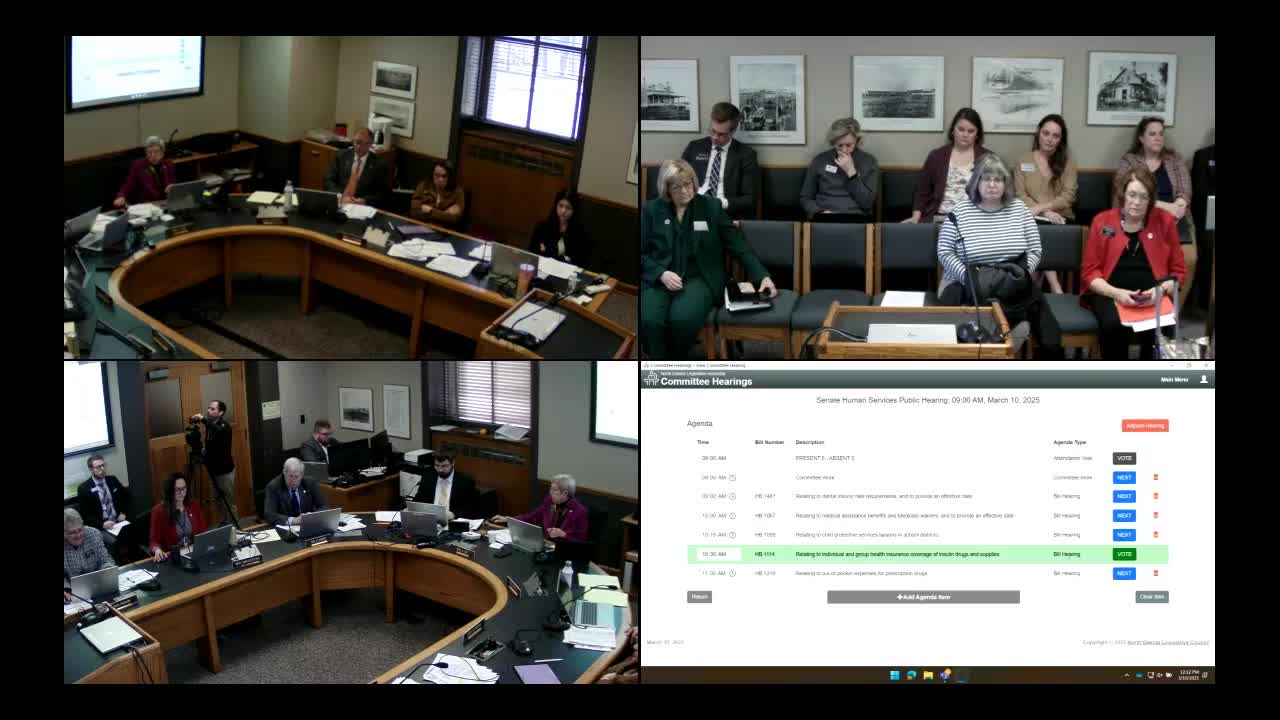
Representative Karen Karls introduced House Bill 1216, which would require health benefit plans to count amounts paid by third parties on behalf of an enrollee — for specified high-cost prescription drugs that have no generic equivalent — toward the enrollee’s deductible and out-of-pocket maximum. Karls framed the bill with a constituent story: a patient with a rare disease who received manufacturer assistance at the pharmacy but later was billed the same amount because the insurer did not credit the manufacturer payment to the member deductible.
Sponsor testimony and advocates characterized accumulator or copay‑accumulator programs as a barrier to access for people with very high-cost specialty drugs. Representative Karls said the draft applies narrowly to prescription drugs without generic equivalents and only to third‑party patient‑assistance payments, not broader coupons. The bill also includes a provision to address future PERS self‑insurance status.
Senators pressed the sponsor on fairness: some argued that patients who receive manufacturer assistance should not have a lower effective deductible than others who pay full price, and asked why cost‑sharing help for drugs should be treated differently than assistance that reduces other healthcare costs. Representative Karls said the bill targets life‑saving and specialty drugs for which the market dynamics and manufacturer assistance are different, and she argued those patients face existential risk when access is interrupted.
Representative Karls said fiscal impacts in the fiscal note were overstated because the bill would affect only a small number of patients taking the highest-cost, limited‑market medications; she asked stakeholders to provide data. Committee members suggested follow‑up meetings with carriers and the PERS plan, and Representative Karls indicated her intent to continue refining the measure while the committee reviews testimony.
Ending: The committee recessed the hearing on HB 1216 for additional information and stakeholder meetings. Representative Karls and witnesses agreed to provide written materials and to return for further committee work.