Get Full Government Meeting Transcripts, Videos, & Alerts Forever!
Get email alerts on the Cps School Liaison topic
No spam. Unsubscribe anytime.
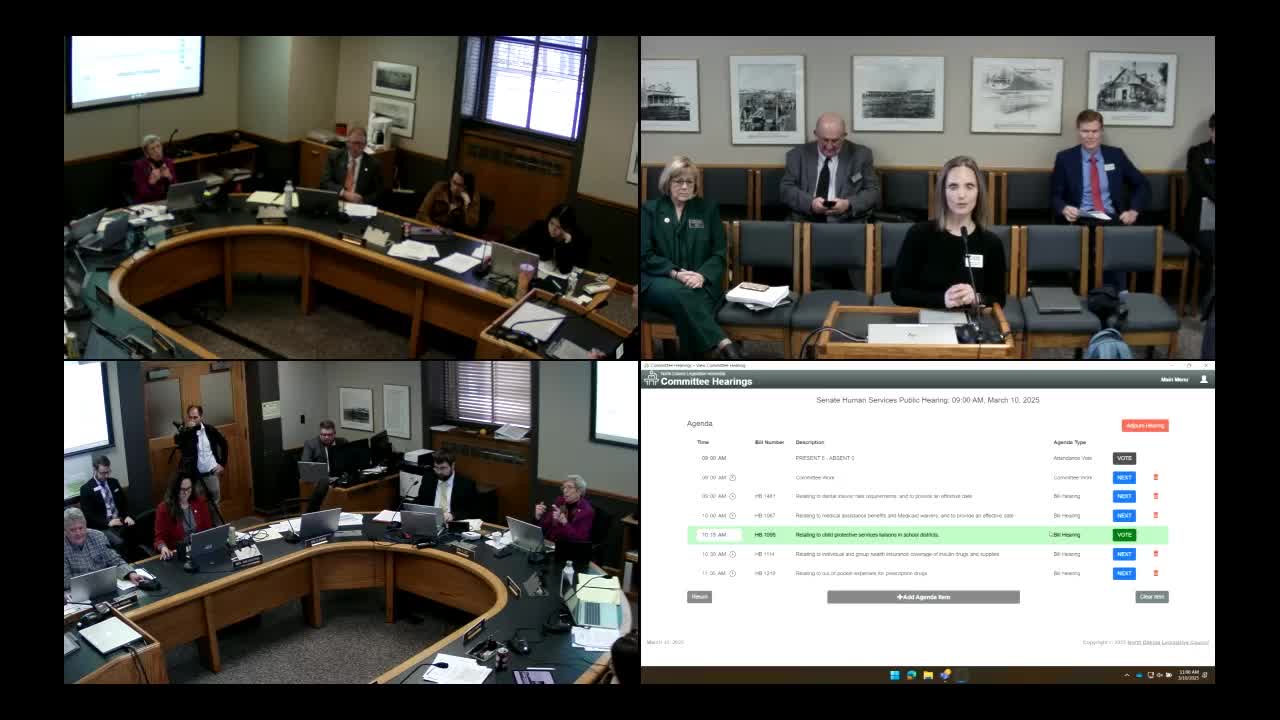
Bill to allow school districts to name CPS liaisons draws support, raises confidentiality and forensic interview concerns
Summary
House Bill 1095 would let school districts designate a child protective services liaison to coordinate with CPS on assessments and student services; school boards supported the option but CHILDREN’S advocacy representatives warned that the proposal could risk improper information sharing and untrained interviews.
House Bill 1095 would allow school districts to designate a child protective services (CPS) liaison to coordinate with CPS when the district’s students are involved in assessments or services. Amy DeCook of the North Dakota School Boards Association told the committee the measure is optional for districts and could clarify a point of contact to facilitate communication with CPS, coordinate services and support school staff.
Supporters said educators are often first to recognize signs of abuse or neglect and a designated liaison could ease coordination when legally permitted. The school boards association said language was amended in the House to add flexibility and to require CPS to provide liaison training; the bill does not obligate districts to designate a liaison.
Senators raised several substantive concerns during the hearing. Senator Hogan and others said the juvenile-justice-era restructuring of child welfare had already reduced multi-agency teams and that this bill risked reintroducing complexities the prior reforms sought to avoid. The central questions were legal boundaries and confidentiality: who can receive or share what information, under what legal authority, and whether the liaison role might create expectations or liability beyond the district’s legal authority.
Greg Casalski, executive director of the Children’s Advocacy Centers of North Dakota, registered a narrow opposition: he said the bill’s language (section 3(c)) could be read to permit school employees to “assist CPS with a student case investigation” and that untrained school staff conducting interviews or probing children after disclosure risks contaminating forensic interviews, threatening law‑enforcement investigations and harming the child. Casalski recommended limiting any liaison role to coordination and requiring that forensic interviews remain with accredited interviewers at Children's Advocacy Centers or law enforcement.
Committee members asked how the proposal would intersect with behavioral health coordinators already placed in schools and whether a CPS liaison would duplicate or conflict with that role. Members and DeCook agreed the liaison idea is not a panacea and noted training and legal safeguards would be essential. The hearing was recessed and left open for further input from the state’s CPS zone directors and from Kim Jacobson, who was expected to attend but had been called away; senators asked Jacobson to return for committee work.
Ending: The committee left the bill open for additional input on confidentiality safeguards, training scope and forensic‑interview protections before deciding whether to move the measure forward.