Get Full Government Meeting Transcripts, Videos, & Alerts Forever!
Get email alerts on the State Finance topic
No spam. Unsubscribe anytime.
Representative proposes study and small state gold reserve; opponents cite flexibility and investment governance concerns
Summary
Representative Dan Johnston introduced legislation directing the state treasurer to study and (after a delay) place at least 1% of the treasury in gold and silver; supporters argued it hedges inflation and preserves purchasing power, while opponents warned legislative mandates can reduce investment flexibility.
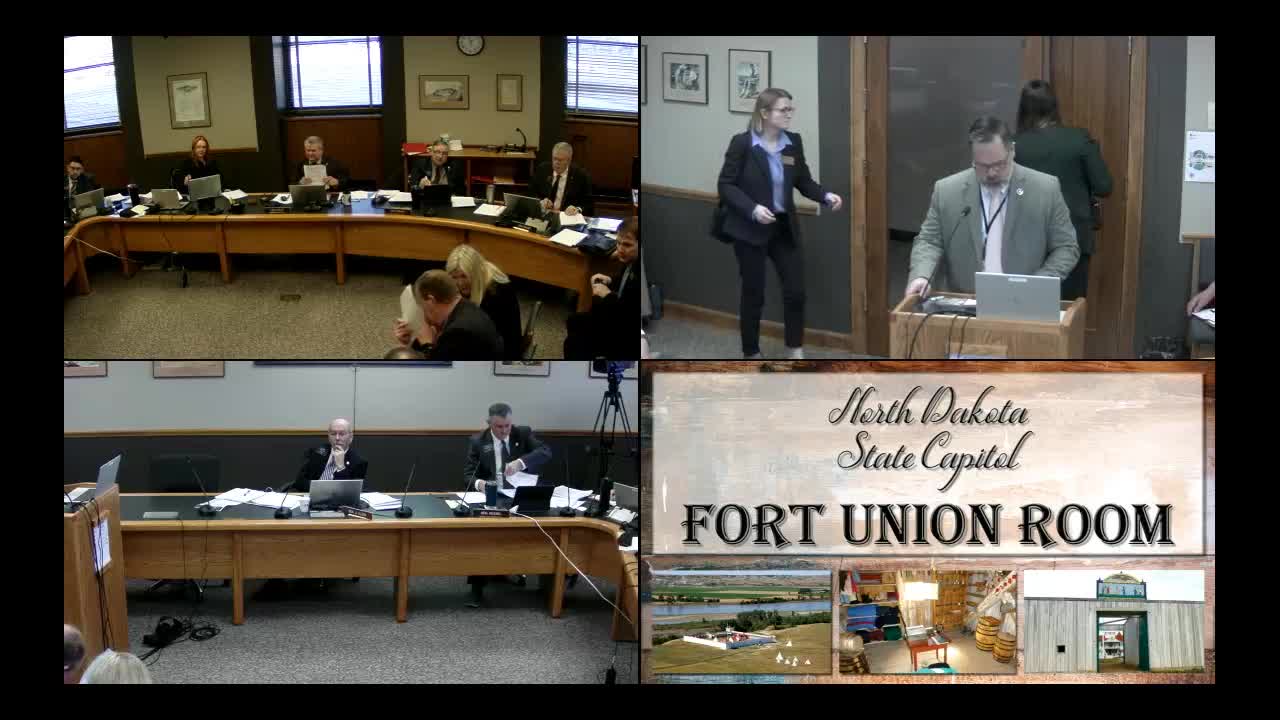
Bismarck — Representative Dan Johnston told the Senate Industry and Business Committee that House Bill 11‑83 would direct the state treasurer to study and, after the study period, acquire at least 1 percent of the state’s treasury holdings in gold and silver bullions as a strategic reserve.
Johnston framed the proposal as a hedge against inflation and a diversification tool in an era of growing global demand for physical bullion, citing recent enactments in other states and central‑bank purchases abroad. “Gold ensures solvency when fiat currency fails,” he said, adding that the bill would allow the treasurer to use insured, audited private vaults or exchange‑traded funds backed by bullion and that the bill’s effective date would follow a study period.
Supporters and opponents: JP Cortez of the Sound Money Defense League (testifying by phone) and other supporters said a modest, legislatively authorized bullion holding would be a low‑cost insurance policy against currency risk and noted Wyoming and Utah activity on similar measures. Cortez said Utah’s recent purchase and Wyoming’s new law demonstrate a broader policy trend.
Opponents, including McLean County State’s Attorney Lad Erickson and Bank of North Dakota representatives, urged caution. Erickson said legislation that constrains the executive‑branch investment board risks reducing returns by mandating allocations at fixed percentages. He argued the State Investment Board’s mandate to maximize returns and manage liquidity best accomplishes long‑term fiscal goals and that productive, revenue‑producing assets (for example state school lands) historically outperform unproductive holdings such as bullion.
Operational questions: Kelvin Hulett, chief business‑development officer at the Bank of North Dakota, testified in a neutral position and provided preliminary cost estimates for vaulting bullion at the Bank of North Dakota — including “a couple of million dollars” in renovations to retrofit a vault and an estimated $400,000–$600,000 a year in operating costs in an illustrative scenario. Hulett said the bank is willing to participate in the study and detailed the practical security, insurance and audit work a physical bullion depository would require.
Timing and study: Committee members asked whether the bill’s “shall” language obligates the treasurer to make purchases immediately; Johnston said the bill schedules the effective date after the required study and that the bill was intended to give statutory authority and to start with a modest allocation (he proposed 1 percent as a conservative entry point). Senators also discussed whether the treasurer already has authority under the prudent‑investor standard to execute such purchases without legislation.
No formal committee action was recorded at the hearing. The committee received neutral and opposing testimony urging a careful study of costs, governance and the State Investment Board’s role before any mandate to purchase bullion is adopted.