Get Full Government Meeting Transcripts, Videos, & Alerts Forever!
Committee reviews governor's budget for Department of Corrections, highlights aging prisons, staffing and health-care gaps
Summary
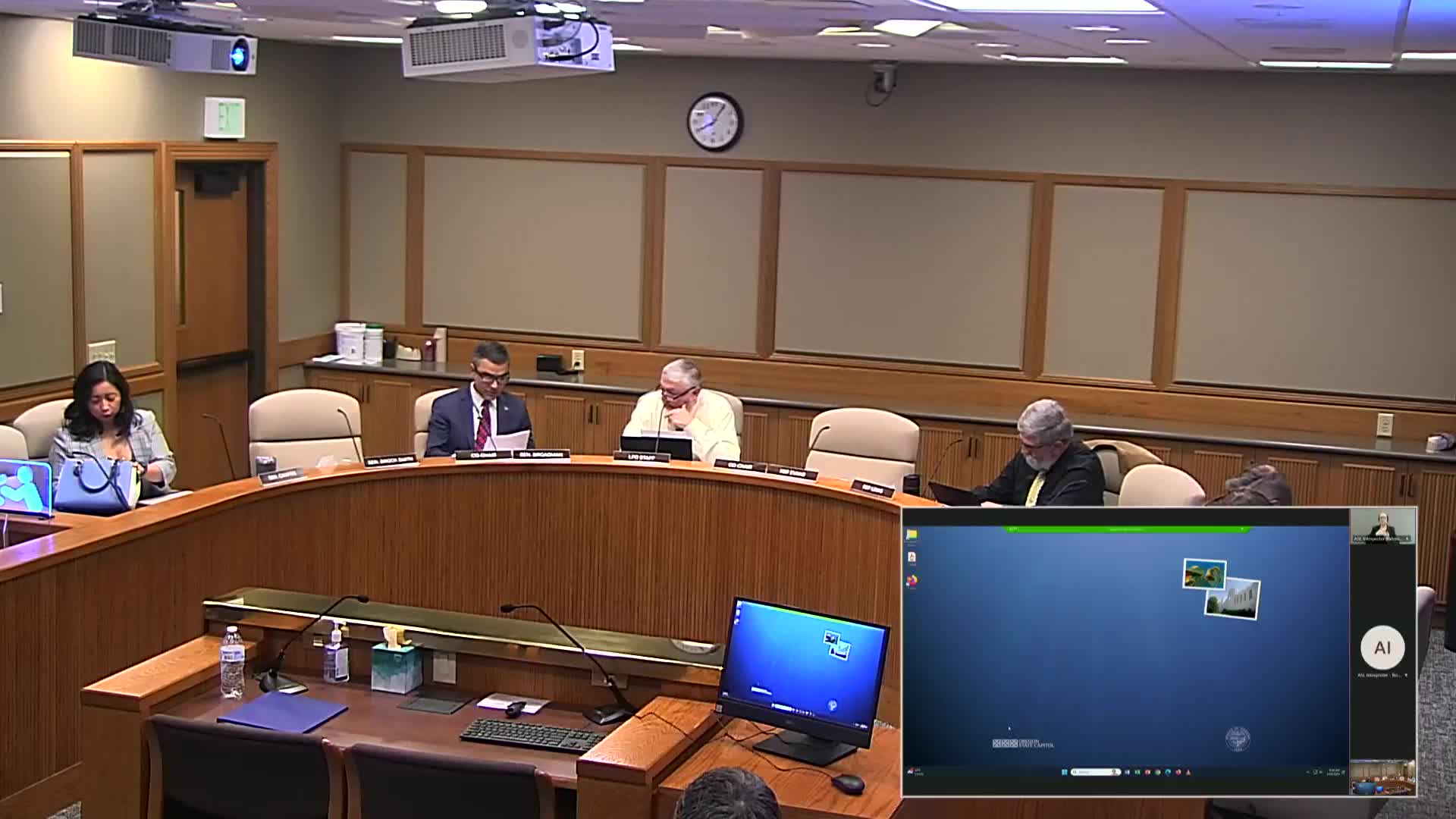
An informational hearing on House Bill 5,004 reviewed the governor's recommended budget for the Oregon Department of Corrections, focusing on capital needs for the Oregon State Penitentiary, staffing shortages and overtime, health-services leadership changes and investments for gender-informed programming at Coffee Creek Correctional Facility.
Allison Daniel, a budget analyst from the Department of Administrative Services' Chief Financial Office, told the Public Safety Committee on March 10 that "the Department of Corrections budget is almost entirely general fund with relatively small components of other funds and federal funds." The governor's recommended budget for the Department of Corrections (DOC) was presented to the Committee as part of an informational hearing on House Bill 5,004.
The hearing laid out the budget's scale and major proposed investments. Daniel said the current service-level budget for the 2025-27 biennium is about $2.7 billion and the agency employs roughly 4,900 full-time positions. The recommended package increases spending primarily to address facility maintenance, staffing and program needs, including: a proposal for a feasibility and planning effort tied to a geriatric campus; funding for body scanners at Coffee Creek Correctional Facility; repair and maintenance at the Oregon State Penitentiary (OSP); and replacement and maintenance of key IT systems.
"When we treat people with dignity and respect, when we give them the resources they need to be successful, we can have a profound positive impact on the lives of the adults in custody and reduce recidivism," said Mike Rees, director of the Department of Corrections, as he summarized DOC priorities and programs. Rees described DOC as a largely personnel-driven agency that operates 12 institutions across the state and manages about 12,000 adults in custody (AICs) systemwide.
Why it matters: Committee members singled out multiple areas where one-time and ongoing dollars would affect public safety, operations and long-term costs. Committee discussion centered on: facility needs at the aging Oregon State Penitentiary, growing numbers of older adults in custody and the department's plan for a geriatric campus; recruiting and…
Already have an account? Log in
Subscribe to keep reading
Unlock the rest of this article — and every article on Citizen Portal.
- Unlimited articles
- AI-powered breakdowns of topics, speakers, decisions, and budgets
- Instant alerts when your location has a new meeting
- Follow topics and more locations
- 1,000 AI Insights / month, plus AI Chat